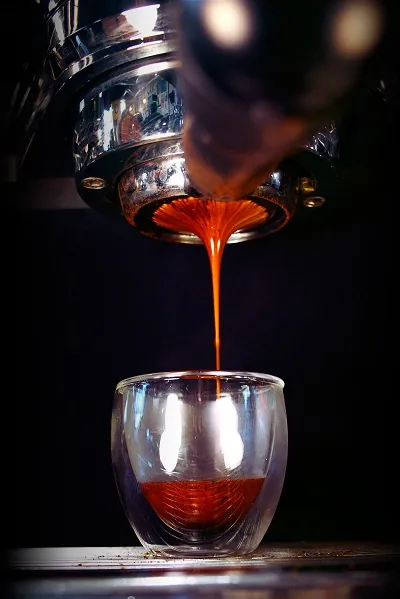
Espresso Vivace is a partnership founded in Seattle in 1988 by David Schomer and Geneva Sullivan, and its charter is to research, develop and prepare caffè espresso as a culinary art. The name translates loosely as great enthusiasm and excitement for espresso. Vivace began with coffee carts and moved into indoor stores in 1992, the year it started roasting in the Northern Italian style: mild arabicas, with each bean in its blends taken to the peak of caramelised sugar. Schomer still oversees quality control, roasting and training, and visits each shop daily. In 2015 the roasting moved from a small garage into a larger production facility.
Schomer wrote “Espresso Coffee: Professional Techniques” in 1995 and has revised it since, with editions in Japanese, Russian and Korean, and he made two barista training courses on DVD. In 2001 he worked with La Marzocco in Ballard on what Vivace describes as the first PID-controlled espresso machine, which held brewing temperature steady. Vivace favours a slow, short shot of about 22 ml extracted in about 35 seconds, and its baristas now grind each shot on La Marzocco’s Pico grinder, which Schomer vented to keep it cool.
Vivace buys only mild, low-acid arabica grown under shade trees. Since 2019 its bean bags, cups, lids, straws and stir sticks have all been compostable, and a small electric van delivers to its shops. In 2004 it planted hundreds of cedar trees in Interlaken Park with the Cascade Land Conservancy to offset the carbon from roasting.
Brix, the flagship café, is on Capitol Hill, and Alley 24, Vivace’s grand bar, is in South Lake Union. Both have indoor seating and do not take cash. A shot of espresso at Vivace is what set Eileen Rinaldi on the path to founding Ritual Coffee Roasters in San Francisco in 2005.
Coffee on the shelf

- caramel
- sweet floral
- chocolate
- caramel
- salted caramel
- leather
- chocolate
- umami
- chocolate
- berries
- chocolate
- apple
Photograph: Espresso Vivace