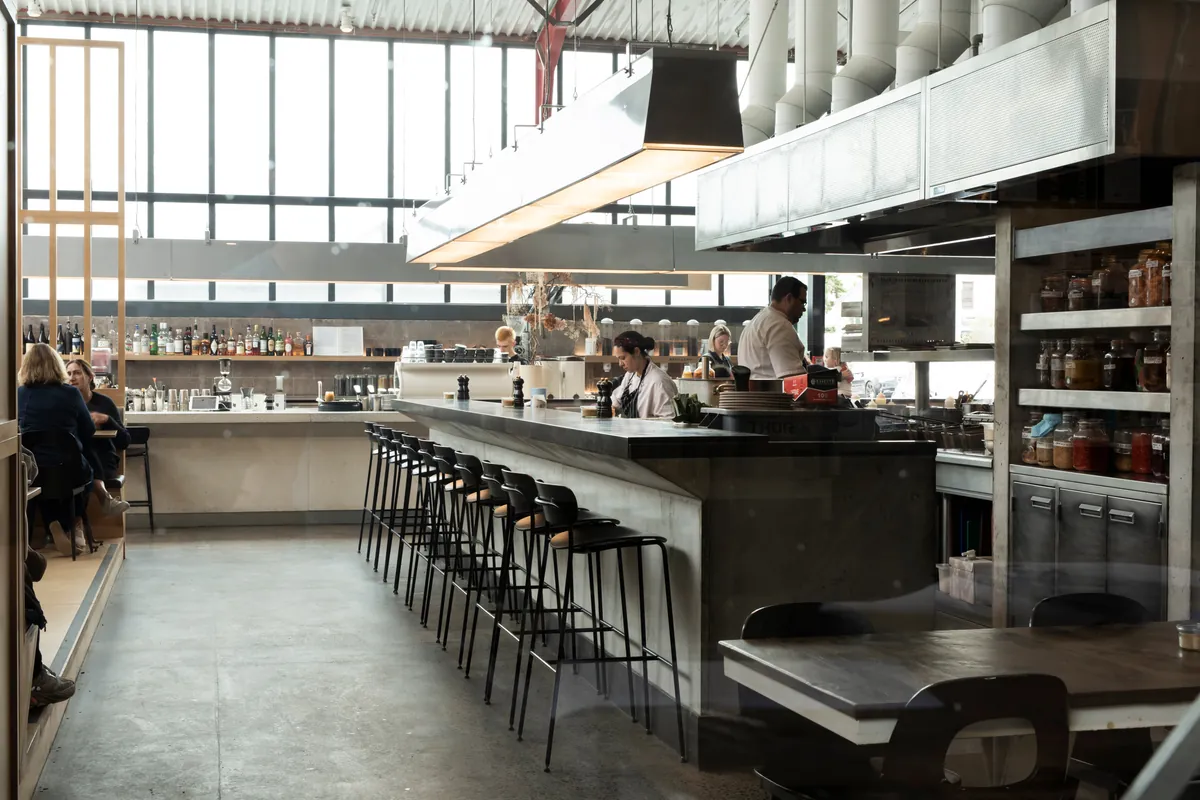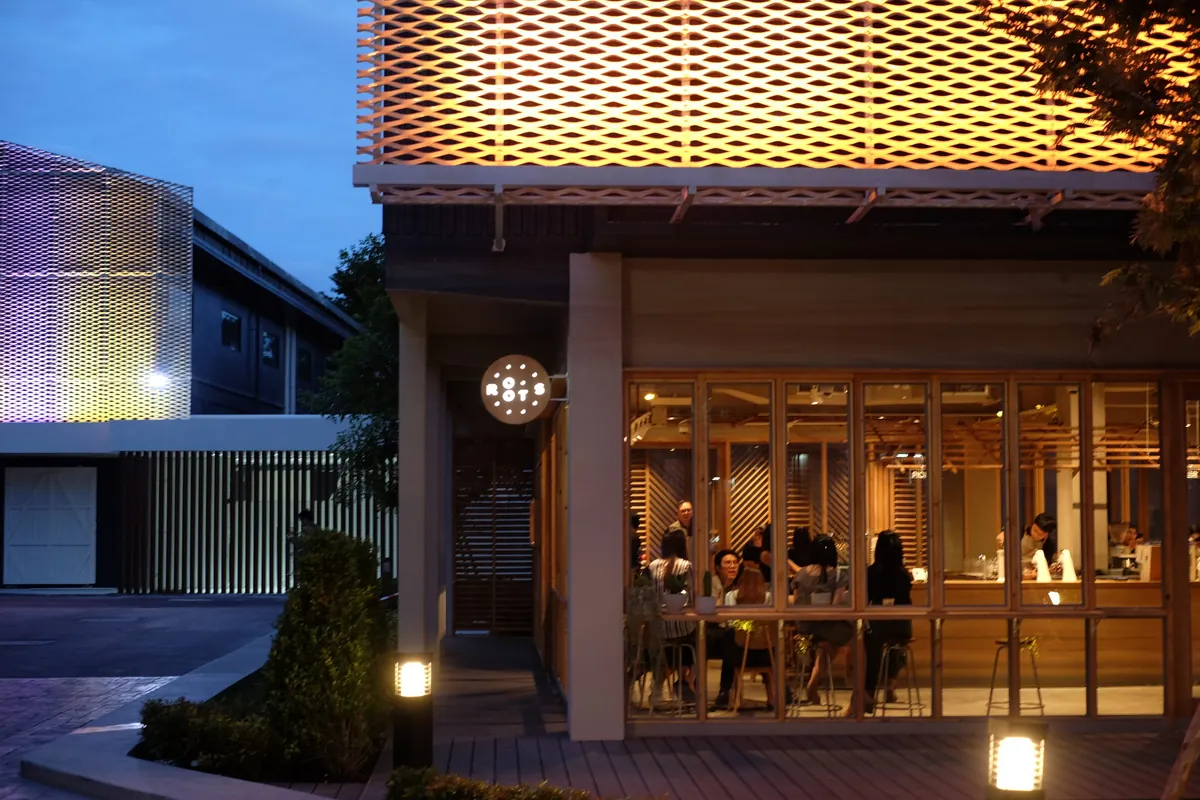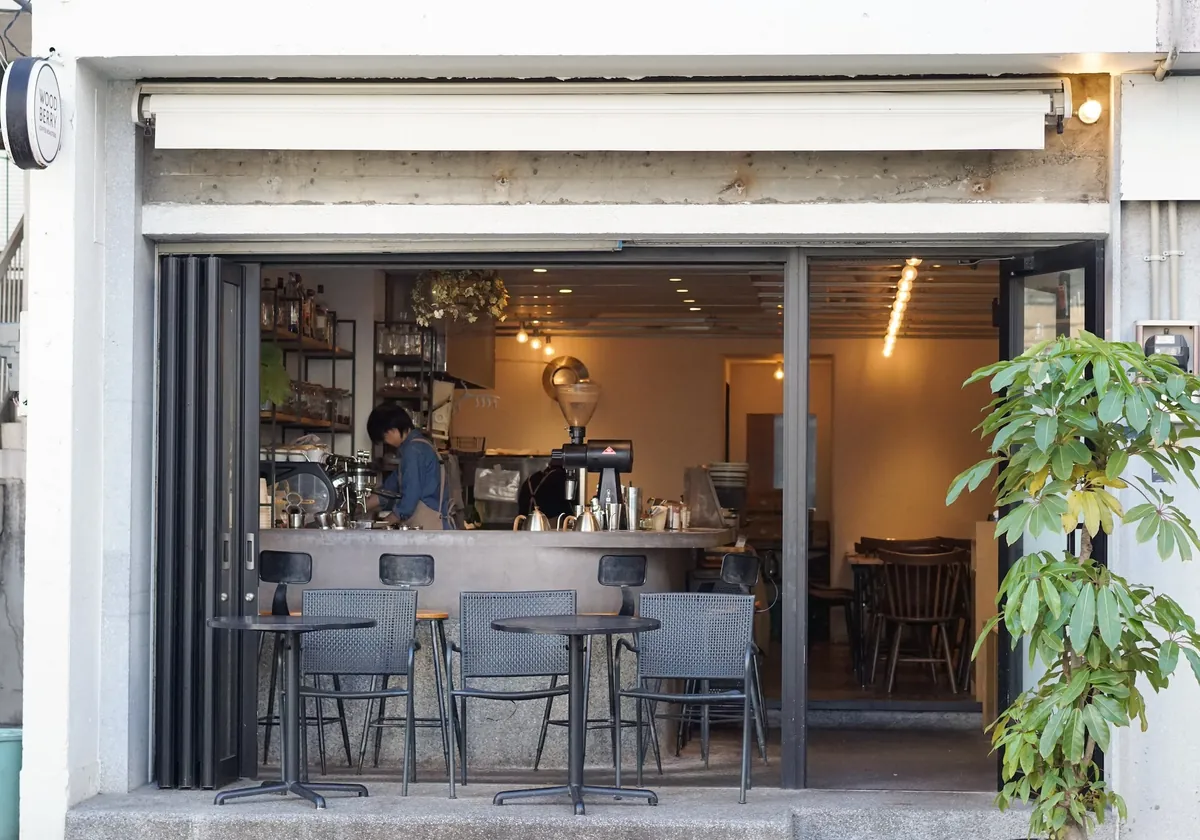
Every venue in this guide roasts its own coffee and pours it in its own shops. Two of them go back decades: cafe Bach, a Taito café since 1968, hand-picks and roasts its own coffee, and HORIGUCHI COFFEE was founded in Setagaya in 1990. Sarutahiko Coffee, founded in Ebisu in 2011, now runs more than twenty shops and roasts every bean at its Chofu Roasting Hall. ONIBUS, WOODBERRY, LIGHT UP, GLITCH, PASSAGE and LEAVES opened between 2012 and 2019. GLITCH and PASSAGE roast light. PASSAGE’s founder won the World AeroPress Championship, and LEAVES has been a Sprudge Notable Roaster twice. OBSCURA has stands in Sangenjaya and Shibuya and a roastery café in Hiroshima, and COFFEE VALLEY roasts on the third floor of its Ikebukuro shop. Their shops spread from Shibuya, Ebisu and Nakameguro in the west to Nihonbashi, Jimbocho and Sumida in the east, and out to Kichijoji and Mitaka.
cafe Bach, Nihonzutsumi
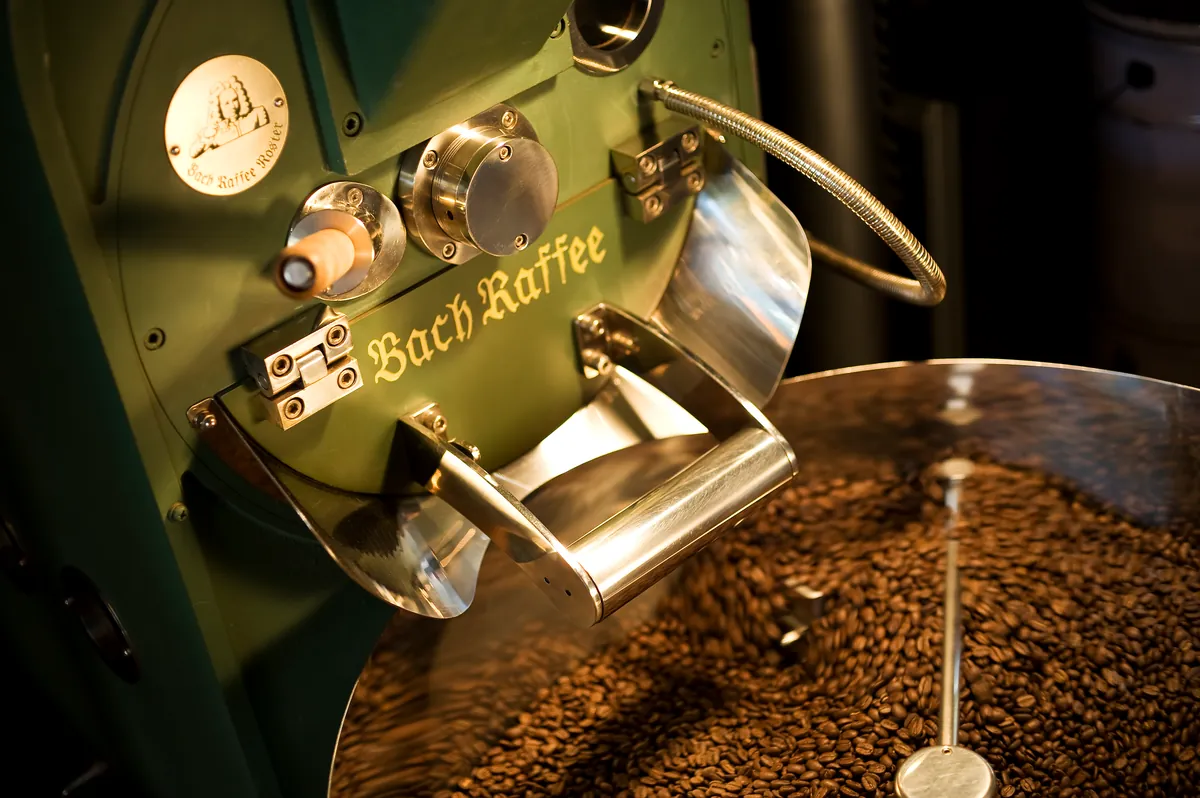
cafe Bach opened in 1968 as a café run by Mamoru and Fumiko Taguchi in Nihonzutsumi, in Taito, and it now roasts its own coffee and bakes its own cakes and bread. Good coffee, for Bach, has three conditions: beans hand-picked one by one, an even roast right through to the core on its own roasting machines, and only as much roasted as each day needs. Its range runs from light to dark and centres on single origins, with one blend for each roast degree, and the Bach Blend was served at the leaders’ dinner of the 2000 Okinawa summit. From 1978 Mamoru Taguchi travelled to producing countries, advised farms in several of them and began training younger café owners, many of whom now run cafés across Japan. Bach calls cakes coffee’s “lover” and bread its “spouse”.
HORIGUCHI COFFEE, Setagaya, Komae and Otemachi
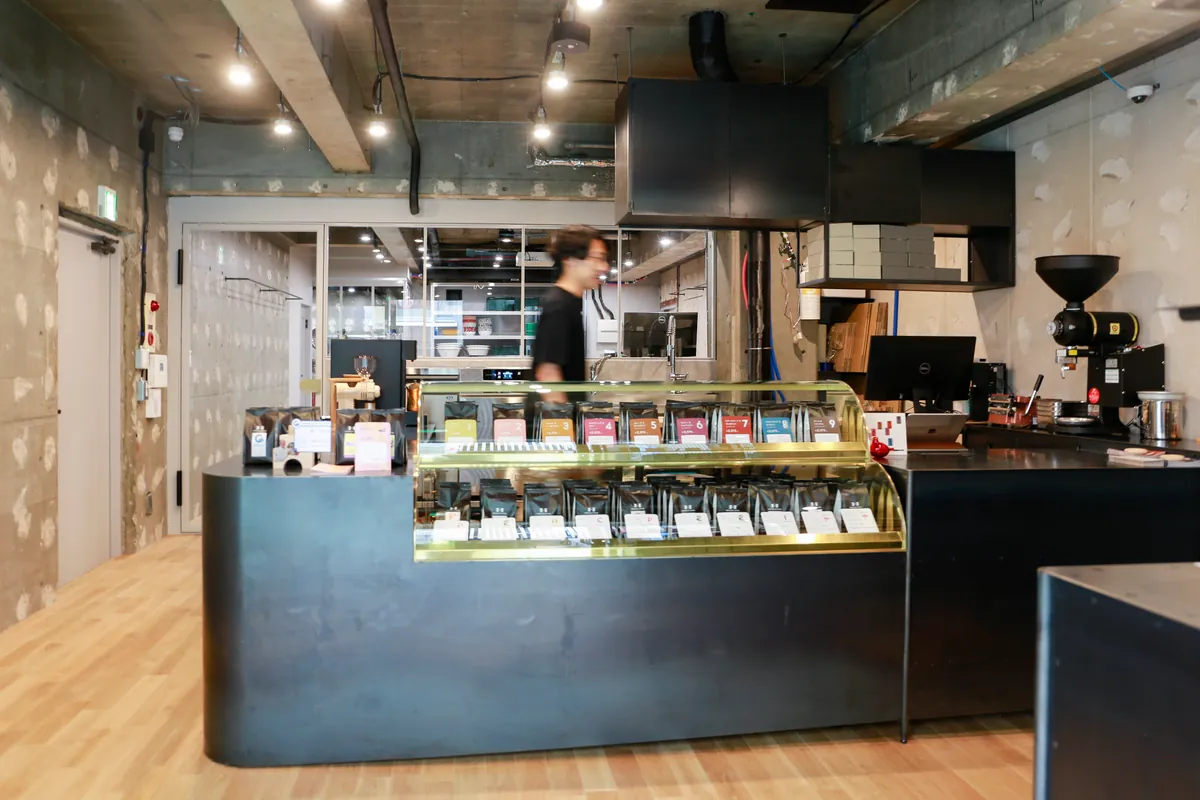
HORIGUCHI COFFEE was founded in Setagaya by Toshihide Horiguchi in May 1990. It set up a research institute in 2002 to study how growing and processing shape flavour, ships green coffee in refrigerated containers, and since 2019 has roasted at its Yokohama Roastery, where every batch is sorted twice by machine and once by hand. Nine CLASSIC blends, numbered #1 to #9, run from a high roast to an Italian roast beside its single origins. The Setagaya shop keeps the feel of a classic kissaten, the Komae shop reopened in 2023 as a “Coffee Civic Center” with about twenty coffees in its bean case and paper drip by the cup, and the Otemachi One bar serves drip and espresso near the Imperial Palace gardens. The Uehara shop, renewed in September 2026, sells beans and roasts samples in its lab.
Sarutahiko Coffee, Ebisu, Harajuku and Chofu
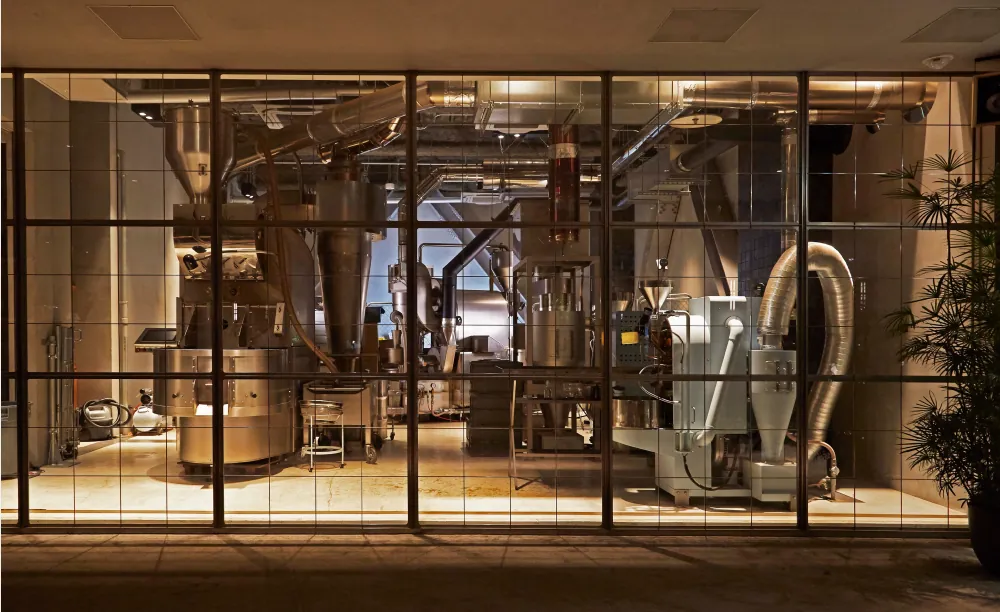
Sarutahiko Coffee opened in Ebisu in June 2011 as “a coffee shop where a single cup makes you happy” and started roasting in 2013. Since 2017 it has roasted at the Chofu Roasting Hall, a café with the company’s roasting base, and every bean it serves or sells is roasted in house and cupped twice, straight after roasting and the next morning. It buys by direct trade and gives part of its profit to World Coffee Research. Its baristas have won the Japan Latte Art Championship five years running and the 2024 Japan Barista Championship. As well as the Ebisu flagship, it has The Bridge in Harajuku station, its city flagship, and cafés from Shinjuku and Ikebukuro to Shimokitazawa, Kichijoji and the Imperial Palace East Gardens.
ONIBUS COFFEE, Nakameguro, Yakumo and Shibuya
ONIBUS COFFEE was founded in Tokyo in January 2012 and is led by Atsushi Sakao. It buys only coffees that score 85 points or more, buys as directly as it can, has written transparency reports on its green coffee buying since 2022 and became a certified B Corp in July 2026. In Tokyo it runs a coffee stand by Nakameguro station, a second Nakameguro shop, its roastery shop in Yakumo and a shop in Jiyugaoka, along with two ABOUT LIFE COFFEE BREWERS stands in Shibuya.
WOODBERRY COFFEE, Yoga, Ogikubo and Shibuya
WOODBERRY COFFEE opened in Yoga, Setagaya, in June 2012 and now roasts every coffee at its four-floor Ogikubo flagship on a Loring S35 Kestrel. It buys by direct trade, and since 2022 it has leased a plot at Finca Naranjales in Jalapa, Guatemala, where it designs its own fermentation and drying. Its eleven shops include the Shibuya café on the approach to Hikawa Shrine, with meals and coffee cocktails all day, a vegan and gluten-free bakery nearby, a takeaway stand in Daikanyama, cafés in Gakugei-daigaku, Futako-Tamagawa, Komazawa and Oimachi, and two more in Tama-Plaza and Kamakura.
LIGHT UP COFFEE, Kichijoji, Shimokitazawa and Mitaka
LIGHT UP COFFEE opened in Kichijoji in July 2014. Its founder, Yuma Kawano, won Japan’s national latte art championship in 2012. It roasts for clarity and a sweetness that lasts as the cup cools, and since 2023 it has roasted on a 22 kg Probat in a former car factory in Mitaka, which is also a coffee shop. The Kichijoji shop has a flight of three single origins found only there, and Shimokitazawa, opened in 2017, serves an espresso flight and holds a monthly public cupping.
GLITCH COFFEE & ROASTERS, Jimbocho, Nihonbashi and Ginza
GLITCH COFFEE & ROASTERS opened in 2015 in Jimbocho, the neighbourhood where Japan’s kissaten culture is still alive. It works only with single origins and roasts them light, sorted into four groups: Competition, Hard to Find, Innovation and Traditional. The Jimbocho shop always has more than ten coffees on the shelf and serves hand drip, with a brewer that changes with the day of the week, and espresso drinks. GLITCH also has shops in Nihonbashi and Ginza.
PASSAGE COFFEE, Shiba, Ichigaya and Mitaka
PASSAGE COFFEE was founded in 2017 by Shuichi Sasaki, who in 2014 became the first Japanese winner of the World AeroPress Championship. The idea came from the crowds at independent coffee stands in Melbourne, and its theme is coffee you want to drink every morning. It roasts light on a Probat UG22 and a Giesen W6A, and runs shops in Shiba, Soshigaya, Ichigaya and Nihonbashi and a roastery and coffee shop in Mitaka.
LEAVES COFFEE ROASTERS, Honjo
LEAVES COFFEE ROASTERS is the roastery of Yasuo Ishii, a former professional boxer who taught himself to brew and roast and started roasting in January 2019. It roasts on a Probat UG-15 and a Stronghold S7X, Sprudge named it a Notable Roaster in 2021 and 2022, and Ishii was runner-up at the 2025 Japan Brewers Cup. The roastery in Honjo, Sumida, is also its one coffee bar.
OBSCURA COFFEE ROASTERS, Sangenjaya and Shibuya
OBSCURA COFFEE ROASTERS sends its team to several farms and cooperatives every year and pays above the general market price for its green coffee. Each lot is roasted to suit it, some for fruit, others for sweetness and richness. Its Fruit Blend and Chocolate Blend have been made since the company started. In Sangenjaya, Laboratory and Home sell freshly roasted beans and takeaway coffee, Home with flowers and vases too, and Front is a takeaway counter at Shibuya station. OBSCURA also has shops in Hiroshima, one of them with a roastery.
COFFEE VALLEY, Ikebukuro
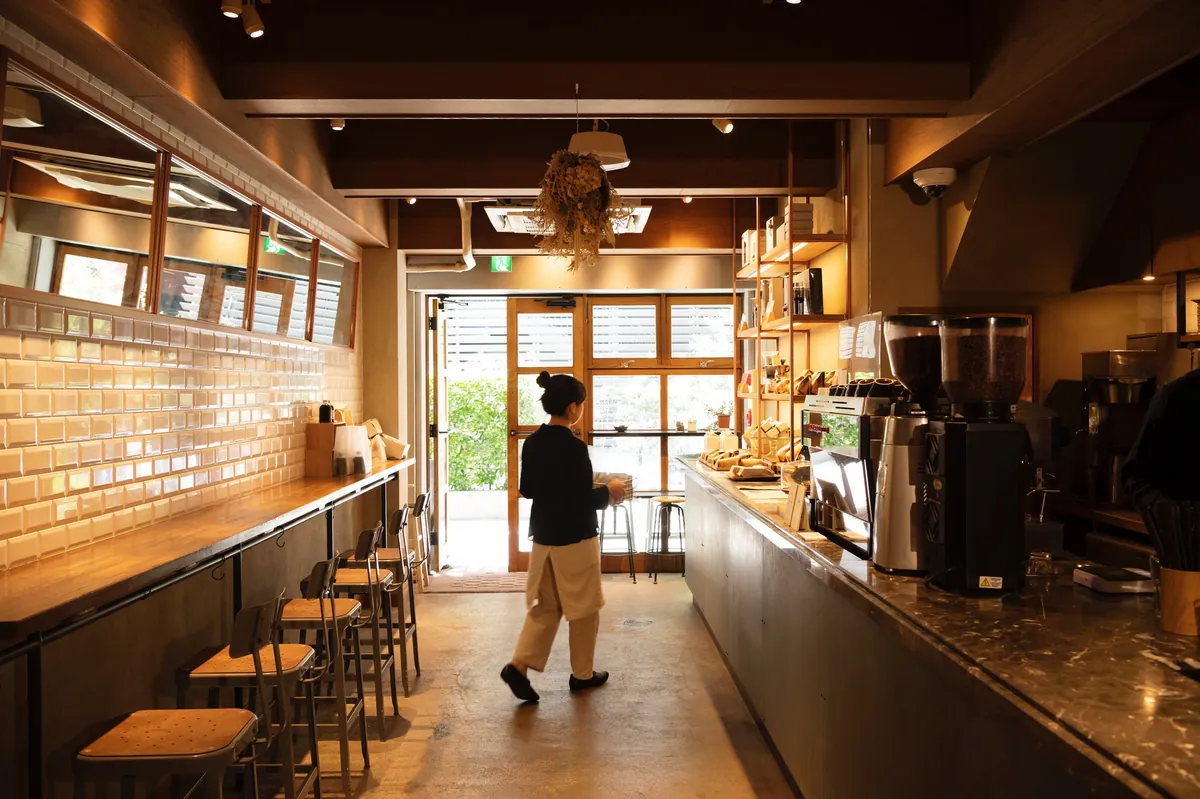
COFFEE VALLEY is a coffee shop in Ikebukuro that roasts higher-grade lots in its third-floor roastery, from light to dark, and suggests a way of brewing to suit each coffee. Its own 3PEAKS set serves one coffee as an espresso, an espresso macchiato and a drip coffee. Toast comes on wholemeal bread from Parlor Ekoda, and the shelf holds the house VALLEY BLEND, single origins and a High Quality Line of limited lots.
Roasters and cafés from elsewhere
Fuglen, from Oslo, has four bars in Tokyo, in Tomigaya, Asakusa, Hanegi Kōen and Sangūbashi, and roasts in Noborito, Kawasaki. Single O, from Sydney, roasts at its Ryogoku Roastworks and has shops in Hamacho, Shibuya, Kanda Awaji and Yurakucho. MAME, from Zurich, has KURO MAME in Toranomon and a shop in Sendagaya. Menotti’s Coffee Stop, from Los Angeles, has a café in Shimokitazawa.
What you need to know about Tokyo specialty coffee
Which Tokyo coffee shops roast their own coffee? All eleven in this guide: cafe Bach, HORIGUCHI COFFEE, Sarutahiko Coffee, ONIBUS COFFEE, WOODBERRY COFFEE, LIGHT UP COFFEE, GLITCH COFFEE & ROASTERS, PASSAGE COFFEE, LEAVES COFFEE ROASTERS, OBSCURA COFFEE ROASTERS and COFFEE VALLEY. HORIGUCHI COFFEE roasts in Yokohama.
Where can you drink coffee at the roastery? Sarutahiko’s Chofu Roasting Hall, WOODBERRY’s Ogikubo flagship, LIGHT UP’s Mitaka shop, PASSAGE’s Mitaka roastery, LEAVES in Honjo, ONIBUS in Yakumo and COFFEE VALLEY in Ikebukuro all roast where they serve.
Where is the light-roast coffee? GLITCH roasts only single origins, light, and PASSAGE roasts light to draw out the fruit of the bean.
Where can you try several coffees side by side? LIGHT UP’s Kichijoji shop serves a flight of three single origins and Shimokitazawa an espresso flight, COFFEE VALLEY’s 3PEAKS pours one coffee three ways, and HORIGUCHI’s Futako-Tamagawa stand serves tasting sets.
Which roasters have won championships? Shuichi Sasaki of PASSAGE won the World AeroPress Championship in 2014, Yuma Kawano of LIGHT UP won Japan’s latte art championship in 2012, Yasuo Ishii of LEAVES was runner-up at the 2025 Japan Brewers Cup, and a Sarutahiko barista won the 2024 Japan Barista Championship.
Where can you buy dark roasts? cafe Bach roasts from light to dark, with a blend for each roast degree, HORIGUCHI COFFEE’s CLASSIC blends run from a high roast to an Italian roast, and OBSCURA’s Chocolate Blend is its dark house blend.
Photo credits
Photographs belong to the businesses and are reproduced from their official websites with attribution.