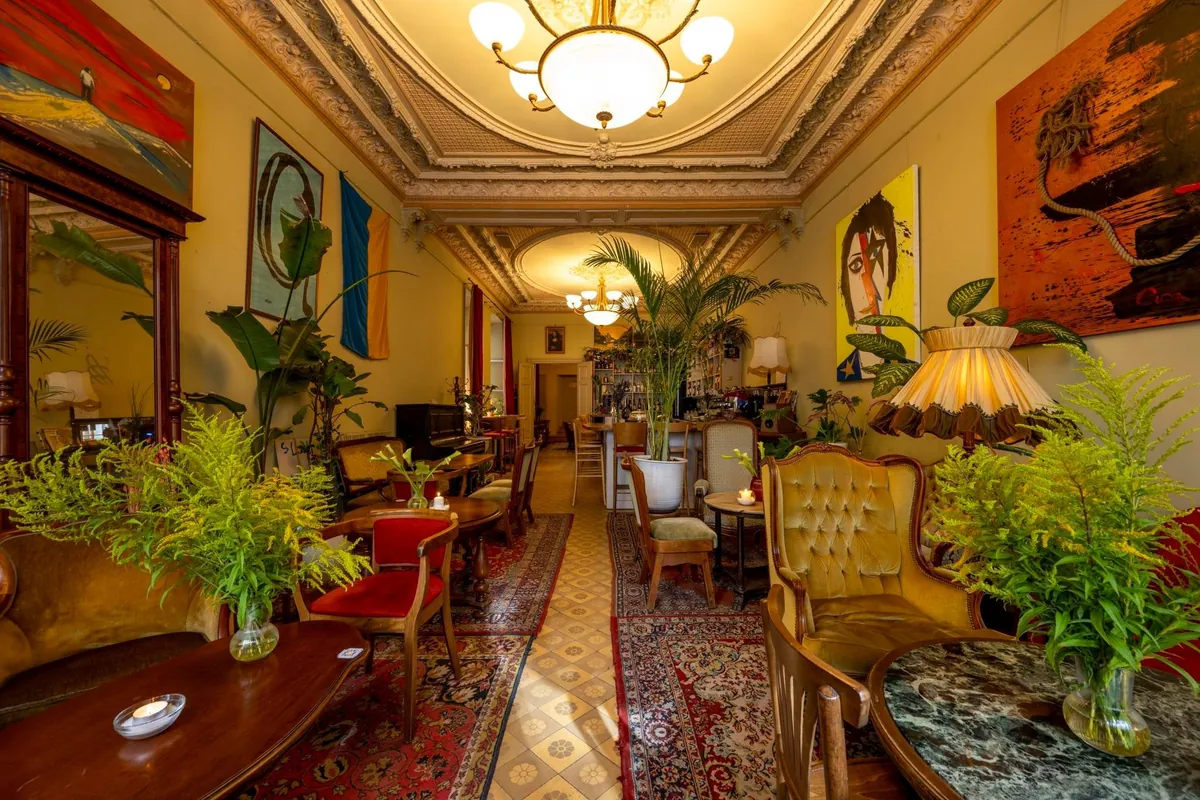
Eskedar Tilahun was born in Ethiopia, left the country in 2005 and built Eskedar Coffee in Vilnius, where it has grown into four cafés, an online shop and the Eskedar Coffee Foundation, which is building a primary school in Yirgacheffe for the children of the farmers who grow its coffee. Every bean Eskedar roasts comes from Africa, most of it from Ethiopia, and it is roasted in small batches in Vilnius without beans from other continents blended in. Eskedar Tilahun still roasts by hand in the Ethiopian way, as she did for her grandparents when she was a little girl.
The flagship café is in Signatarų namai, the House of the Signatories in the Old Town, where Lithuania’s Act of Independence was signed on 16 February 1918. The merchant Karolis Štralis opened the café Baltasis Štralis in the same room in 1852, and it ran for almost a hundred years. The Lithuanian National Museum reopened the café in 2021 through a tender, and Eskedar won it. Four doors down on the same street, Eskedar Coffee and Books is a smaller, quieter room built around books and daylight. Eskedar Coffee Terrace has a small stage and an outdoor bar and opens from late spring to early autumn, and Eskedar Coffee Flow in Šnipiškės is the largest, with room for 300 people standing.
Buna, the Amharic word for coffee, gives the house blend its name. Eskedar holds the Ethiopian coffee ceremony as a ticketed event, three brews from one batch of green beans roasted by hand, served with popcorn and incense, and each room can be booked for Ethiopian dinners. Eskedar Attire, the founder’s clothing line, brings African print together with Lithuanian linen.
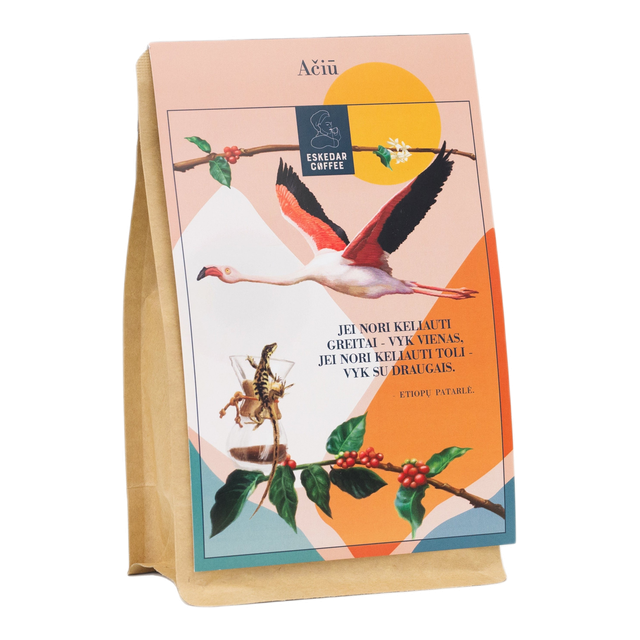
Coffee on the shelf
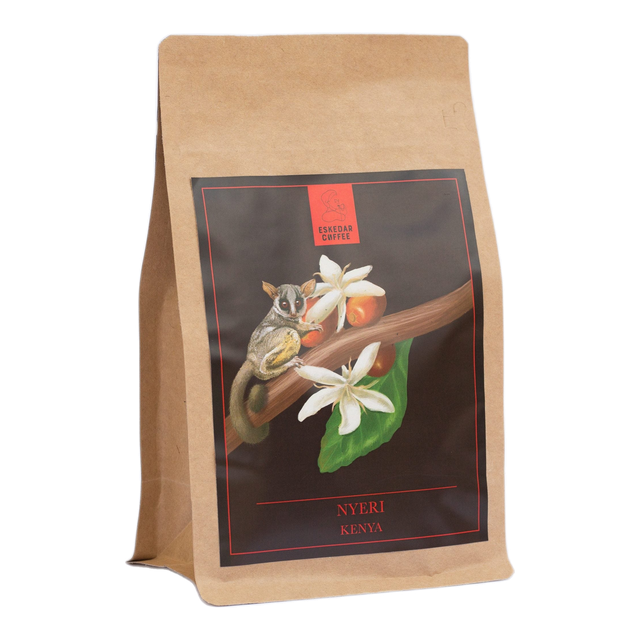
- Yellow currant
- Blueberry
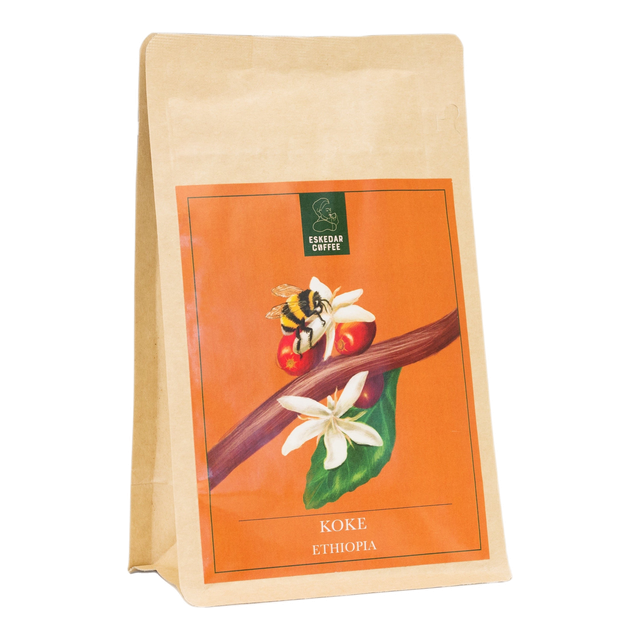
- Peach
- Honey
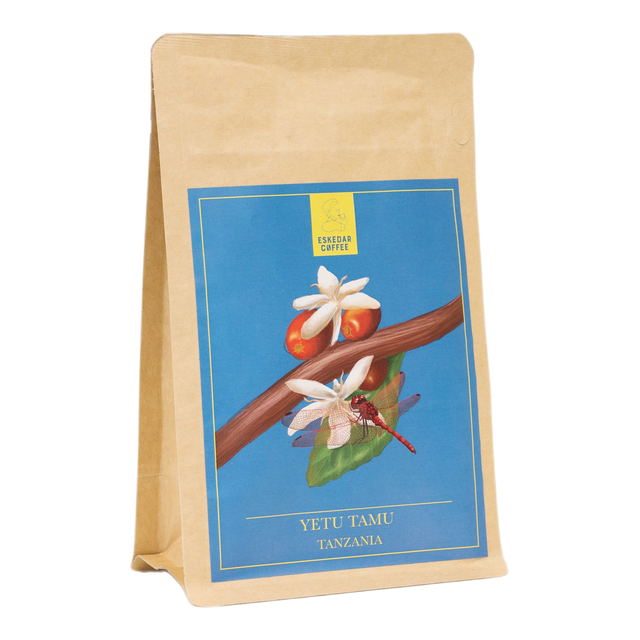
- Fruity
- Mango
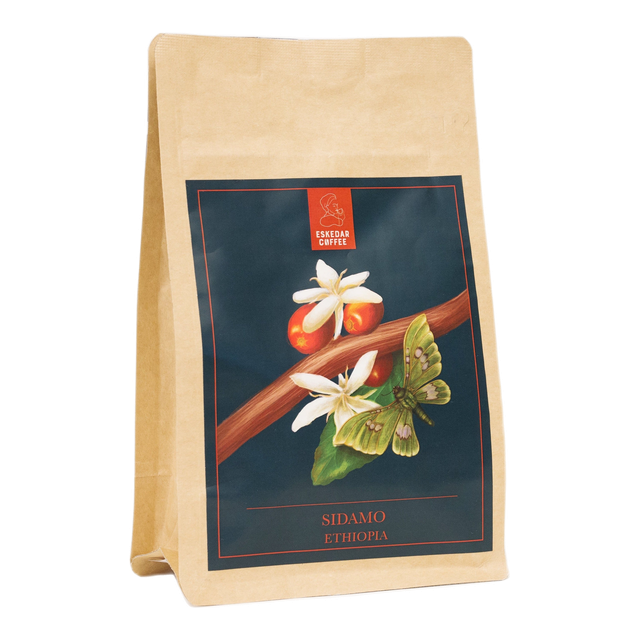
- Red currant
- Floral
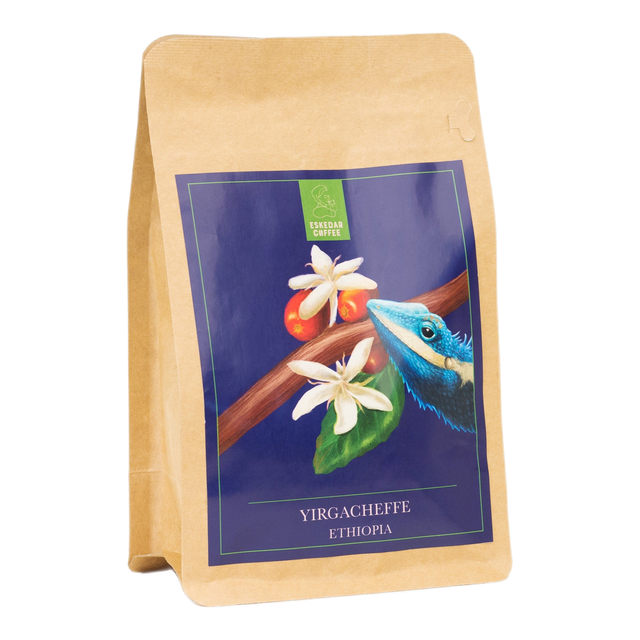
- Blueberries
- Chocolate
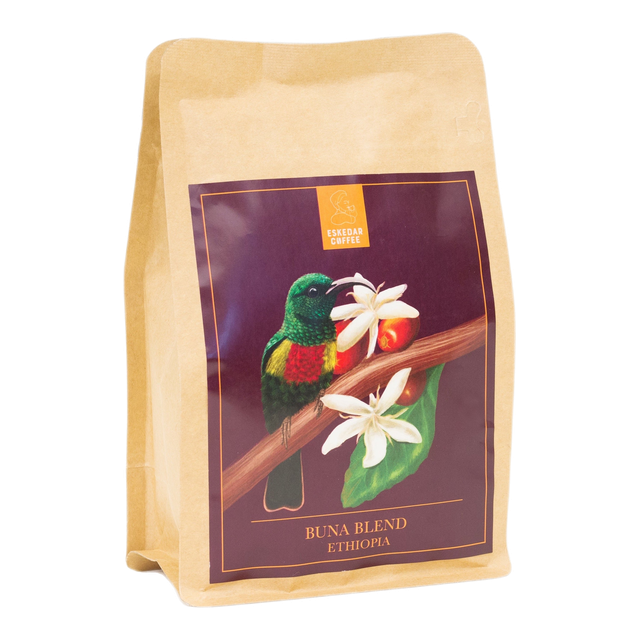
- Dark chocolate
- Balanced
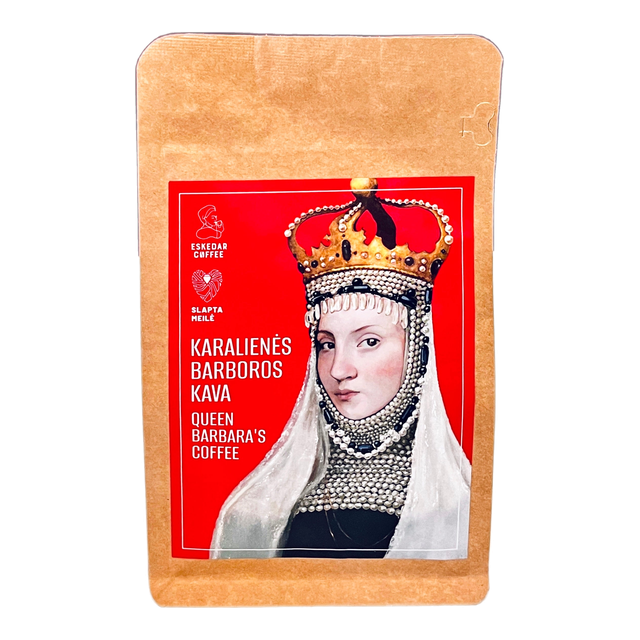
- Fruity
- Zesty
- Floral
- Chocolate
Photograph: Eskedar Coffee