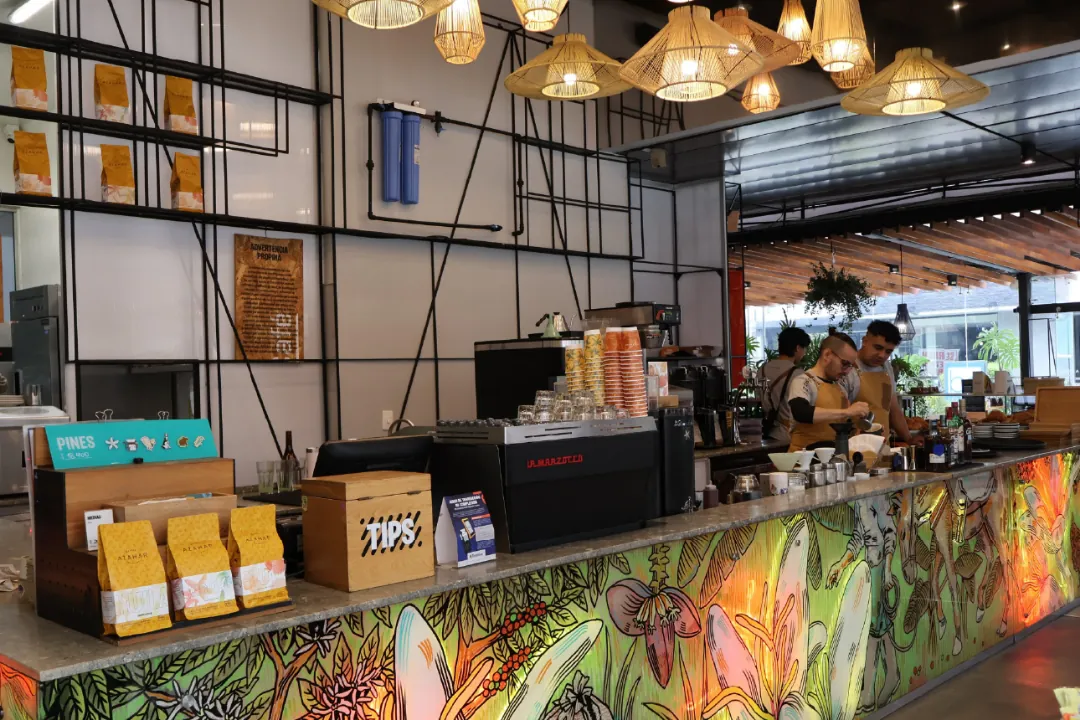
Azahar Coffee buys coffee directly from producers, cooperatives and growers’ associations across Colombia, and its team travels the country all year, visiting some of the smallest farms. Colombia has always exported its best coffee, and Azahar keeps that custom, shipping micro-lots and regional blends of green coffee to importers and roasters abroad. The rest it roasts on its own roaster in the department of Quindío and serves in Bogotá because, as Azahar puts it, “Colombia also deserves to enjoy its best coffee”.
Instead of the daily market price, which follows the New York exchange, the exchange rate and a premium for Colombian coffee, Azahar pays producers a fixed price, set higher and steadier, to cover their production costs and reward quality. For each coffee it uses the Sustainable Coffee Buyer’s Guide to estimate what the price means for the producer, the family and the workers, and several recent lots reached or passed the guide’s Prosperous Price, among them Rafael Aya’s semi-washed Caturra from finca La Virginia in Timaná, Huila.
The shelf runs from nanoeditions of a single grower’s coffee, such as the Caturrón that Oliver Berdugo developed on his farm in Acevedo, Huila, to microlots in 340 g bags and blends such as Fruta and Arcoíris in bags of up to a kilo. Arcoíris changes with every edition, and Azahar’s quality team develops a roast profile for the microlots in each one.
Azahar has cafés by Parque 93 and in El Nogal, both with table service, a café in the public area of El Dorado airport and a take-away counter. Azahar has run filter-brewing workshops at its El Nogal café.
Coffee on the shelf
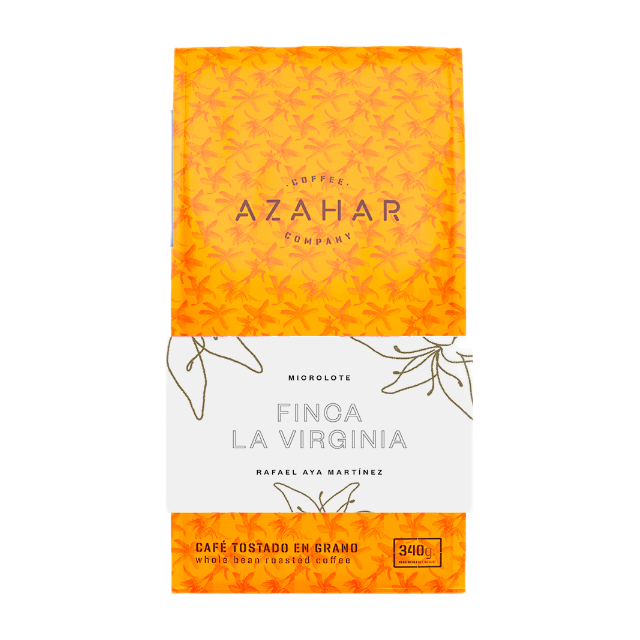
- Panela taffy
- Caramel
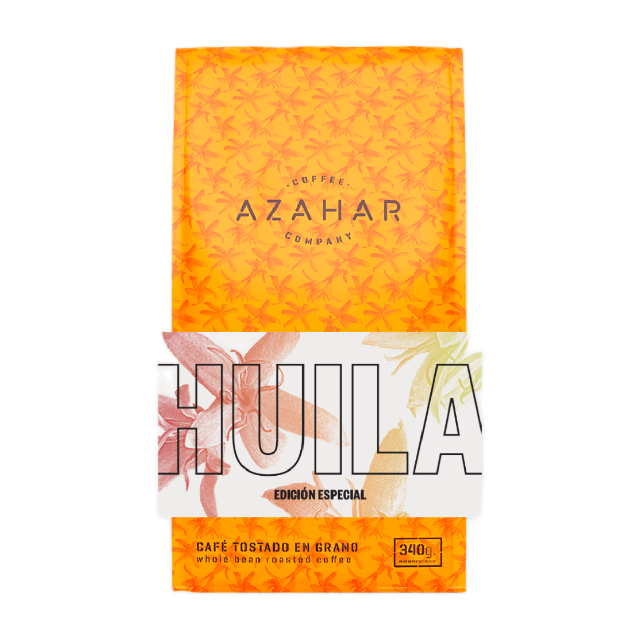
- Red plum
- Grape must
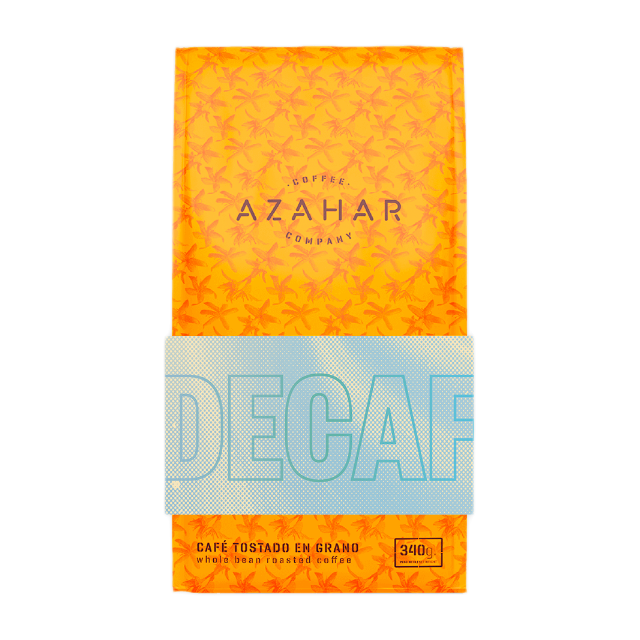
- Caramel
- Banana
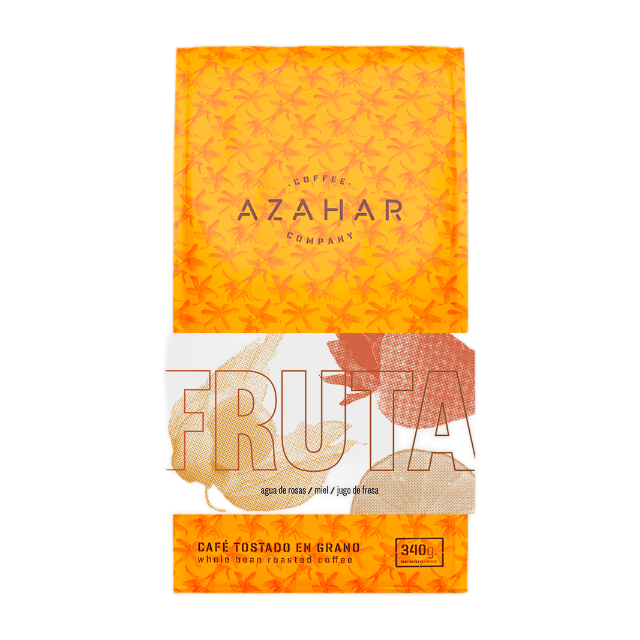
- Rose water
- Honey
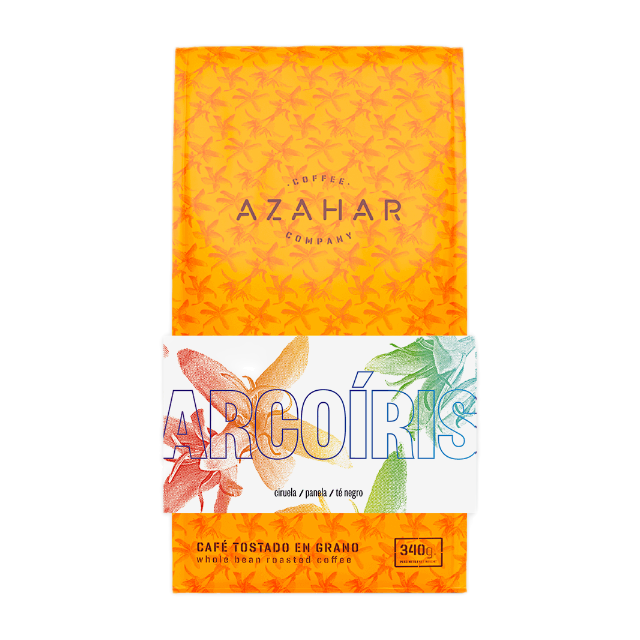
- Plum
- Panela
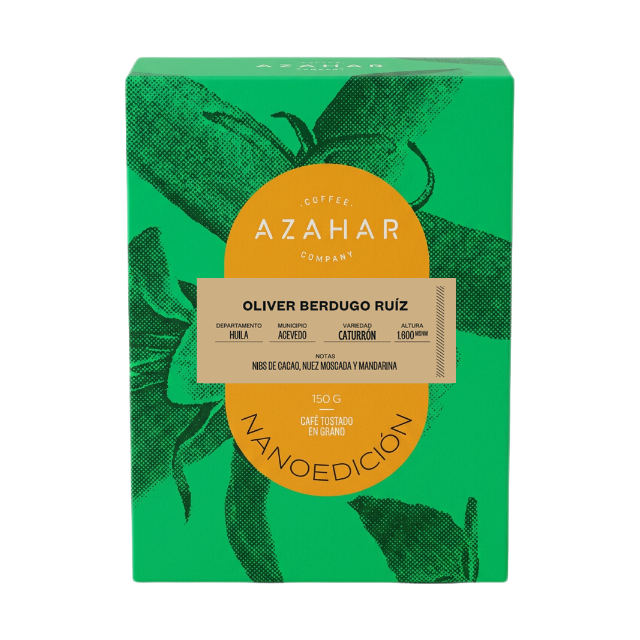
- Cacao nibs
- Nutmeg
Photograph: Azahar Coffee