Cold brew is coffee steeped in cold or room-temperature water for a long time, typically 8 to 24 hours1. It’s often brewed as a concentrate and diluted with ice or milk when it’s served1.
What’s cold brew?
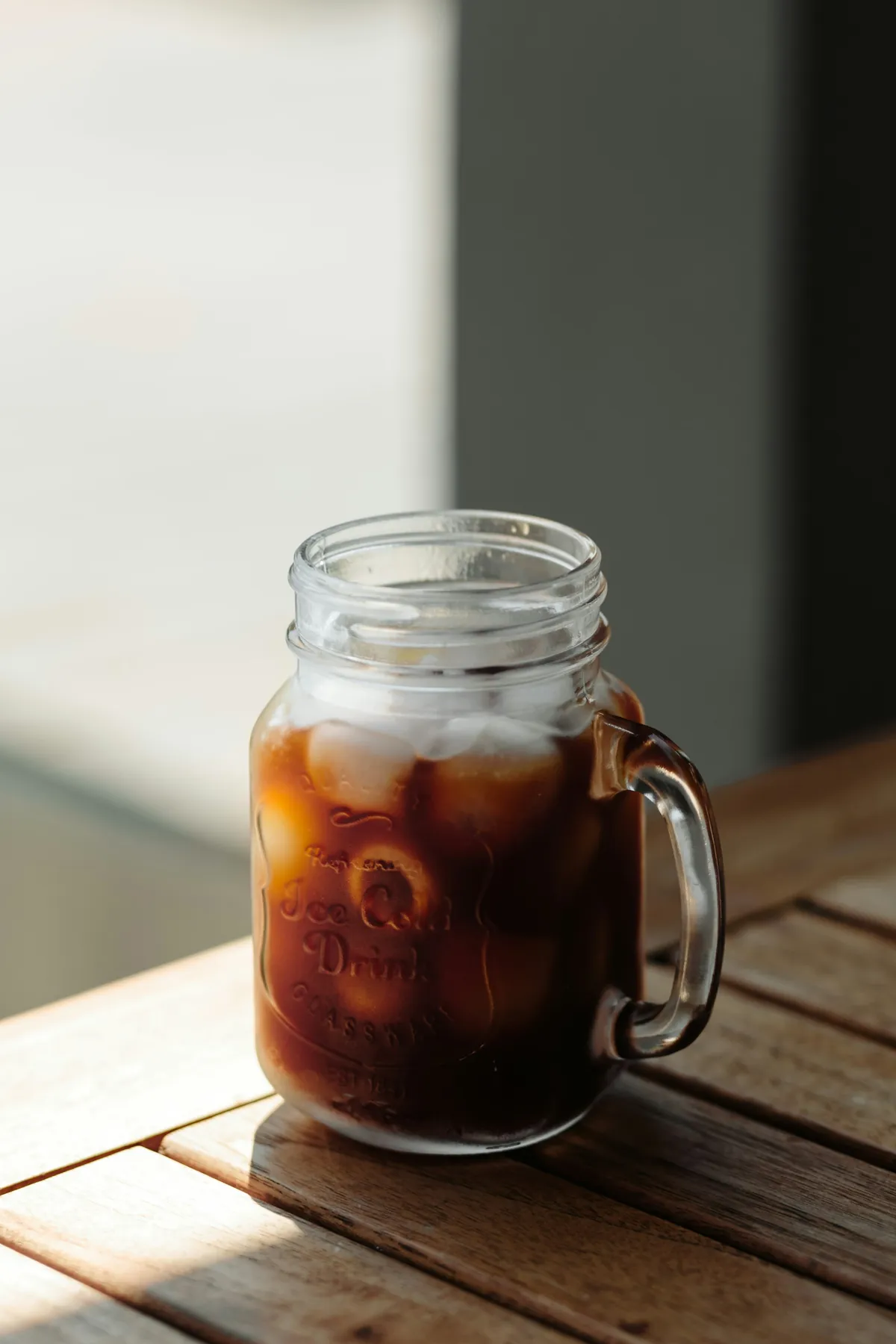
Cold brew is a full-immersion method, which means the grounds stay submerged in the water for the whole brew2. The water is at room temperature, 20 to 25 °C, or colder3, and because cold water has less energy than hot water it extracts the coffee much more slowly, which is why the steep lasts hours2.
Cold brew vs iced coffee
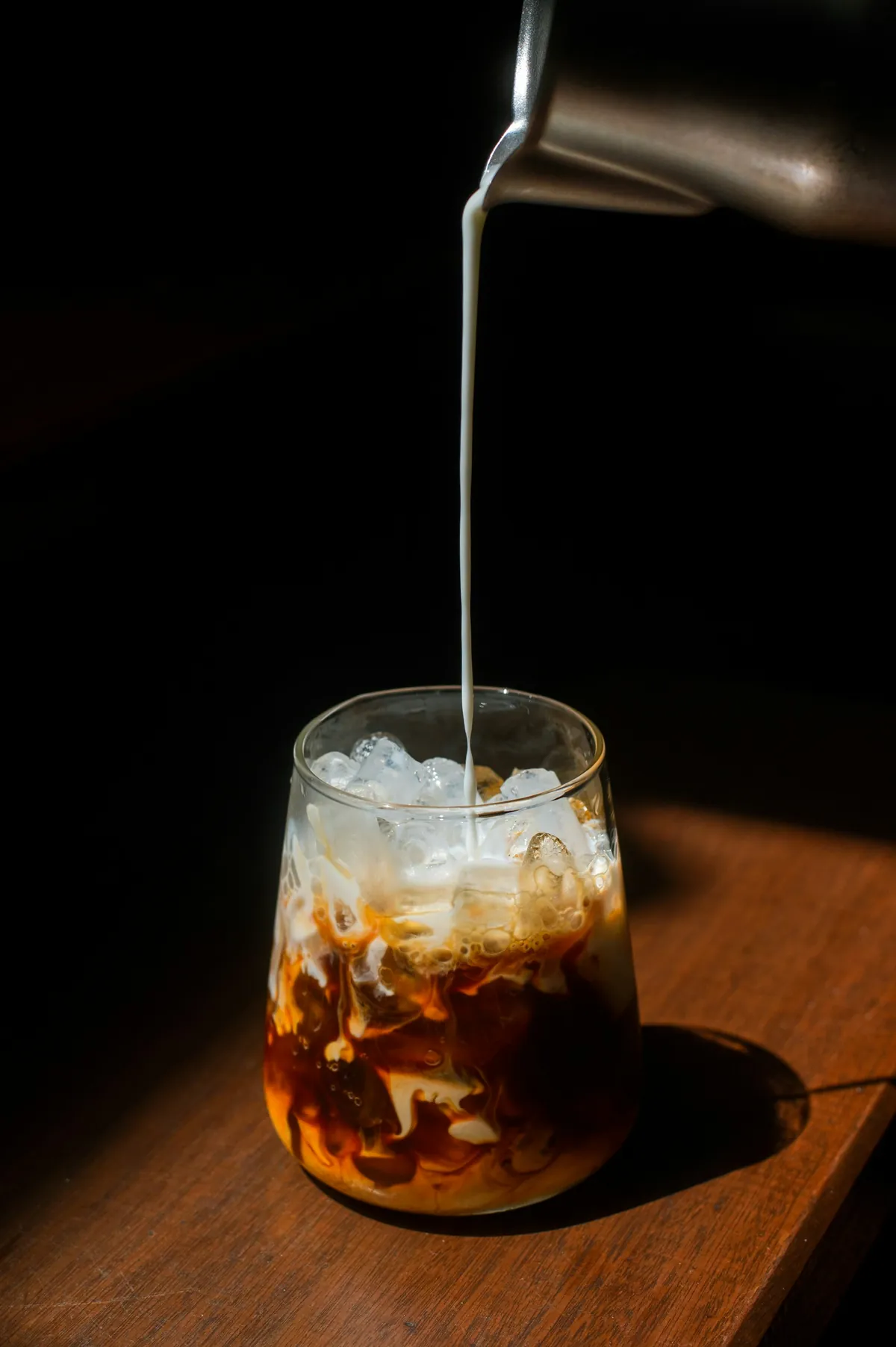
Iced coffee is brewed hot by any standard method and served cold over ice, so it’s ready in minutes where cold brew takes hours12. Flash brew, also called Japanese iced coffee, is a third method, in which hot coffee is brewed directly onto ice at a ratio that allows for the melting1.
How to make cold brew
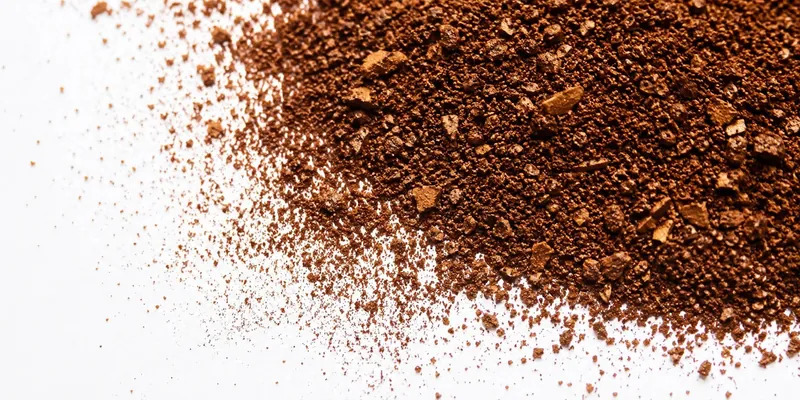
Cold brew recipes call for a coarse grind, because a coarser grind compensates for the long contact time and a finer one overextracts and tastes bitter2. In a Toddy brewer, 340 g of coarse-ground coffee and 1.9 litres of filtered water go into a paper filter bag, and the coffee steeps at room temperature for 8 to 24 hours before the concentrate drains through a felt filter4. Toddy’s original 1964 method uses the felt filter alone and gives a concentrate with virtually no sediment4.
When Megan Fuller and Niny Rao, chemists at Thomas Jefferson University in Philadelphia, sampled cold brew as it steeped at 21 to 25 °C, caffeine and 3-chlorogenic acid both reached equilibrium between six and seven hours, well short of the steep in typical recipes3.
Cold brew recipe
- Set your Comandante grinder 4 clicks coarser than your regular V60 grind.
- Steep the coffee for 12 to 24 hours, in the fridge or on the counter. The counter brews faster, because colder water extracts more slowly2.
- Brew a small batch in a Hario Mizudashi cold brew pot first, and change the grind and the steeping time until you like the result.
- Once it’s right, move to a Toddy brewer to make enough for a week or so.
Cold brew coffee ratio
A concentrate is brewed at about 1:5 of coffee to water5, and cold brew that’s bottled undiluted at about 1:146.
| Recipe | Coffee to water | Steep | Served |
|---|---|---|---|
| Concentrate in a Toddy brewer4 | 340 g to 1.9 litres, about 1:5.6 | 8 to 24 hours at room temperature | 1 part concentrate to 2 parts water or milk |
| Home concentrate2 | 1:8 | 18 to 24 hours at room temperature | One-third concentrate to two-thirds water or milk, over ice |
| Bottled, ready to drink6 | 70 g per litre, about 1:14 | 17 hours at 4 °C | Undiluted |
Is cold brew less acidic?
Cold brew is often described as sweeter or less acidic than hot coffee5. Rao and Fuller tested the claim in 2018 by brewing light roasts from six growing regions hot and cold at the same ratio7. The pH of the two came out comparable, between 4.85 and 5.13, but every cold brew had less total titratable acid than its hot counterpart, which suggests that hot water extracts more of the coffee’s acids7. When they repeated the comparison in 2020 at three roast levels, the differences between the hot and cold brews widened as the roast got darker8.
At the UC Davis Coffee Center, 17 panellists tasted a washed, a honey-processed and a wet-hulled coffee brewed at 4 °C, 22 °C and 92 °C, with every sample diluted to the same strength and served cold5. Whatever the origin or roast, the hot brews scored higher for bitterness, sourness and rubber flavour, and the cold brews scored higher for floral flavour5. The team concluded that cold brew is less sour “but not necessarily less acidic chemically”5.
How much caffeine is in cold brew?
Fuller and Rao also compared the caffeine in hot and cold brews made at the same 1:10 ratio3. With a coarse-ground medium roast, the 24-hour cold brew held 1,230 mg of caffeine per litre and a six-minute hot French press held 970 mg3. With a medium grind the gap wasn’t statistically significant, because the smaller particles gave up nearly all of their caffeine in either brew3. Their 2020 study found similar caffeine in hot and cold brews at every roast level8.
How long does cold brew keep?
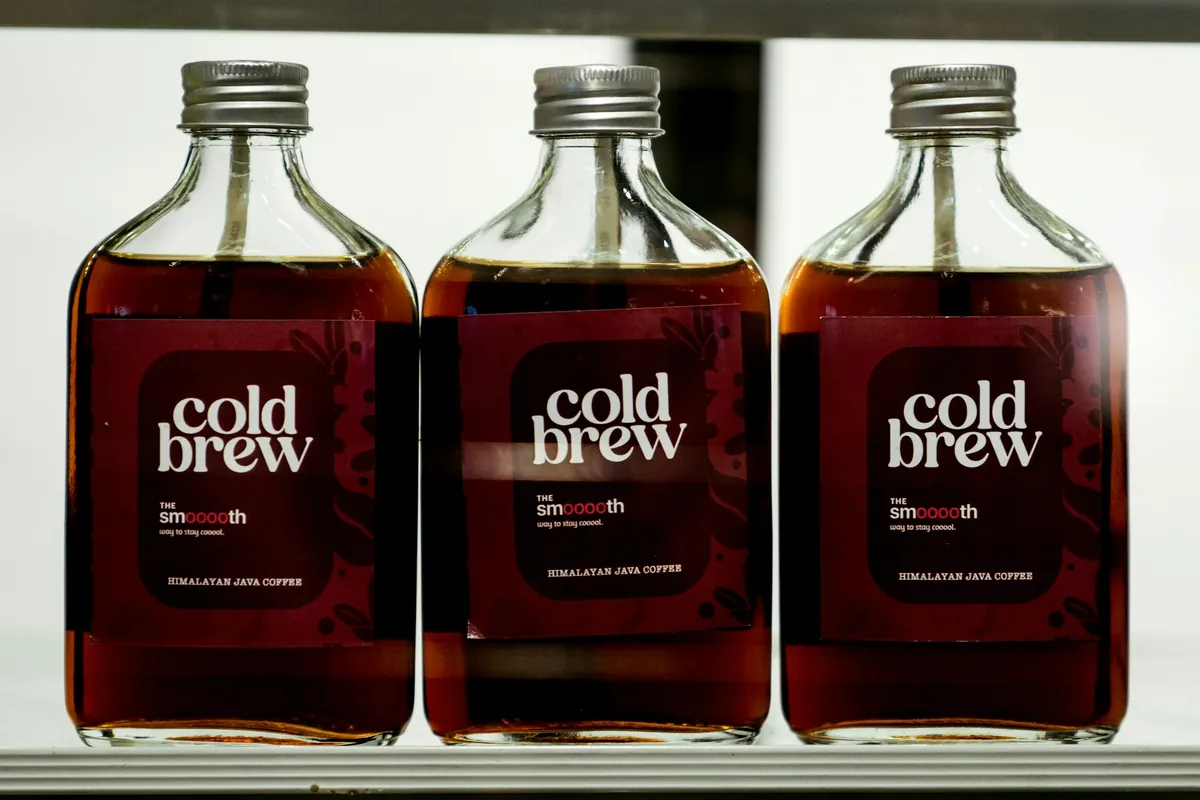
A Toddy concentrate keeps for up to two weeks in the fridge4, and the same goes for a 1:8 home concentrate2.
For a safety study that the National Coffee Association of the United States released in 20239, Eurofins Microbiology Laboratories stored full-immersion concentrate and bag-in-box cold brew at 29 °C for up to 11 days, with and without oxygen, and found no growth or toxin from six pathogens that included Salmonella, Listeria and C. botulinum910. The results apply to black cold brew, because cream or sugar would call for new studies10. Local health departments can class the cold brew a café makes as a food that needs temperature control10.
In a 2023 study from Burgos in Spain, E. coli, Listeria and Salmonella added to cold brew didn’t grow, but all three were still detectable after 60 days at 4 °C6.
What’s nitro cold brew?
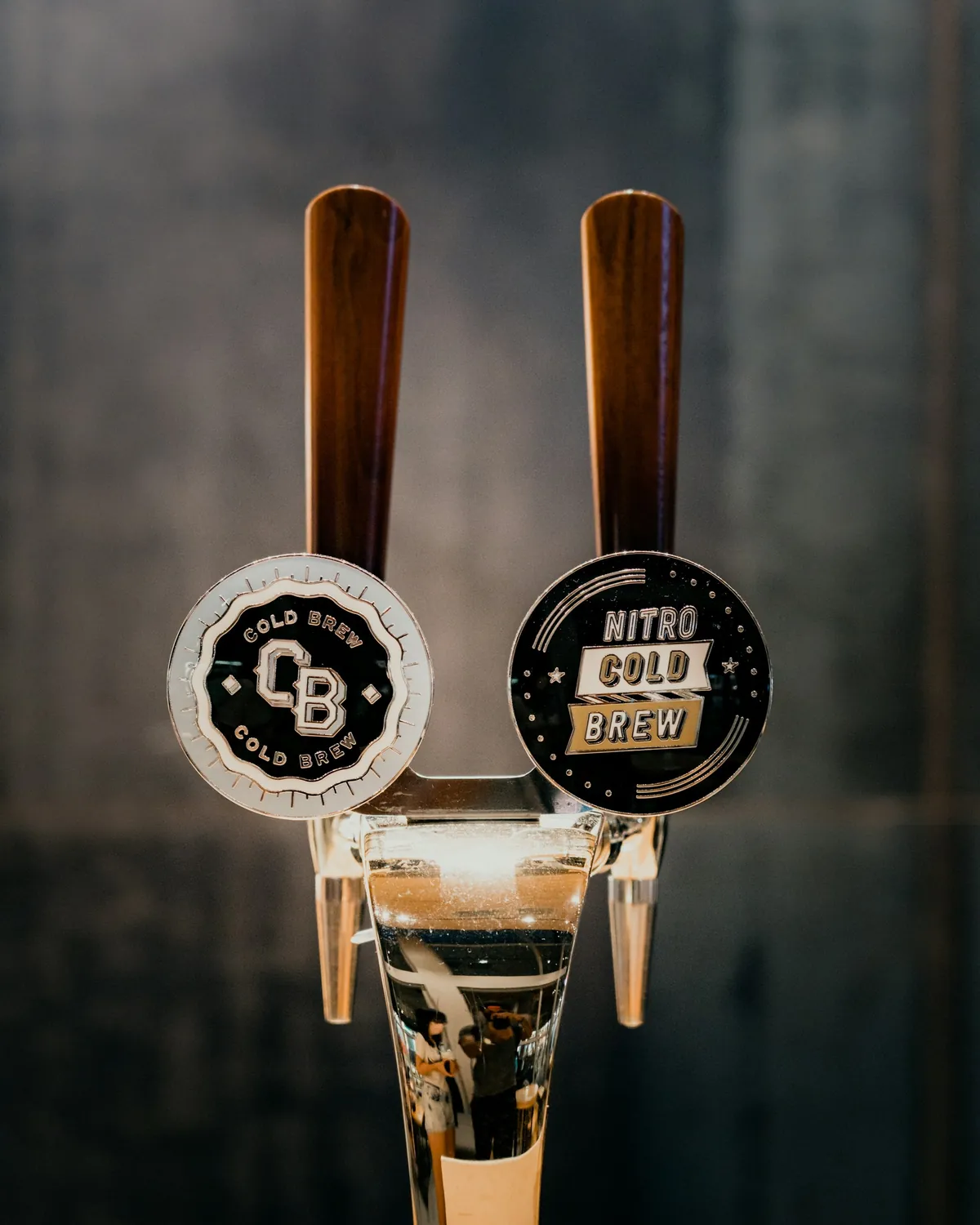
Nitro describes any coffee infused with nitrogen, either when it’s packaged or as it’s poured from a nitrogen-driven tap, and it’s most closely associated with cold brew1. Nitrogen forms much smaller bubbles in a liquid than carbon dioxide, and they take longer to separate and break down, which gives the drink a creamy feel in the mouth11.
The technique comes from beer, where Michael Ash developed it at Guinness in the 1950s12. A Guinness tap runs on 75% nitrogen and 25% carbon dioxide, but coffee is charged with nitrogen alone, because carbon dioxide strips the sweetness from black coffee12. Kegged nitro cold brew made its debut at the Slow Food Quiz Bowl in Austin, Texas, in 2012, and Mike McKim and Lorenzo Perkins, who both worked at the same Austin roaster that year, each claim to have invented it12.
Kyoto-style slow drip and the Dutch connection
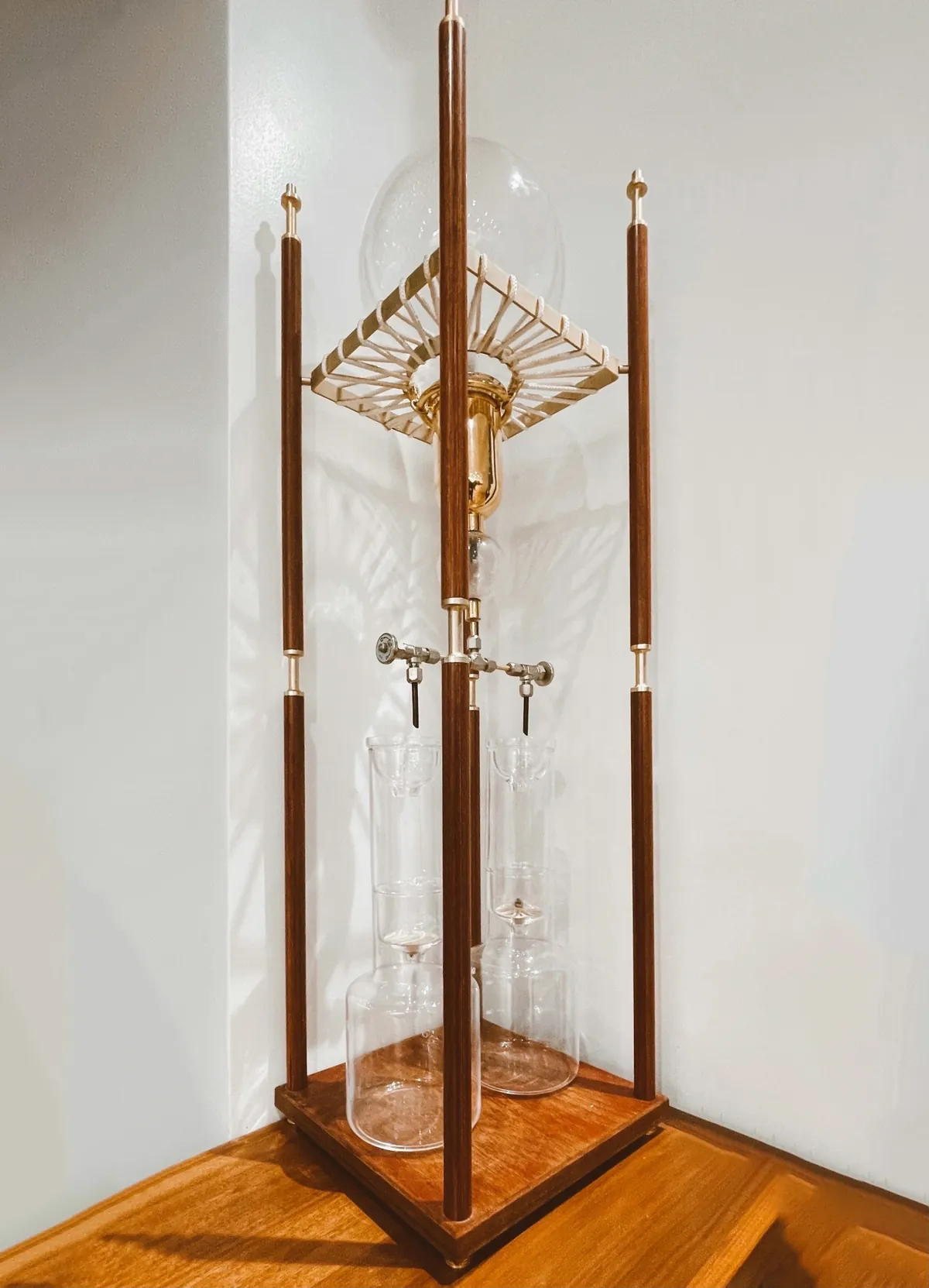
Slow drip is a different kind of cold brewing, in which the coffee isn’t immersed: water, ice or both sit at the top of a tower and are released one drop at a time onto a bed of ground coffee, and the concentrate collects underneath over 3 to 24 hours1. In English it’s called Kyoto-style or Japanese-style slow drip, and in Japan and South Korea, where it’s a common sight, it goes by the name Dutch coffee113. The method was reportedly invented by Dutch East India Company sailors, who needed a way to make coffee without lighting a fire on a wooden ship13.
References
- Daily Coffee News, cold new world: a guide to cold coffee differences and definitions
- Perfect Daily Grind, how do you make cold brew coffee at home?
- Fuller and Rao, the effect of time, roasting temperature, and grind size on caffeine and chlorogenic acid concentrations in cold brew coffee, Scientific Reports (2017)
- Toddy, Cold Brew System brewing guide
- Batali et al., sensory analysis of full immersion coffee: cold brew is more floral, and less bitter, sour, and rubbery than hot brew, Foods (2022)
- Polanco-Estibález et al., high-pressure processing for cold brew coffee: safety and quality assessment under refrigerated and ambient storage, Foods (2023)
- Rao and Fuller, acidity and antioxidant activity of cold brew coffee, Scientific Reports (2018)
- Rao, Fuller and Grim, physiochemical characteristics of hot and cold brew coffee chemistry: the effects of roast level and brewing temperature on compound extraction, Foods (2020)
- Daily Coffee News, NCA white paper builds a case for in-store cold brew safety
- National Coffee Association, cold brew white paper
- Cornell Food Venture Center, cold brew coffee is keeping me awake… and it's not the caffeine
- Good Beer Hunting, rising to the top: how nitro transformed beer and coffee
- Sprudge, Dutch coffee: Batavia's slow-dripped, cooled down take on a classic
Photo credits
- Nadia Valko, Unsplash License
- pariwat pannium, Unsplash License
- Frederick Shaw, Unsplash License
- isaac., Unsplash License
- Jon Tyson, Unsplash License