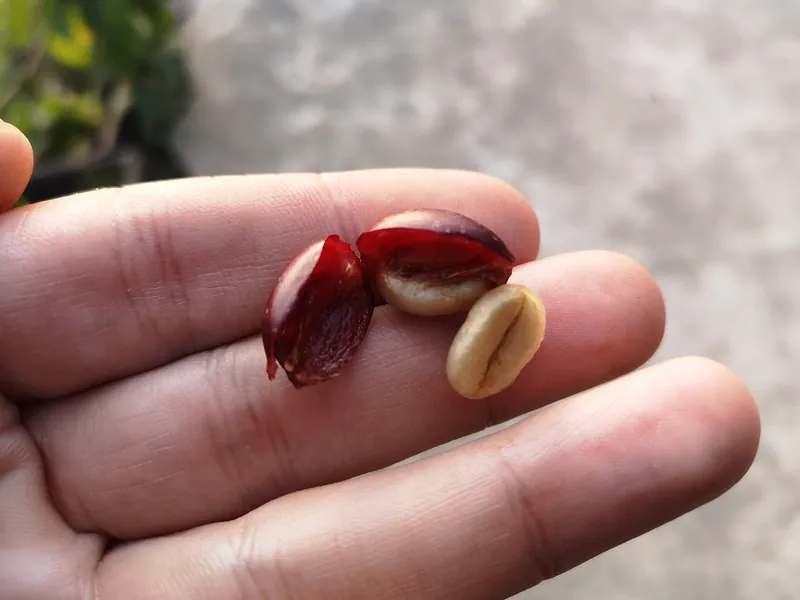
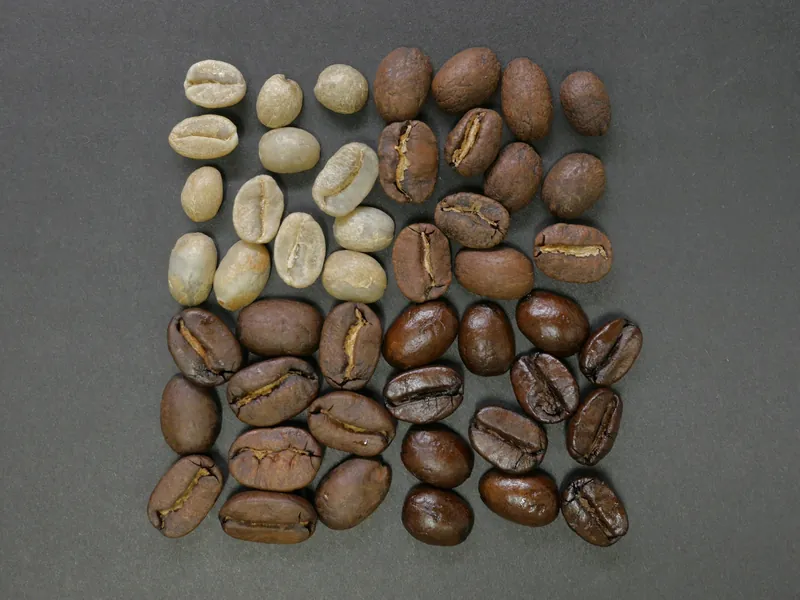
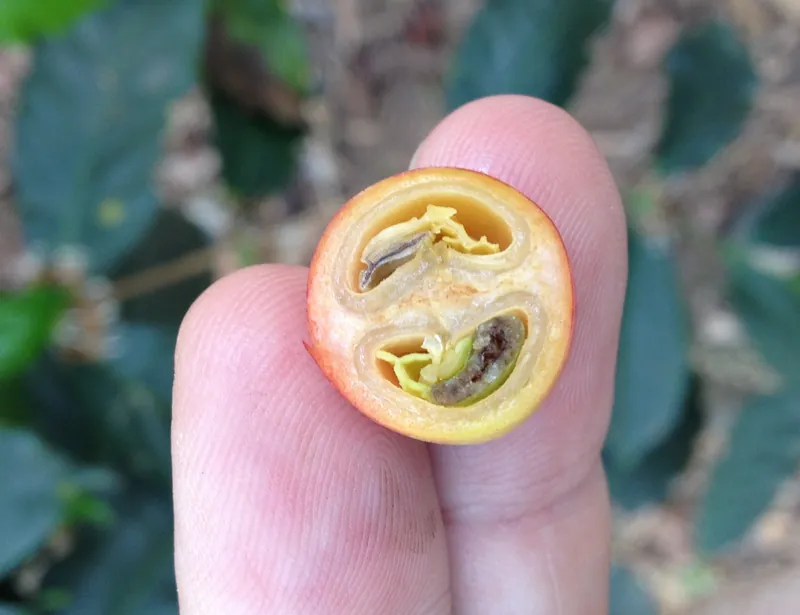
Decaf coffee is coffee that’s had most of its caffeine taken out while the beans are still green, before they’re roasted1. Some caffeine stays behind, so a typical cup of decaf has 2 to 15 mg against 95 mg in a regular one2.
How is decaf coffee made?
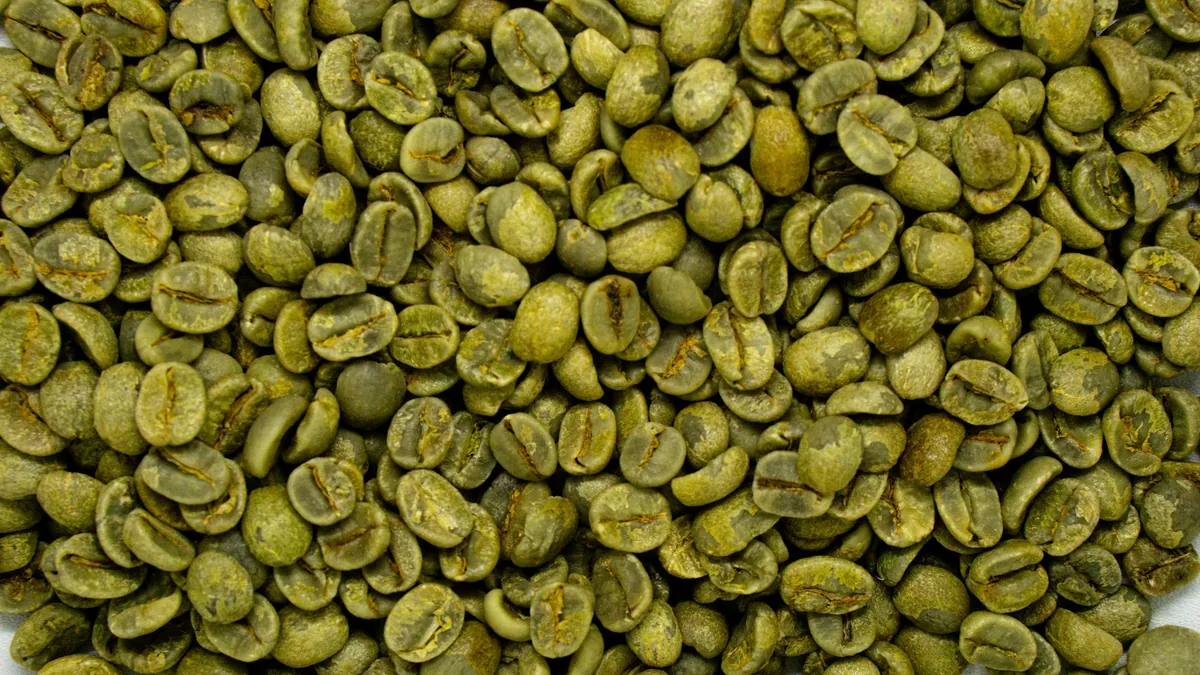
Coffee is decaffeinated after it’s been harvested, processed and had its parchment removed, usually at a specialist plant rather than at the mill3. Washed, natural and honey-processed coffees can all be decaffeinated3. In every method the green beans are warmed and soaked so that the caffeine can be drawn out, and they’re then dried and roasted like any other coffee2.
Decaffeination goes back to Ludwig Roselius, a coffee merchant from Bremen, who in 1905 patented a process that used benzene as the solvent, and founded Kaffee HAG the following year4. By 1970 benzene had long since been replaced by less poisonous solvents such as methylene chloride and ethyl acetate4.
Does decaf coffee have caffeine?
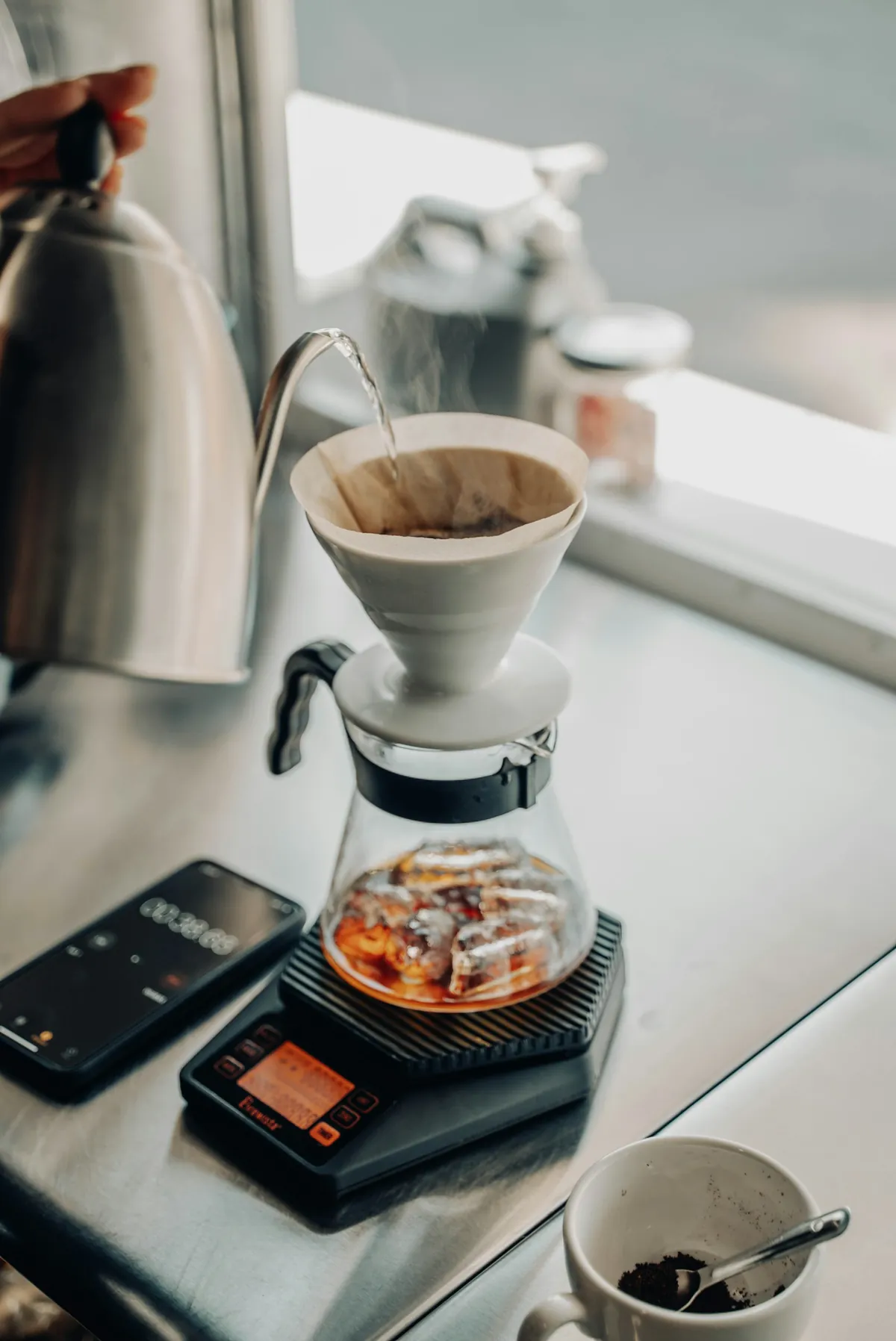
Decaf isn’t caffeine-free, because decaffeination typically removes around 97% of the caffeine and leaves roughly 2 to 15 mg in an 8-ounce cup, which is about 240 ml2, and most current methods can take out as much as 99%3.
In EU law, instant coffee and other coffee extracts carry the word “decaffeinated” when caffeine makes up no more than 0.3% of their coffee-based dry matter5. Germany’s coffee regulation sets a lower figure for green and roasted coffee, which is labelled “entkoffeiniert” with at most one gram of caffeine per kilo of dry matter, or 0.1%6. In the US, the Department of Agriculture’s specification for coffee bought by government bodies caps decaf at 0.10% caffeine on a dry basis7.
A 2006 study measured ten decaf coffees bought from different outlets and found 0 to 13.9 mg of caffeine in a 16-ounce serving, which is about 470 ml8.
Decaf espresso
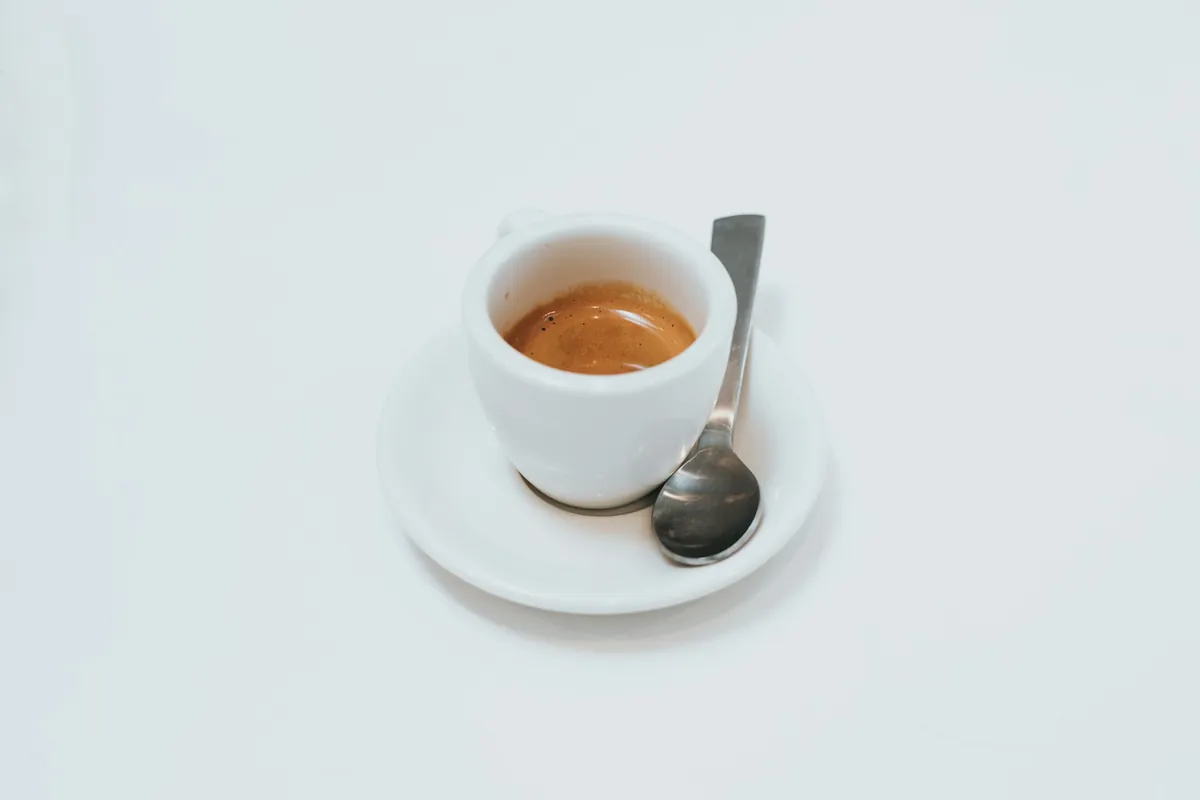
Espresso made with decaf beans carries some caffeine too: the same study measured 3.0 to 15.8 mg in each of six decaf espresso shots bought from one outlet, and 12.0 to 13.4 mg in six 16-ounce cups of brewed decaf bought there8.
Decaf coffee processes compared
Coffee is decaffeinated with water, ethyl acetate, carbon dioxide or methylene chloride1. Bags of Swiss Water and CO2 decaf usually name the method, and when no method is named, the coffee has most likely been through a solvent process1.
| Method | What removes the caffeine | Also called |
|---|---|---|
| Swiss Water | Water | “Swiss Water Process” or “solvent-free”9 |
| Mountain Water | Water | “Mountain Water Process” or “MWP”3 |
| Sugarcane | Ethyl acetate | “Sugarcane decaf” or “EA decaf”9 |
| Supercritical CO2 | Carbon dioxide | “CO2 process”1 |
| European | Methylene chloride | “European process”, or no method1 |
Swiss Water and Mountain Water process
Swiss Water, a company based in Delta, Canada, starts from green coffee extract, which is water already infused with every coffee compound except caffeine, so when green beans soak in it only the caffeine migrates out9. Carbon filters then take the caffeine out of the extract, which is reused on the next batch9.
The Mountain Water Process is carried out by Descamex in Mexico3. Green coffee is soaked in water, which removes the caffeine along with other soluble compounds, then a filter captures the caffeine and the solution goes back onto the beans so that they reabsorb the rest3.
Sugarcane decaf, or ethyl acetate (EA)
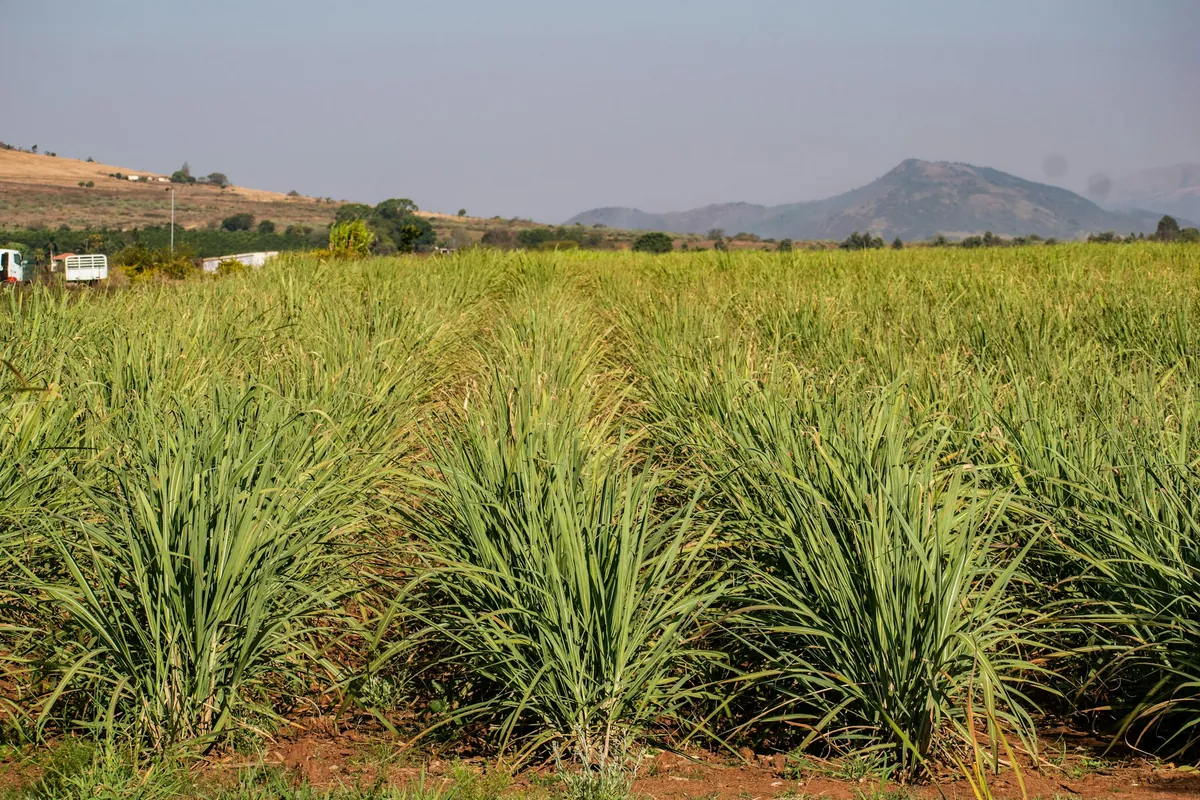
Ethyl acetate is an ester that occurs naturally in bananas and as a by-product of fermented sugars3, which is why coffee decaffeinated with it is also sold as “naturally decaffeinated”1.
At Descafecol in Colombia, the ethyl acetate comes from sugarcane in Palmira10. The green coffee is steamed and moistened with hot water until the beans swell, then the solvent is circulated through them until at least 97% of the caffeine is gone, and a final steaming removes the last traces of the solvent10.
Supercritical CO2 decaf
Carbon dioxide turns supercritical above 30.1 °C and 73.8 bar, a state in which it can pull some substances out of a mixture and leave the others unchanged4. Kurt Zosel of the Max Planck Institute for Coal Research noticed in 1967 that caffeine was one of the substances it dissolves, and he filed a patent three years later4.
In his process the beans are first swollen with steam and hot water, then carbon dioxide at 70 °C and 162 bar is pumped through them and draws the caffeine out, and an activated carbon filter captures the caffeine once the gas has been cooled to a liquid4.
Methylene chloride decaf
Methylene chloride and ethyl acetate are the two solvents behind the process variously called European, traditional or conventional1. In the direct version, the solvent is applied straight to steamed beans1. In the indirect version, hot water first extracts the caffeine and other solubles, the beans are lifted out and methylene chloride is added to the water, where it bonds with the caffeine and is removed with it before the beans go back in to reabsorb their flavour compounds3.
The EU allows 2 mg of the solvent per kilo of roasted coffee11, and US food rules allow 10 parts per million, which is 10 mg per kilo12.
What “chemical-free decaf” means
“Chemical-free” is the phrase Swiss Water uses for its own process13, and it means solvent-free, because the process uses only water and carbon filters where solvent-based decaf uses methylene chloride or ethyl acetate9. Sugarcane decaf is a solvent method9, and EU law lists both ethyl acetate and carbon dioxide as extraction solvents11.
Half caff
A half caff, also written half-caf, is a blend of caffeinated and decaffeinated beans13.
Naturally low-caffeine coffee: Laurina
No coffee is genetically decaffeinated at present, which is why the caffeine has to be removed physically3. Laurina is a rare arabica variety that naturally has less of it, about a third to half the caffeine of typical varieties14. Also known as Bourbon Pointu, it’s been traced to Réunion Island and is thought to have evolved as a mutation of Bourbon, and it’s now grown in Brazil, Guatemala and Nicaragua14. Caffeine deters insects, so a plant with less of it is harder to grow, and there’s no steady supply of Laurina14.
References
- Coffee Review, fun without the buzz: decaffeination processes and issues
- National Coffee Association, decaf coffee
- Café Imports, decaf process
- Max Planck Society, coffee decaffeination processes: coffee withdrawal
- European Union, Directive 1999/4/EC relating to coffee extracts and chicory extracts, Article 2
- German Federal Ministry of Justice, Verordnung über Kaffee, Kaffee- und Zichorien-Extrakte (KaffeeV)
- US Department of Agriculture, commercial item description A-A-20213B: coffee
- McCusker, Fuehrlein, Goldberger, Gold and Cone, caffeine content of decaffeinated coffee, Journal of Analytical Toxicology (2006)
- Swiss Water, a closer look at water-process vs chemical solvent method decaf coffee
- InterAmerican Coffee, Colombia decaf ethyl acetate
- European Union, Directive 2009/32/EC on extraction solvents used in the production of foodstuffs and food ingredients, Annex I
- US Code of Federal Regulations, 21 CFR 173.255: methylene chloride
- Swiss Water, the growing demand for half-caf coffee
- Sprudge, what is Laurina coffee?
Photo credits
- wisnu dwi wibowo, Unsplash License
- Yitzhak Rodriguez, Unsplash License
- Nathan Dumlao, Unsplash License
- proudlyswazi, Unsplash License