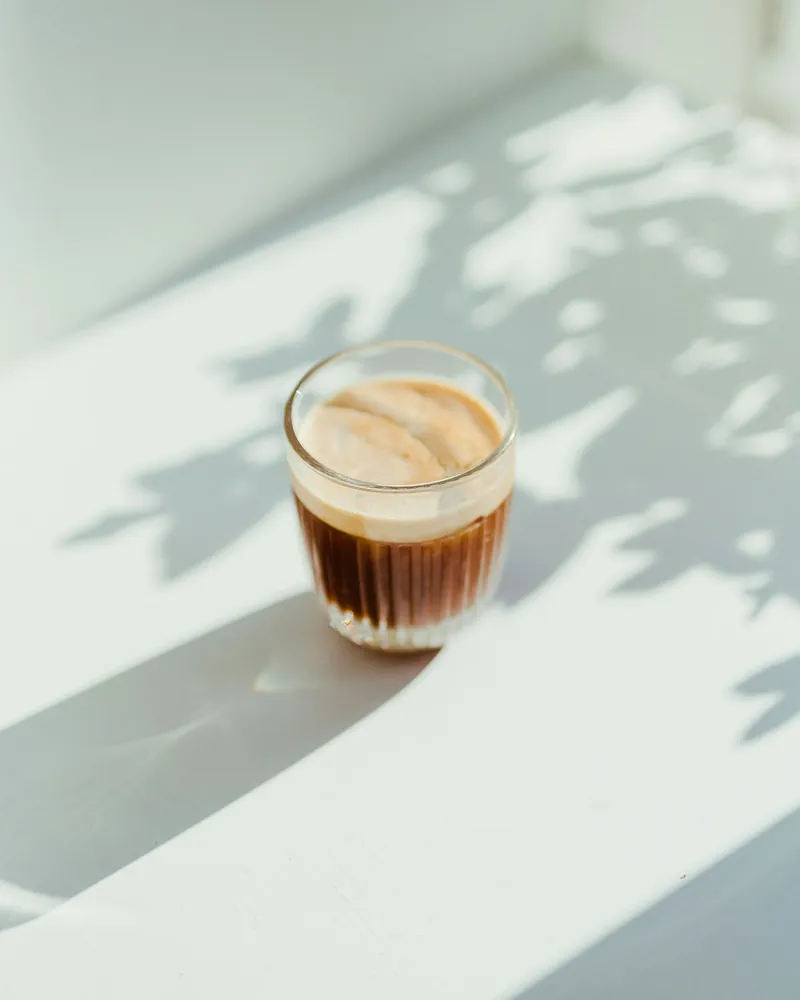
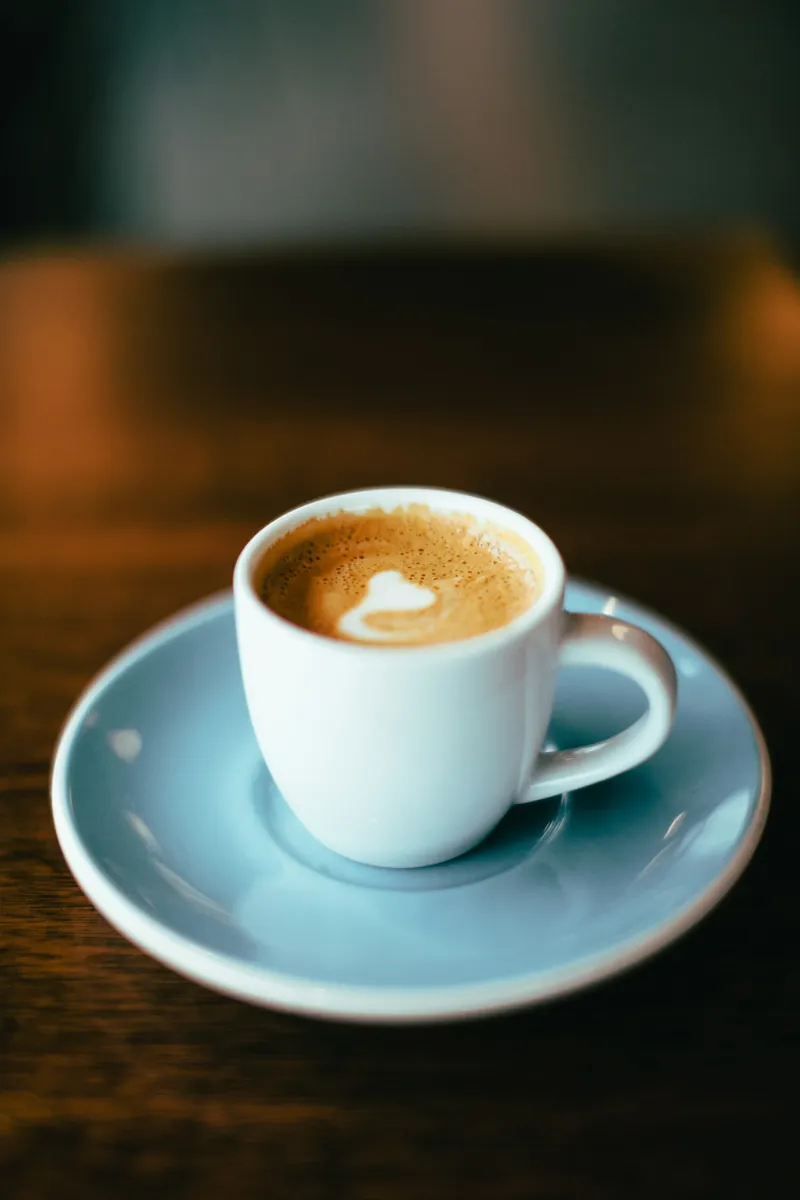
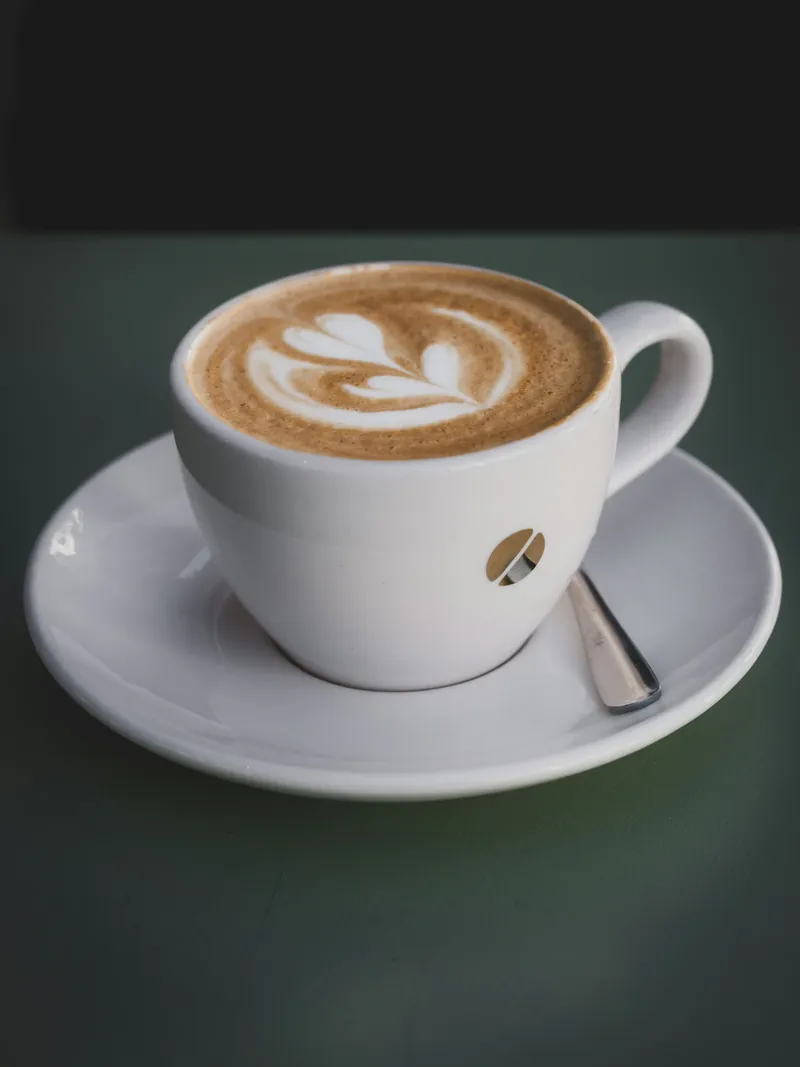
A ristretto and a lungo are espressos made from the same dose of coffee with less water or with more1, and a doppio is a double2. A ristretto and a lungo differ from an espresso in their brew ratio, which is the weight of ground coffee set against the weight of espresso in the cup3.
What counts as an espresso
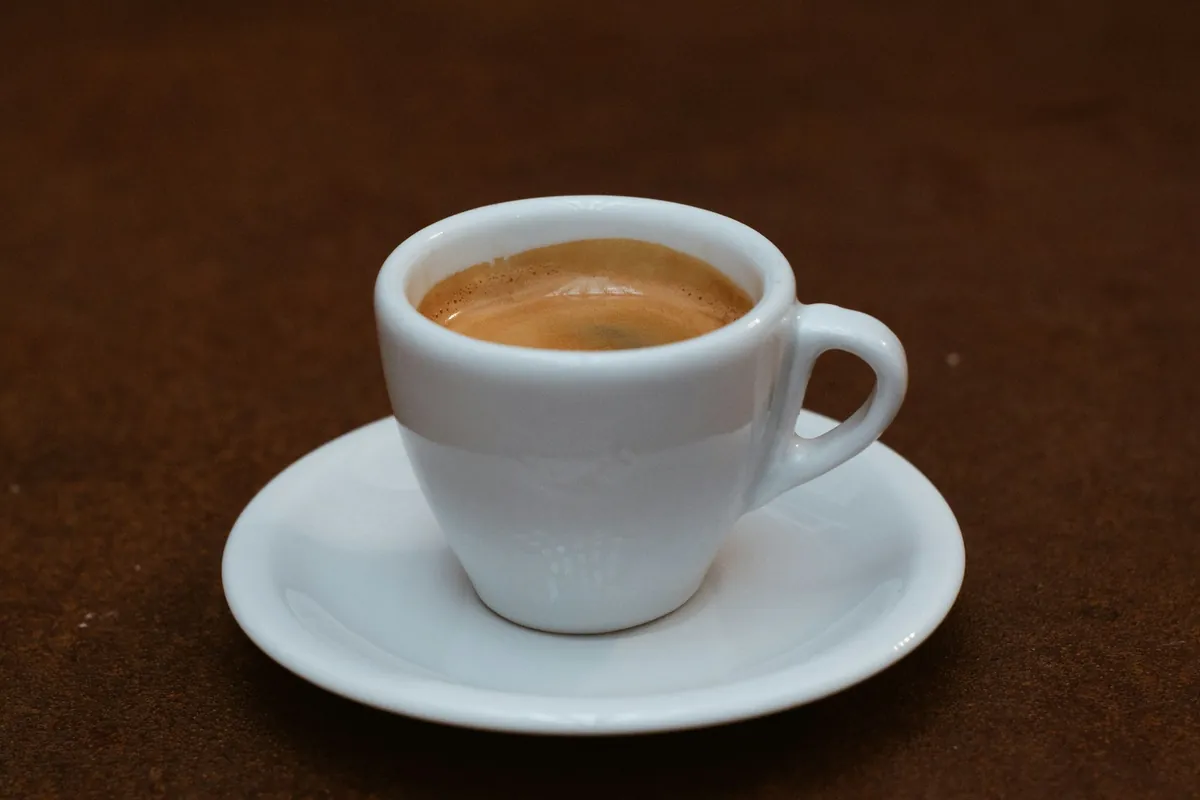
The Italian Espresso National Institute (Istituto Espresso Italiano) specifies 7 g of ground coffee for 25 ml in the cup, froth included, brewed in 25 seconds, with a small tolerance on each figure4. The heritage definition of the Specialty Coffee Association of America (SCAA) is close to it, at 7 to 9 g of coffee for 25 to 35 ml in 20 to 30 seconds5, and the World Barista Championship’s espresso is around 30 ml6.
Specialty baristas mostly weigh the espresso instead of measuring its volume5. In a 2017 survey by the Barista Guild of America that drew 275 responses, 82% measured yield by weight, and the average ratio was 1:2, for example 20 g of coffee in and 40 g of espresso out5. Every answer fell between 1:1.5 and 1:2.55.
By weight, a traditional Italian shot is about 7 g of coffee for 21 g of espresso, which is a 1:3 ratio, where many specialty cafés use 16 to 19 g of coffee for 32 to 38 g3.
Ristretto, espresso, lungo and doppio compared
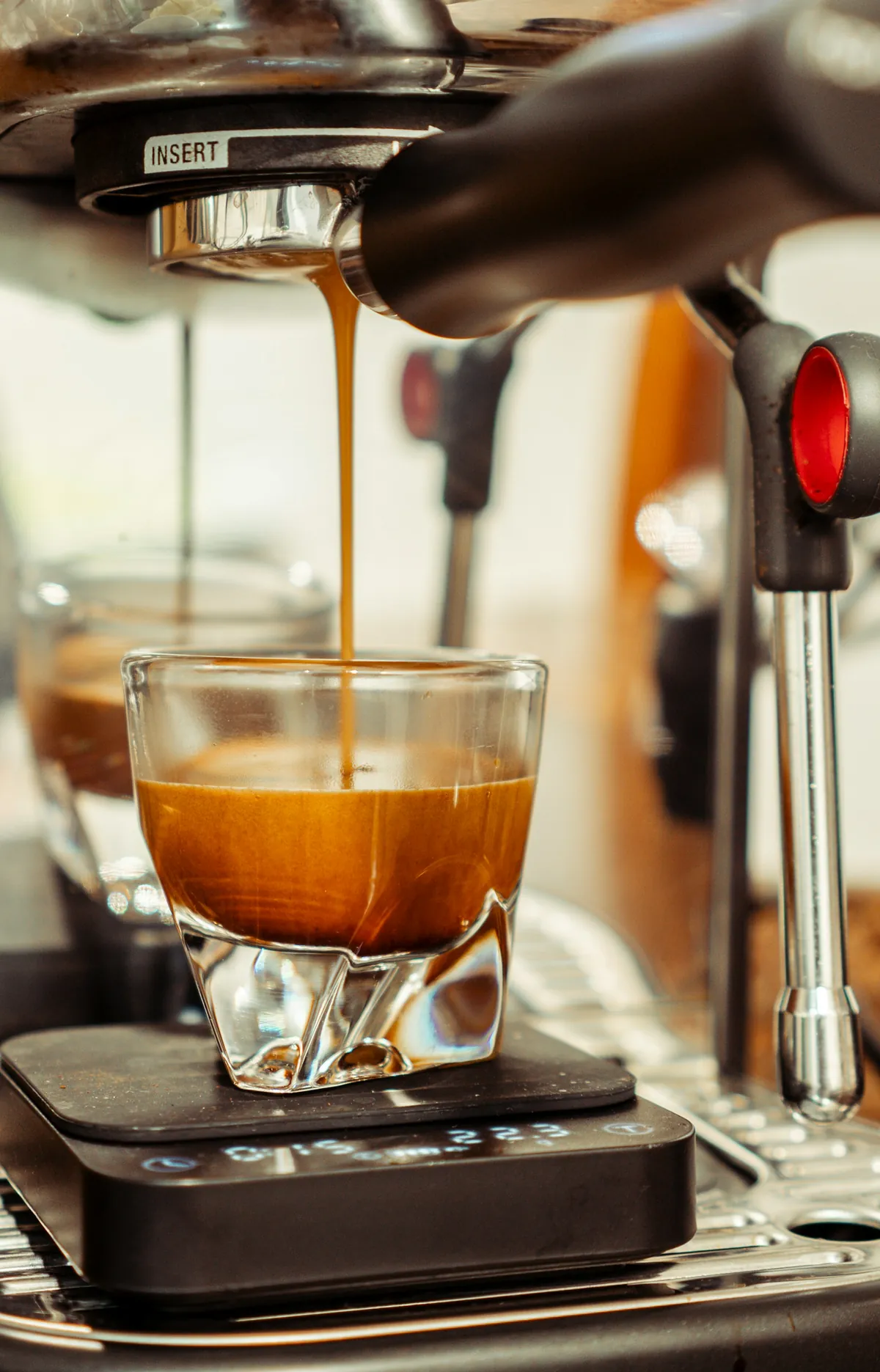
| Name | Meaning in Italian | Typical ratio, coffee to espresso | Yield | Taste |
|---|---|---|---|---|
| Ristretto | Reduced, concentrated7 | 1:1 to 1:23 | 15 to 25 ml1 | Viscous and heavy-bodied, with less clarity3 |
| Espresso | Pressed out8 | 1:2 to 1:33 | About 25 ml from 7 g4 | Sour and bitter in balance, with neither on top4 |
| Lungo | Long, made with more water than usual9 | 1:3 to 1:43 | 54 to 72 g from an 18 g dose310 | More clarity, less body and viscosity3 |
| Doppio | Double, twice the usual quantity2 | The same as a single5 | 50 to 70 ml from 14 to 18 g5 | The same recipe at twice the size5 |
The ranges meet at the edges because the names are borrowed from Italian café language and leave room for interpretation3.
What’s a ristretto?
Ristretto is the Italian for reduced or concentrated, and it’s the word Italians also use for a concentrated broth7. The shot is made with the same dose of coffee, water pressure and temperature as an espresso but with less water1. Baristas get there in one of two ways: some stop the shot early, at around 15 seconds instead of 25 to 3011, and others grind finer so that the smaller shot takes about as long as an espresso1.
How short a ristretto is depends on who’s making it1. It’s usually pulled at anywhere from 1:1 to 1:23, and Paolo Scimone, who runs a roastery in Monza, gives the Italian tradition as 7 to 8 g of coffee for 15 g in the cup11. That’s the same 1:2 the average specialty barista pulls as a standard espresso5. A ristretto is so small that most coffee shops offer it only as a double1.
Ristretto vs espresso
A ristretto is slightly thicker than an espresso because less water has gone through the coffee11. Bitter compounds are the last to extract, so cutting the shot short gives a sweeter and more concentrated cup1. It also raises the risk of under-extraction, so a ristretto can be strong and rich but sour110.
Jim Shulman, a founding member of the SCAA, wrote in 2007 that Italian shots get shorter towards the south, where the roasts are darker12. Some cafés use a ristretto as the base of milk drinks such as the cappuccino, the latte and the flat white, where the milk exaggerates its sweetness1.
What’s a lungo?
Lungo means long, and Italian uses it for any drink made with more water than the normal measure and therefore with little body, as the opposite of ristretto9. A lungo is pulled through the same coffee at a ratio of 1:3 or higher13.
In the Barista Guild survey, most respondents didn’t pull ristretto or lungo shots, and a quarter of them would on request5.
Lungo vs espresso
Extra water extracts more flavour from the coffee and dilutes it at the same time, so a higher yield gives a weaker and more extracted espresso10. In a lungo that shows as more clarity with less body and viscosity3, and it can bring more bitterness1.
Lungo vs americano
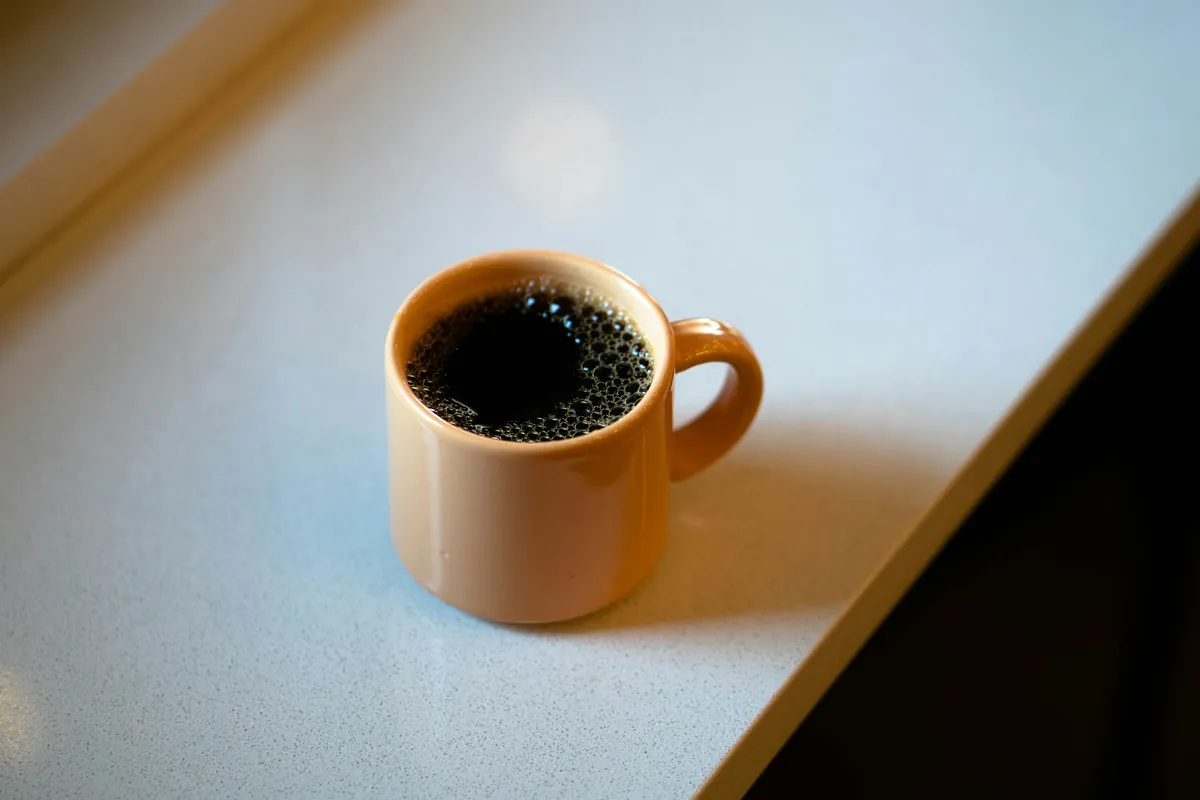
An americano is made by adding hot water to a shot of espresso, typically at two parts water to one of espresso13. A lungo comes close to an americano in volume but none of it is plain hot water, because the extra liquid has all come through the coffee in the espresso machine13.
Doppio: single vs double shot espresso
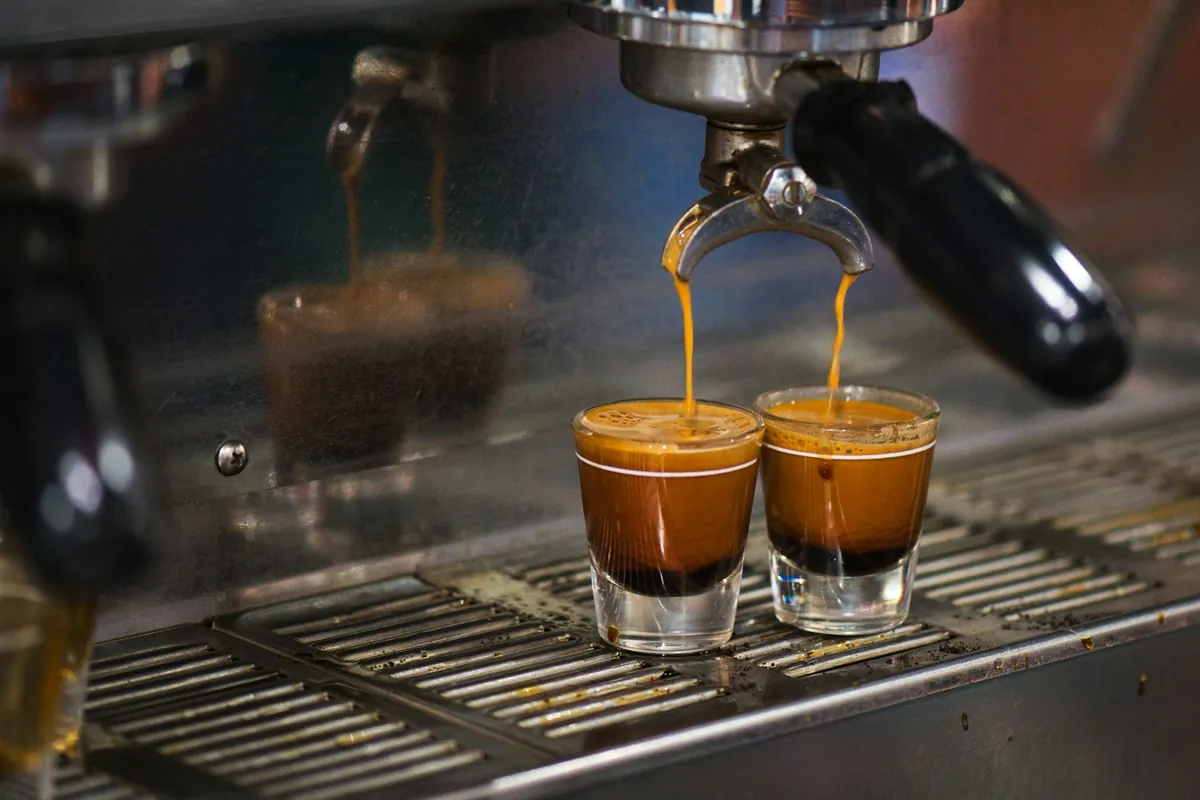
Doppio is the Italian for double2. A double shot is the same recipe at twice the size, so the SCAA definition gives 14 to 18 g of coffee and twice the volume5. A single is often half of a double: the World Barista Championship defines its espresso as the pour from one side of a double portafilter6, and a spouted portafilter with a double basket sends two shots into two cups12.
The espresso a specialty café hands over is usually a double5. In the Barista Guild survey, 93% of respondents considered the espresso they pull to be a double shot, and the average was an 18 to 20 g dose for 36.5 g of espresso in 25 to 30 seconds5.
Why specialty cafés pull doubles
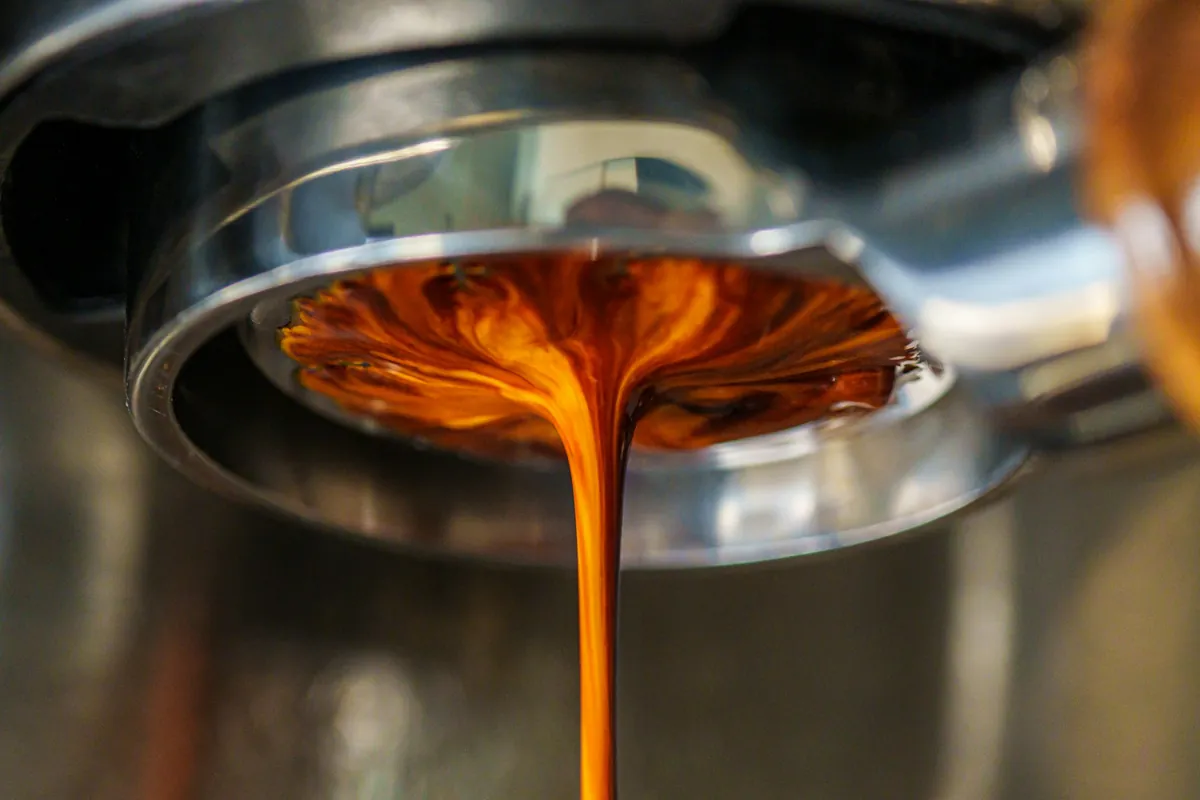
A typical single basket narrows towards the bottom, and that shape makes the water flow unevenly through the coffee and extract it unevenly14. To get an acceptable shot from one, a café usually needs a bigger dose, a finer grind or both, which means 11 or 12 g for a single where a double takes 18 g, or a second grinder14. That waste and cost are why the single basket has almost disappeared from specialty coffee bars14.
Many cafés have removed the choice by fitting double baskets to bottomless portafilters, which pour both shots into one cup12. When a single espresso is served from a double basket, it’s common practice to keep the second shot back for a later drink14.
References
- Perfect Daily Grind, extraction wars: espresso vs ristretto
- Treccani, Vocabolario: doppio
- La Marzocco Home, brew ratios around the world
- Italian Espresso National Institute, the Certified Italian Espresso and Cappuccino (2006)
- Specialty Coffee Association, defining the ever-changing espresso, 25 Magazine issue 3
- World Coffee Championships, 2026 World Barista Championship official rules and regulations
- Treccani, Vocabolario: ristretto
- Merriam-Webster, where does the word 'cappuccino' come from?
- Treccani, Vocabolario: lungo
- Barista Hustle, espresso recipes: understanding yield
- Perfect Daily Grind, what is a ristretto?
- Perfect Daily Grind, why you should consider offering single shots
- Sprudge, what is an americano? Espresso, hot water, and history
- Barista Hustle, all the single baskets
Photo credits
- Gabi Miranda, Unsplash License
- Hogar Barista, Unsplash License
- Nick Harsell, Unsplash License
- Kevin Butz, Unsplash License
- Scott K, Unsplash License