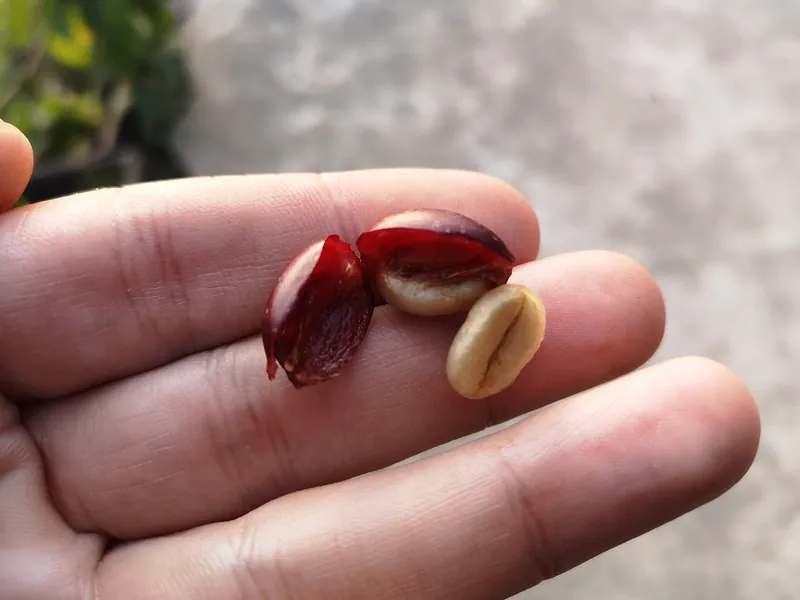
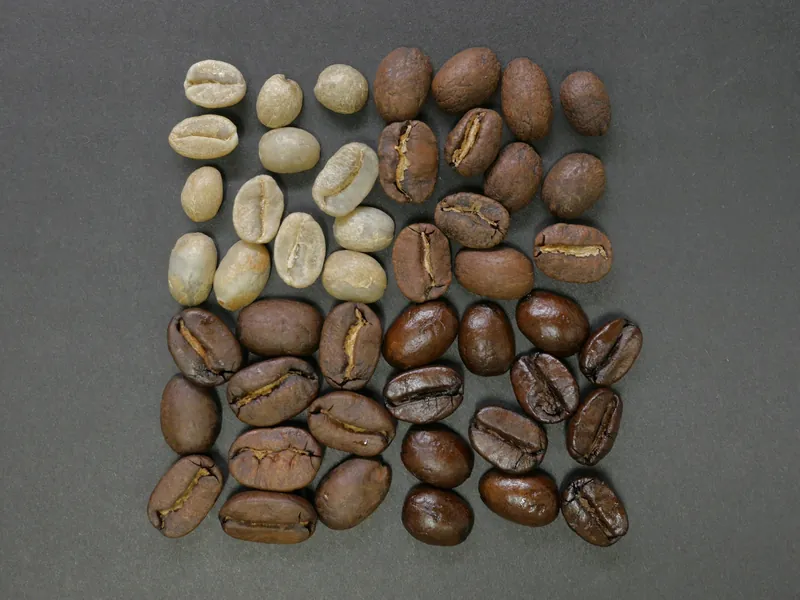
Yemeni coffee is arabica grown on mountain terraces in the west of Yemen, the country whose port of Mokha was once the centre of the world’s coffee trade. A Yemeni coffee house brews it with spices such as cardamom and ginger, and serves it alongside qishr, a drink made from the dried husks of the coffee cherry.
Where Yemeni coffee comes from
Arabica is native to Ethiopia and South Sudan, but most of what’s grown around the world can be traced back to Yemen, where the plant was domesticated1. Some of the earliest documented coffee growing, trading and drinking is recorded there, and Yemeni Sufis were using the brew in their religious practice from at least the middle of the 1400s2.
The trade ran through Mokha, a Red Sea port that the Ottomans turned from a small fishing village into the centre of the coffee business after they occupied Yemen in the late 1530s3. In the 17th century the English and Dutch East India companies set up there and labelled all the beans they shipped as Mokha coffee, which is how the port’s name became attached to the drink3. Nancy Um, who wrote a history of Mokha’s trade, calls Yemen the home of large-scale coffee growing and “really the first purveyor of coffee to the world”3.
Mokha’s part in the trade shrank once coffee was being grown in Java and the Caribbean by the 1720s3, and the British moved their base from Mokha to Aden in 1839, so Yemen’s trade went through Aden or Hodeidah from then on4.
Why a mocha is called a mocha

Mocha is another spelling of Mokha4, and it was originally a general word for coffee from Yemen2. The café mocha, the mix of coffee and chocolate, seems to be an American invention that borrowed the old name2. Coffee lore has it that Yemeni coffee’s reputation for tasting of chocolate is what led someone to use the name for drinks made with both5.
How coffee is grown in Yemen
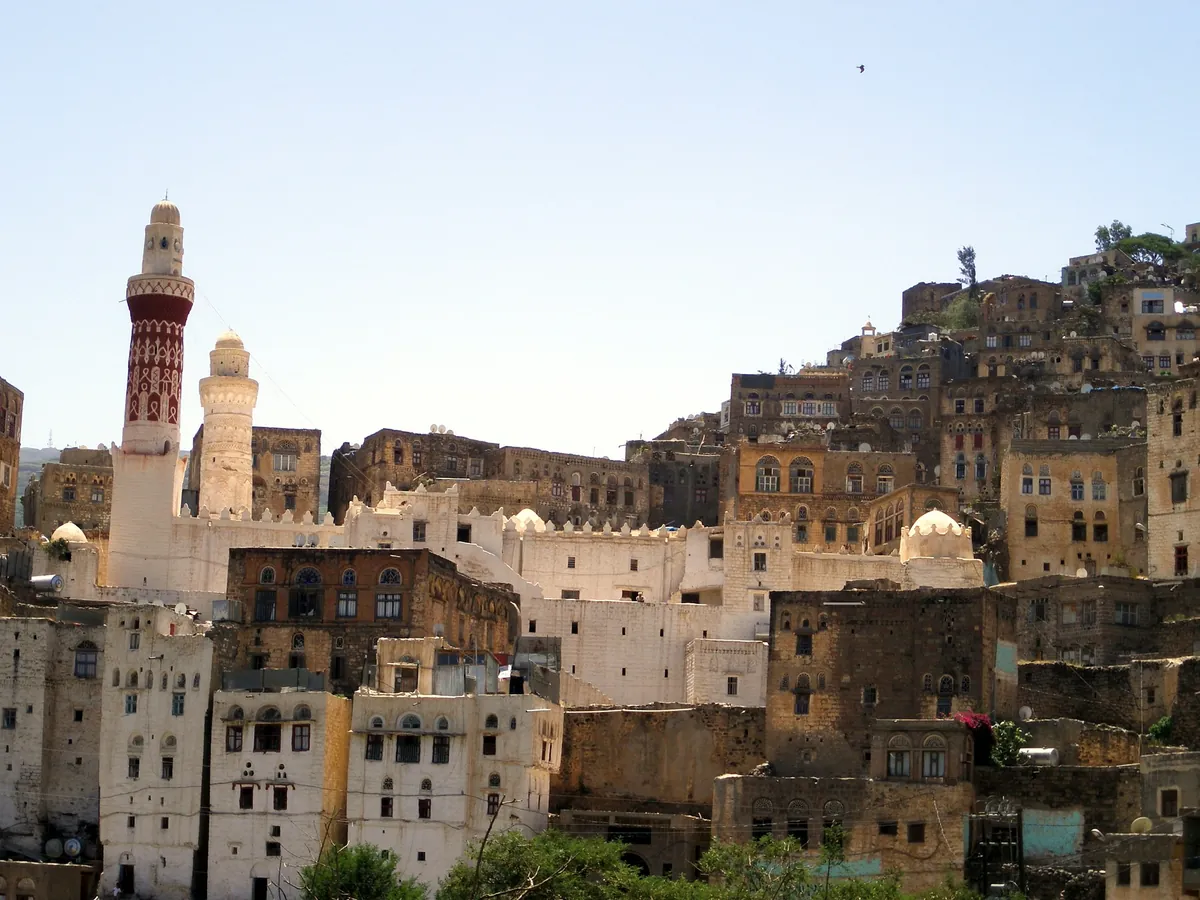
Around 120,000 smallholder farmers grow coffee in Yemen, mostly on terraces in the western highlands6. The terraces are steep, so the farms are small, and the average farmer has 0.291 hectares, or 394 coffee trees7. The coffee grows above 2,000 metres7, and its regions are among the driest in the world, with less than 400 mm of rain a year1.
Yemeni coffees are sold under traditional market names, and the two best known are Matari, from the very high district of Bani Matar just south-west of the capital, Sana’a, and Haraz, from the next set of mountains to the west8. Hayma, another market name, comes from just north of Bani Matar, and Ismaili can mean either the Bani Ismail district or a variety of tree that traders call by the same name8.
Why Yemeni coffee is dried on rooftops
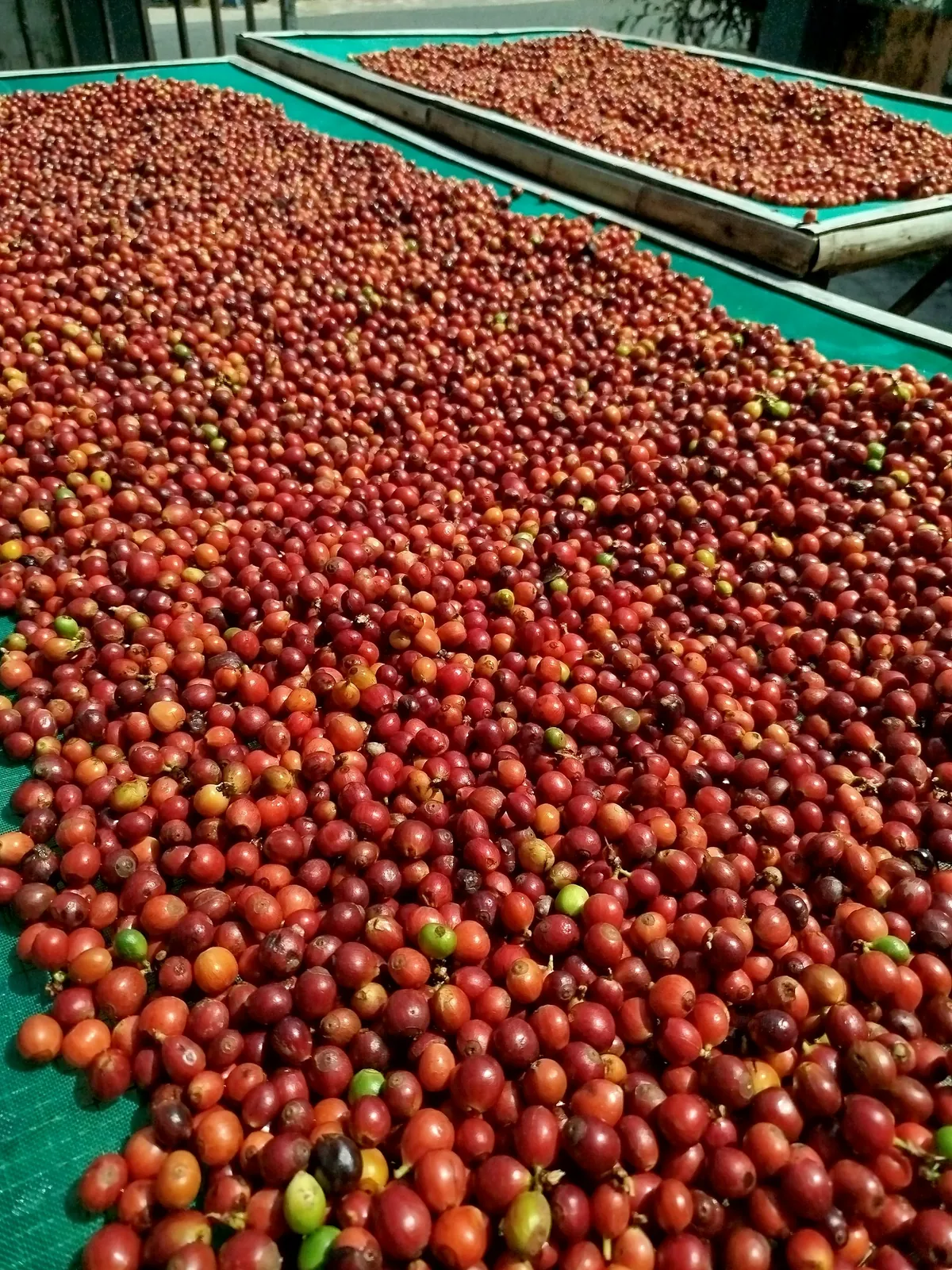
Most Yemeni coffee is natural processed, which means it’s dried with the fruit still on the bean8. The harvest comes in autumn, when the clouds clear and the air turns very dry, and the picked fruit is spread in the sun on the roofs of the stone houses8. Drying coffee this way uses no water for pulping or fermentation9, in a country where the water available per person is the lowest in the world7.
Yemeni coffee varieties: Udaini, Dawairi, Tufahi and Jaadi
Yemeni farmers call their trees by local names, and in a survey of 148 farms, Udaini made up 34% of the names given, followed by Dawairi at 16% and Tufahi at 14%, while Jaadi was named only in Haraz1. Genetic testing of trees on those farms found that the names don’t match the genetics, because the same name is given to very different trees1.
Yemen’s coffee falls into three genetic groups, two of which are the mother populations of most arabica varieties grown around the world, while the third, New-Yemen, has been found only in Yemen1. That third group is marketed under the name Yemenia5.
What Yemeni coffee tastes like
The varieties grown in Yemen’s arid climate and full sun lean towards deep chocolate tones, and natural processing adds a winey character10. In a 2021 tasting of 22 Yemeni coffees, the highest-scoring all had flowers, fruit (often dark berries), some kind of chocolate and aromatic wood notes close to incense5.
What a Yemeni coffee house serves
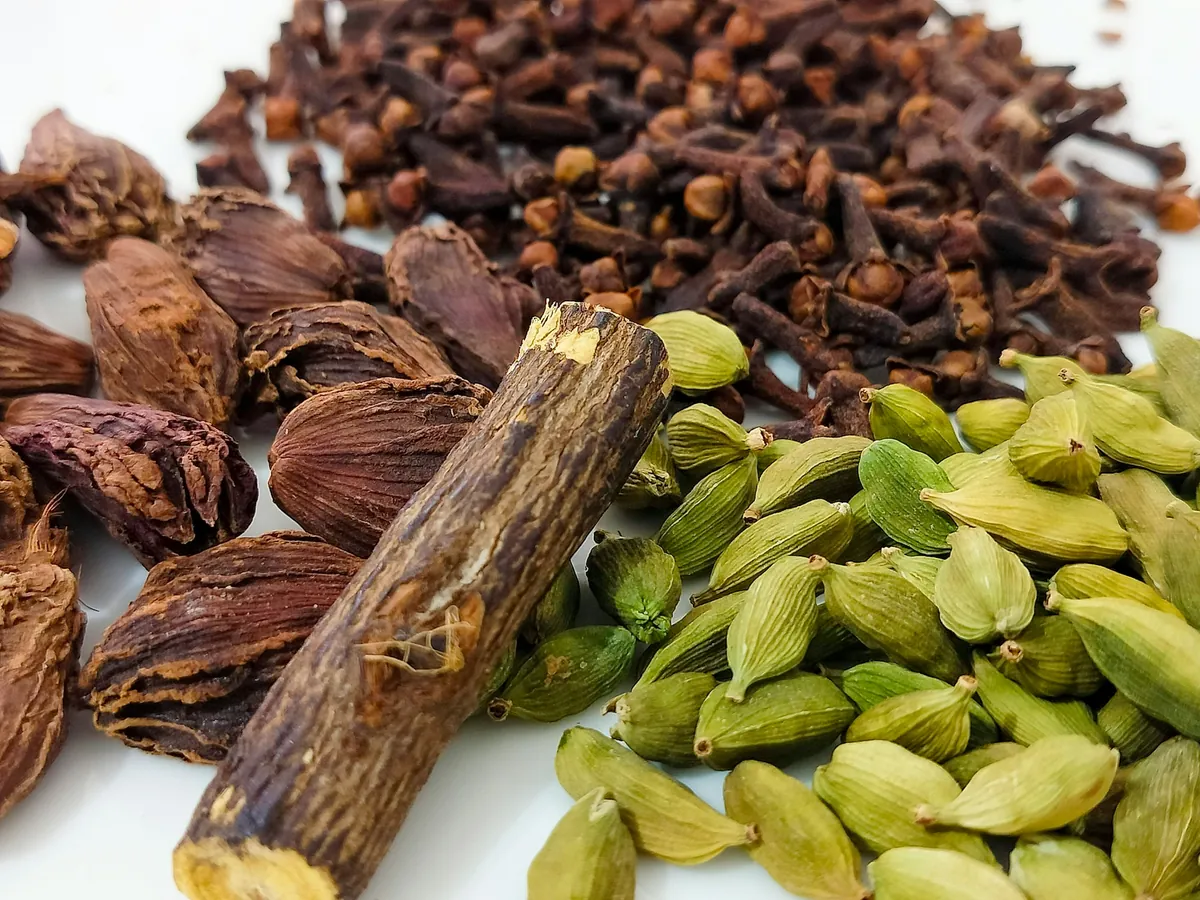
Yemeni coffee houses brew coffee with spice mixes called hawaij, which may contain cardamom, ginger, cinnamon, cloves, coriander or nutmeg11.
| Drink | What it is |
|---|---|
| Qishr | The dried husks of the coffee cherry, with the beans removed, brewed with ginger and cardamom into a low-caffeine drink that’s halfway between a tea and a coffee12. |
| Sana’ani | Medium-roasted beans mixed with cardamom, in the style of the capital12. |
| Mufawar | The same blend as Sana’ani with cream added12, or brewed coffee with spices and evaporated or condensed milk, and it’s also spelled mofawer13. |
| Jubani | A mixture of medium- and light-roasted beans, husks, cardamom, cinnamon and ginger12, named after the part of Yemen where it’s popular13. |
| Adeni tea | Spiced black tea with evaporated or condensed milk, similar to a chai latte13. |
How Yemeni coffee houses spread across the United States
The current wave of Yemeni coffee houses started in 2017 in Dearborn, a Detroit suburb with a large Arab-American population13, and hundreds have opened across the country since14. Six major chains ran 136 cafés between them after growing 50% in 2025, and most Yemeni coffee houses are in places with many Arab Americans, such as Michigan, California and Texas11.
The cafés stay open late, sometimes past 3 a.m. and especially during Ramadan, and they give the growing number of Americans who don’t drink alcohol a place to socialise11.
Why Yemeni coffee is scarce and expensive
Yemen’s coffee trees yield little, around 0.6 tonnes a hectare6, because water is scarce and the ongoing conflict has left farms short of workers9. Coffee also competes with qat, a plant chewed for its amphetamine-like effects3, which takes up about 15% of Yemen’s agricultural land and almost 40% of the water available for irrigation7. Qat has replaced much of the coffee once grown in the Sarawat region because of the cash it returns7.
Exporting is difficult too, because so little coffee is available that it’s hard to fill a container with coffee of export quality, and conflict and government obstacles push the price of green coffee much higher than in other producing countries10. A shipment from Sana’a to the port of Aden took about 10 hours by road before the war and can now take two days14. In 2022, specialty green coffee from Yemen was selling for around $20 and up to $50 a kilo, against $8.50 to $12 for coffee sold on the local market7.
References
- Montagnon, Rossi, Guercio and Sheibani, vernacular names and genetics of cultivated coffee (Coffea arabica) in Yemen, Agronomy (2022)
- JSTOR Daily, why coffee is sometimes called mocha
- The New York Times (via Oman Observer), why Mokha, historic port that shaped the coffee trade, is a prize in Yemen's war
- Encyclopaedia Britannica, Mokha (Mocha)
- Coffee Review, Yemen coffees: variations on the world's oldest cup profile
- Food and Agriculture Organization of the United Nations, Yemen: coffee (2025)
- United Nations Development Programme, value chain analysis of qat and coffee in Yemen (2022)
- Coffee Review, Yemen coffee
- Utrecht University, brewing sustainability in Yemeni coffee
- Café Imports, origins: Yemen
- Associated Press (via The Star), Yemen introduced the world to coffee. Now, its coffeehouse culture is booming in the US
- Saveur, this Michigan coffee shop is bringing Yemeni coffee to the masses
- USA Today (via Yahoo), across US, Yemeni coffeehouses reflect coffee culture's roots
- NPR, built on a rich coffee history, Yemeni cafes find U.S. success and new challenges, too
Photo credits
- Benjamin Sow, Unsplash License
- asamw, Unsplash License
- roedy rustam, Unsplash License
- Jaspreet Kalsi, Unsplash License