Fines are the smallest pieces in a dose of ground coffee, small enough to look like dust. Every grinder makes them, and they’re behind a few familiar brewing problems: a pour-over that takes ages to drain, a muddy cup and the sludge at the bottom of a French press. Baristas and scientists still argue about how much they change the taste, though, and the tricks people use to get rid of them don’t all work equally well.
What fines are
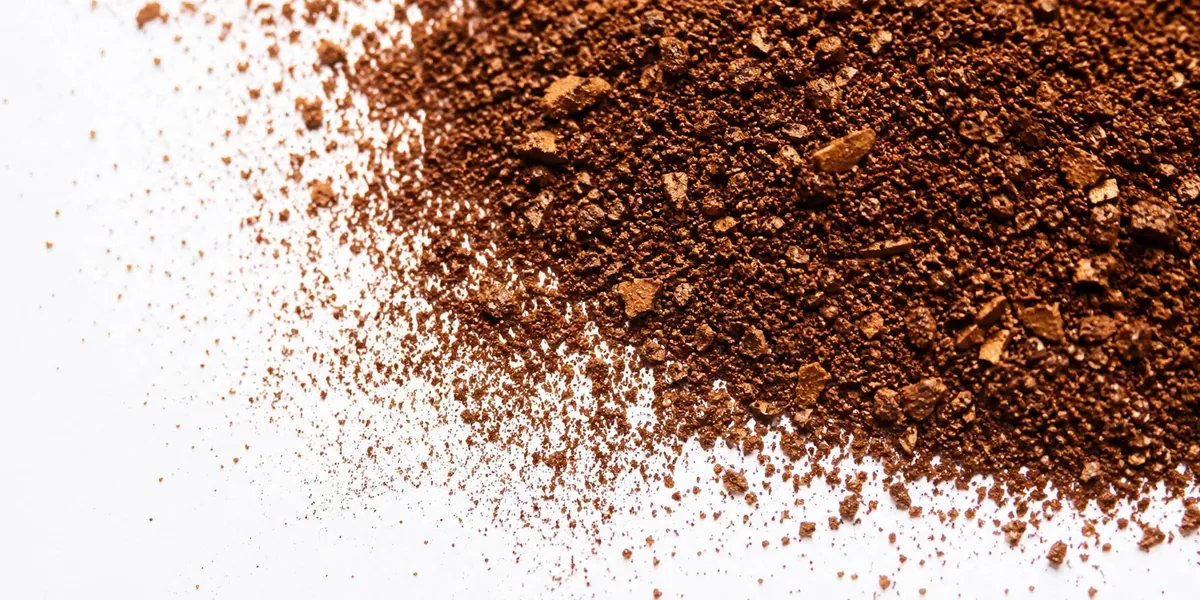
Fines are usually defined as particles smaller than 100 microns, or a tenth of a millimetre12. Scott Rao, the consultant and author of The Professional Barista’s Handbook, doesn’t like the size cutoff, because he thinks of a fine as a fragment of cell wall with no intact coffee cells left in it. To him, “an arbitrary diameter-size cutoff to define fines makes little sense”3.
The Specialty Coffee Association’s “fine grind” is around 380 microns, nearly four times the size of a fine, so a finely ground coffee isn’t the same thing as a coffee full of fines4.
Where fines come from
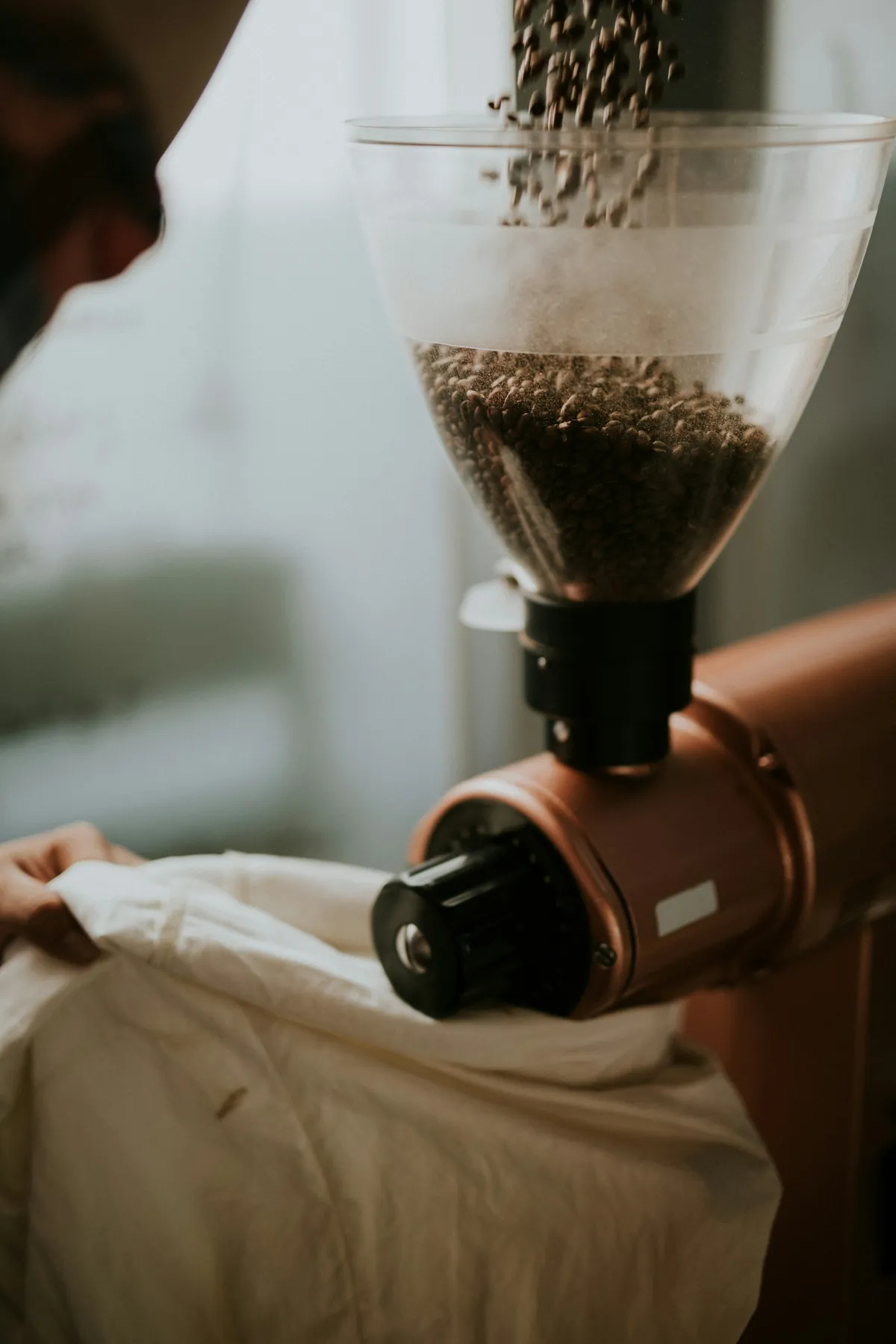
Roasted coffee is brittle, so a grinder doesn’t slice it cleanly. Each piece keeps fracturing until it’s small enough to pass between the burrs, and the fines are thought to break off at the cracks1. That’s why ground coffee has two groups of particles, larger ones close to the size you set and a cloud of much smaller ones, which coffee people call a bimodal grind. Grinding finer raises the share of fines, but the fines themselves stay the same size1.
In Rao’s experience, flat burrs make a modest amount of fines and conical burrs make more5. The coffee matters too, because darker roasts, natural coffees, Ethiopian coffees, decaf and warmer beans all produce more fines36. A 2016 study co-authored by Christopher Hendon, a chemist at the University of Oregon, found that colder beans grind to a more even spread of sizes7.
Static makes it worse: in 2023, Hendon and Joshua Méndez Harper of Portland State University found that darker, drier roasts built up more electric charge in the grinder and produced “much finer particles at the same grind setting”8. The smallest particles are also the ones most likely to cling to the grinder and to the larger grounds8.
What fines do to the taste
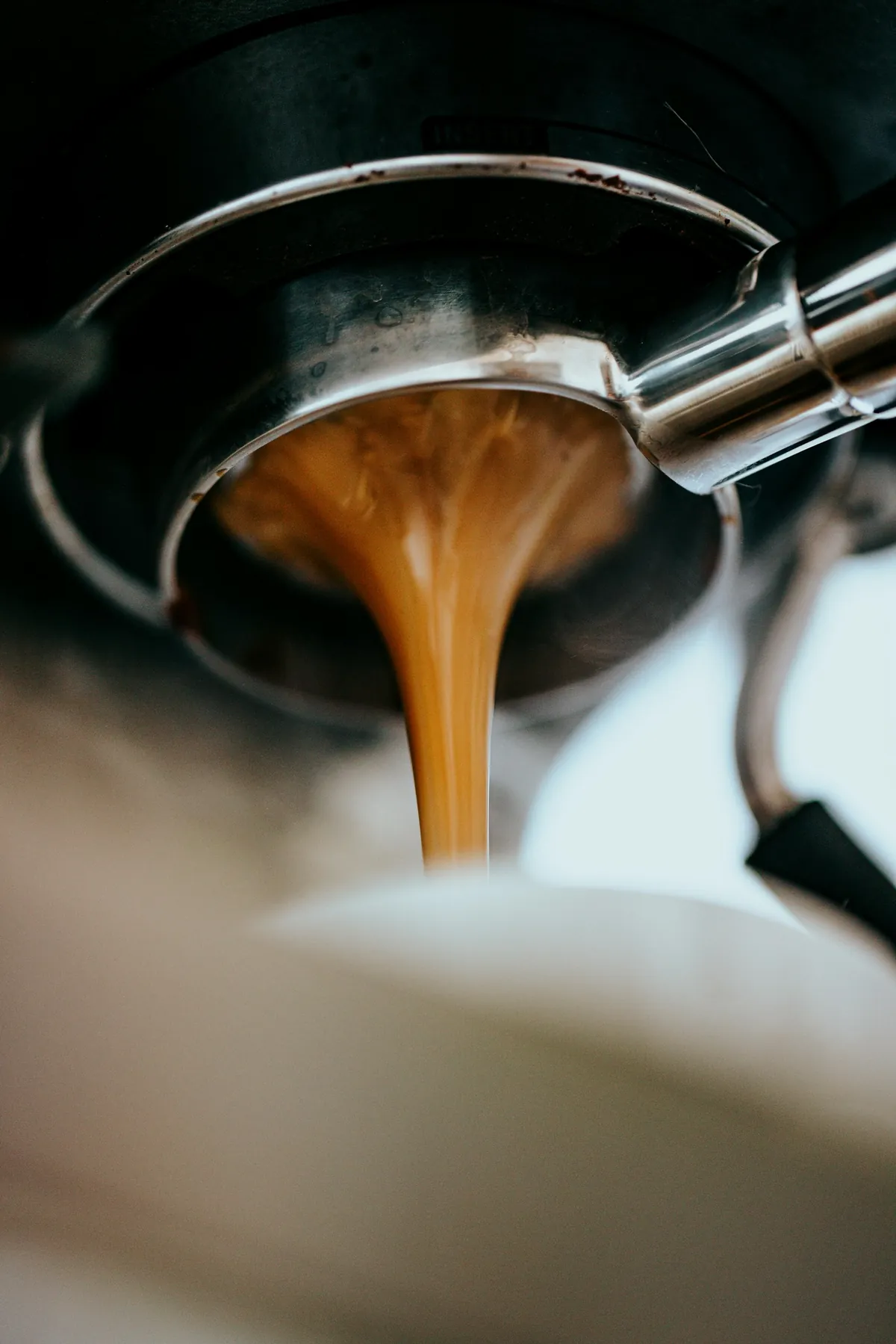
Fines have so much surface for their size that they give up their flavour within seconds3. In a filter brew, where water runs through the coffee for minutes, Rao says “fines are guaranteed to overextract” and add bitterness and astringency to the cup3.
He doesn’t want them gone completely, though. Espresso needs some fines to give the water enough surface to extract, and more of them than filter coffee does35. Rao argues for a “happy medium”, because too many fines block the paths the water takes and cause channels, while too few leave wide open paths and a weak cup that can also taste astringent. He found burrs designed to make very few fines too astringent for pour-over5.
A 2024 study in Scientific Reports added fines to espresso doses and found that their main effect is on flow, because they make the bed of coffee harder for water to pass through and slow the shot down. Trained tasters didn’t score the shots with extra fines any lower, and two of those shots were among the best-rated samples2.
Jonathan Gagné, the astrophysicist who writes the Coffee ad Astra blog, pulled espresso with burrs that make very few fines. The shots tasted clearer and fruitier but had little crema, which led him to conclude that “fines are also important for the stability of espresso crema”9. Those low-fines shots also extracted 1.3 to 2.1% more than shots from a standard grinder10.
Why your pour-over drains slowly
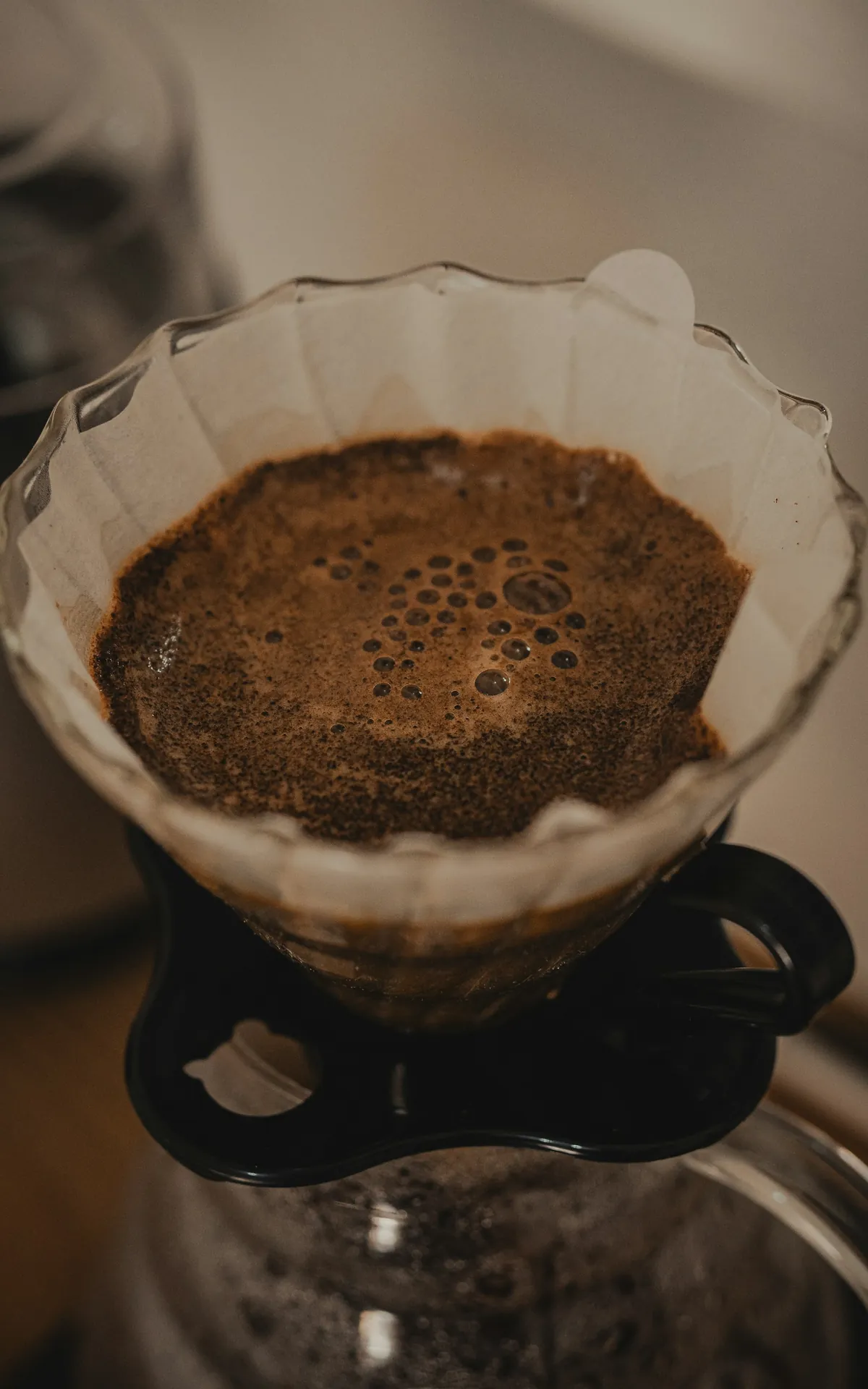
In a pour-over, fines travel through the coffee. Gagné has shown that tapping the brewer sets up a flow that carries them down through the bed to the paper, where they block its pores and make the water drain unevenly11. Past a point, grinding a pour-over finer to extract more clogs the filter and puts fines in your cup, “muddying the flavors”12.
The swirl many people give a V60 at the end of a brew is known as the Rao spin, and it leaves a flat bed of spent coffee13. Rao also warns that too much agitation “may cause fines to plug the pores of a paper filter”13. In a guest post for Rao, Gagné spun the brewer for seven seconds and the coffee took 5:18 to drain, against 4:28 with a two-second spin14.
Espresso has its own version of the problem. In a 2020 study co-authored by Hendon, too many fines packed the coffee unevenly and partly clogged the flow, which lowered extraction, and grinding coarser with a smaller dose gave shots that were easier to repeat1. Gagné’s view is that fines on their own don’t really clog espresso shots9.
Sieving the fines out
Sieves such as the Kruve sort ground coffee by size, so the fines can be thrown away before brewing. Gagné found that sifting takes two to three minutes or more, wastes coffee and still leaves fines stuck to the larger grounds. When he brewed a sifted dose with his usual recipe, it drained faster and tasted weak15.
Matt Perger won the 2012 World Brewers Cup with a 250-micron sieve in his kit, and he said that with the fines removed, an extraction below 22% “doesn’t taste very good”16. Mikaela Wallgren of Finland, runner-up at the 2016 World Brewers Cup, sifted her competition coffee through a sieve she’d made from a cake mould and a frying pan lid, brewing 15 g of sifted coffee from 17 to 18 g of grounds17.
Lance Hedrick, runner-up at the 2020 U.S. Brewers Cup, chose not to sift because he found that fines “tend to bunch up”. Partway through his brew, he lifted the grounds out in a metal filter and set it in a new cone lined with a used paper filter, which took the fines out of the brew18.
A drop of water against static
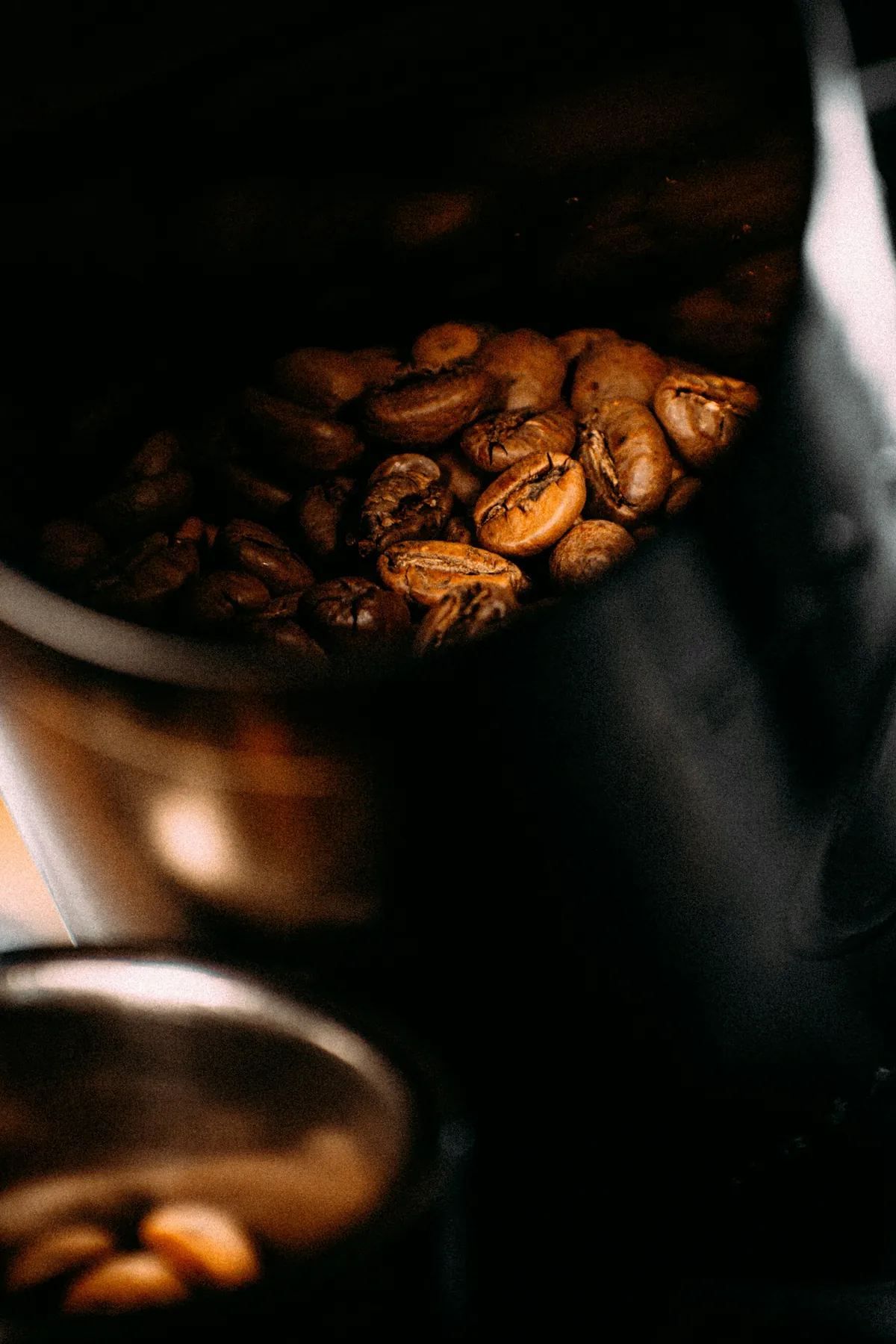
Many home baristas wet their beans with a drop of water or a spray before grinding, a habit known as the Ross Droplet Technique, or RDT. James Hoffmann, the 2007 World Barista Champion, showed it in a 2017 video as a fix for static19.
In Méndez Harper and Hendon’s study, adding 20 to 30 microlitres of water per gram of beans cut the charge by at least half, reduced clumping and the coffee left behind in the grinder, and made dark-roast espresso about 15% more concentrated, while light roasts didn’t change significantly820. Hoffmann covered the study in a video in December 202321.
Blowing across the ground coffee lifts the papery flakes of chaff that come off the bean as it’s ground. Fines are much harder to shift that way, because static holds a lot of them to the surface of the larger grounds15.
The sludge in a French press
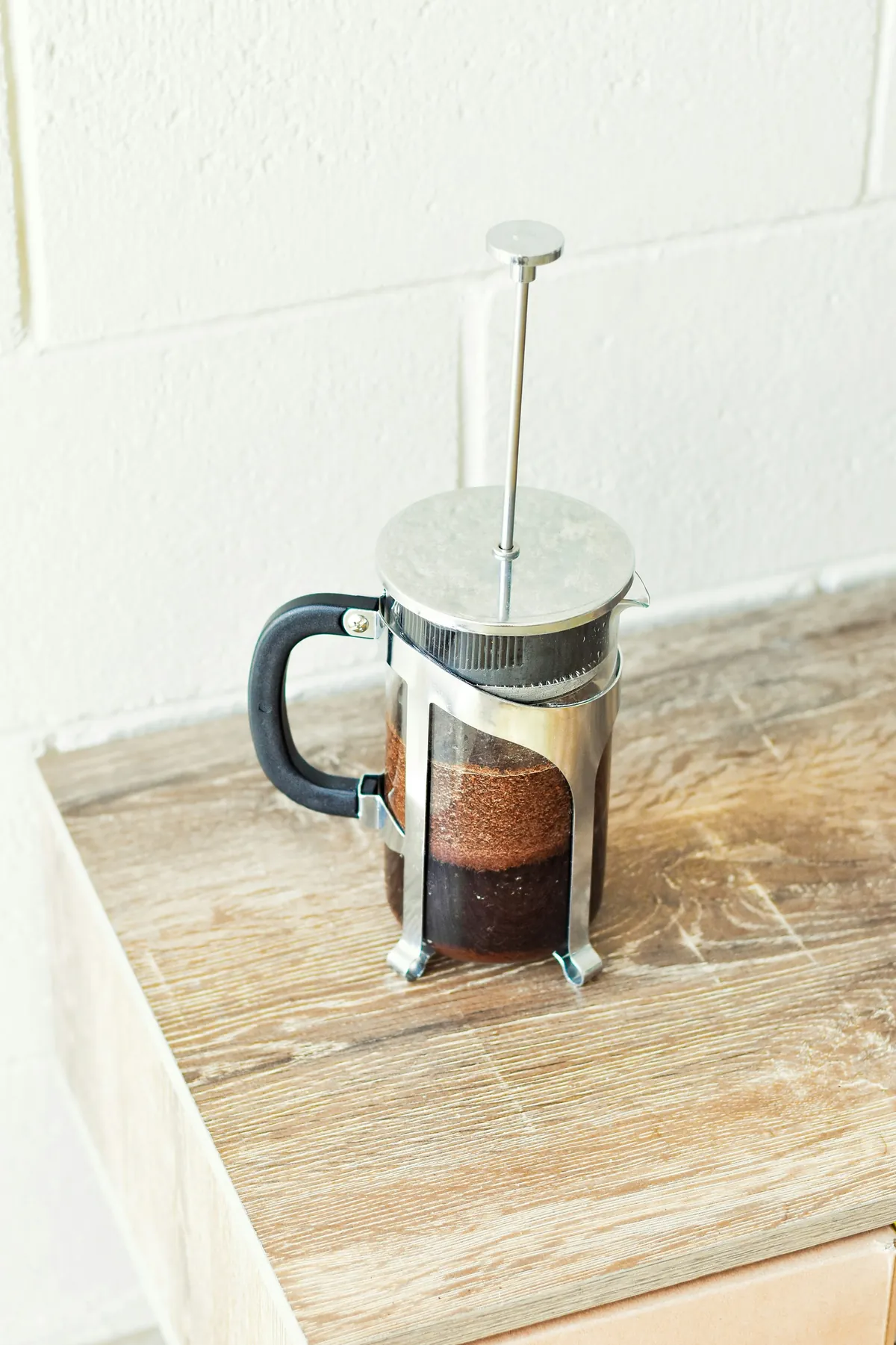
A French press filters through metal mesh rather than paper, so fines pass straight into the cup. Hoffmann’s method aims for a “sludge-free cup of coffee”22. After the steep, he breaks the crust and skims off the foam and floating grounds, then leaves the coffee to settle for several more minutes and pushes the plunger down only as far as the surface, so the fines stay at the bottom.
What makes the biggest difference
Rao ranks the grinder first, ahead of anything you can do once the coffee is ground. Sharper burrs, better alignment, a coarser setting and larger burrs cut fines the most, followed by lighter roasts, avoiding natural coffees and sifting3. When dialling in, he suggests starting at a coarser setting than you expect6. For a pour-over, Rao and Gagné both found that a gentle pour and a short spin keep the fines from clogging the paper1314.
References
- Cameron, Hendon, Foster et al., systematically improving espresso: insights from mathematical modeling and experiment, Matter (2020)
- Smrke, Eiermann and Yeretzian, the role of fines in espresso extraction dynamics, Scientific Reports (2024)
- Scott Rao, fines: fine for espresso, not so fine for filter
- Kruve, good, bad, or just fine?
- Scott Rao, the happy medium amount of fines
- Scott Rao, how to choose a grind setting
- Uman, Hendon et al., the effect of bean origin and temperature on grinding roasted coffee, Scientific Reports (2016)
- Méndez Harper, Hendon et al., chemical strategies to mitigate electrostatic charging during coffee grinding (2023)
- Coffee ad Astra, pulling low-fines espresso shots
- Coffee ad Astra, a comparison between standard and low-fines espresso shots
- Coffee ad Astra, the physics of fines migration
- Coffee ad Astra, why can't we grind coffee finer for pour over?
- Scott Rao, some observations on hand pours
- Scott Rao, why spin the slurry? (guest post by Jonathan Gagné)
- Coffee ad Astra, how to brew better coffee with a V60
- Sprudge, feelin' fines: breaking down Matt Perger's World Brewers Cup win
- Barista Magazine, brewing experiments: Mikaela Wallgren's 2016 World Brewers Cup championship recipe
- Barista Magazine, U.S. Brewers Cup runner-up Lance Hedrick on the nifty coffee grounds trick from his routine
- James Hoffmann, coffee hack: no more static (video)
- Phys.org, grinding coffee with a splash of water reduces static electricity and makes more consistent and intense espresso
- James Hoffmann, science discovers what we all missed: more than an anti-static hack (video)
- James Hoffmann, the ultimate French press technique (video)
Photo credits
- Blackout Coffee
- Nathan Dumlao, Unsplash License
- Nathan Dumlao, Unsplash License
- William Figueroa, Unsplash License
- Amr Taha, Unsplash License
- Hrushi Chavhan, Unsplash License