Honey-processed coffee is named after the way it feels. It doesn’t actually contain honey, so it’s vegan.
What honey processing is
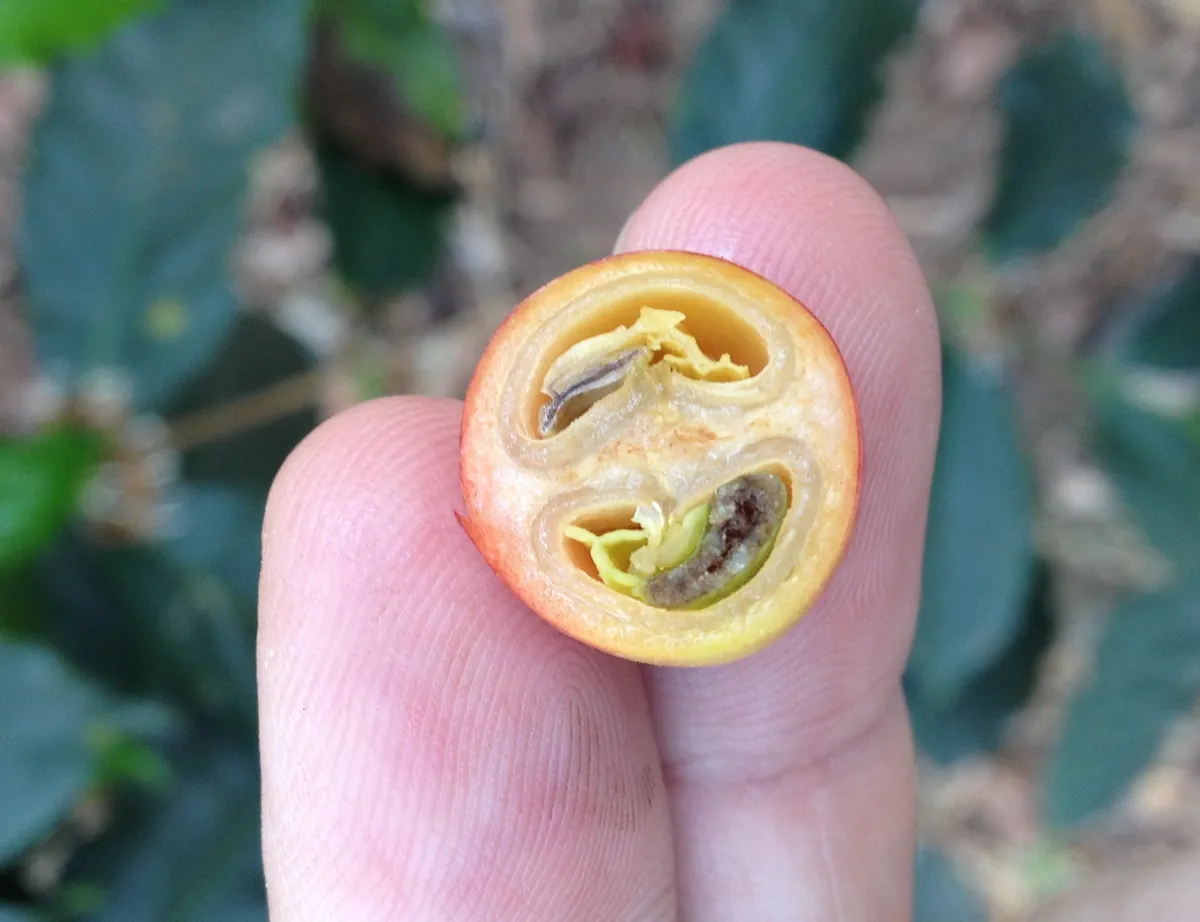
A coffee bean is the seed of a cherry. Under the cherry’s skin, the seed is coated in a sticky, sugary layer called mucilage. In a honey process, the skin is removed within 24 hours of picking and the seed is dried with some or all of that mucilage still on it1.
A washed coffee has all of its fruit removed before drying and a natural coffee dries inside the whole cherry, so honey processing sits between the two.
Why it’s called honey
The name comes from the “sticky, honey-like feel” of the beans as they dry2. Nothing is added to the coffee, and it doesn’t taste of honey either2.
Where honey processing comes from
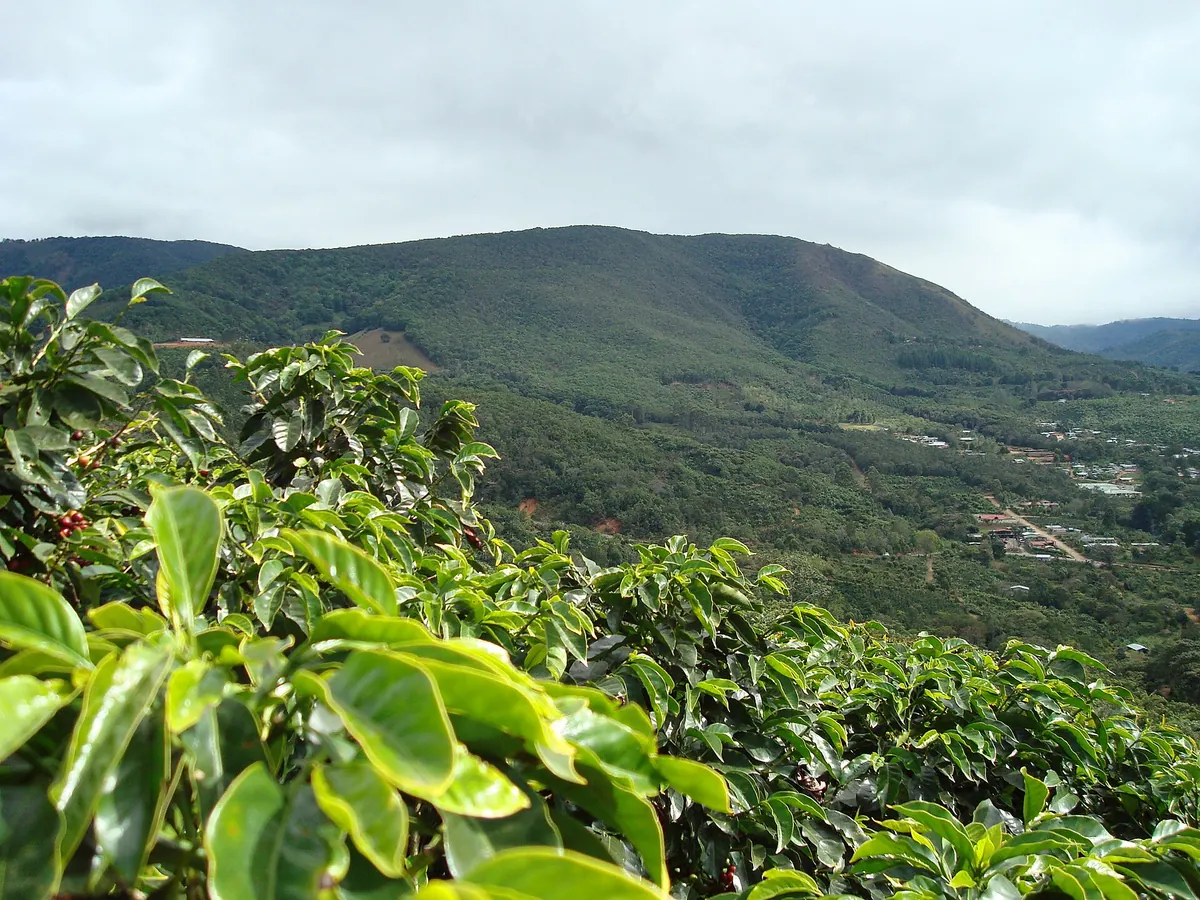
Honey processing originated in Costa Rica3. Farms there were trying it in the early 2000s, borrowing from Brazil’s pulped natural method4. Those were the years when Costa Rican farmers began building their own small mills, which gave them control over how their coffee was processed and sold5.
Las Lajas, a Costa Rican farm known for the method, started because an earthquake during the 2008 harvest cut the mill’s water for several weeks. Oscar Chacón couldn’t wash his coffee, so he looked to countries that dry theirs in the fruit. Cuppers rejected his first coffees as “unclean and wild”6.
White, yellow, red and black honey
Honey coffees are sold by colour, and the usual explanation is the amount of mucilage left on the seed4.
| Colour | Mucilage left on |
|---|---|
| White | About 10% |
| Yellow | About 25% |
| Red | About 50% |
| Black | 75 to 100% |
Not every producer follows that scale. Las Lajas, for example, leaves all of the mucilage on every lot and sets the colour by how the coffee is dried6. Elsewhere a yellow honey gets the most sun, while a black honey is kept covered so that it dries slowly2. That’s why one farm’s red honey can be another farm’s black4.
What honey-processed coffee tastes like
The more mucilage is left on, the sweeter the cup4. Yellow honeys have a subtle fruitiness and sit closest to a washed coffee. Red honeys are sweet with red-fruit notes, and black honeys have a heavy mouthfeel, raisiny sweetness and dark chocolate6.
Why it’s harder to make than washed coffee
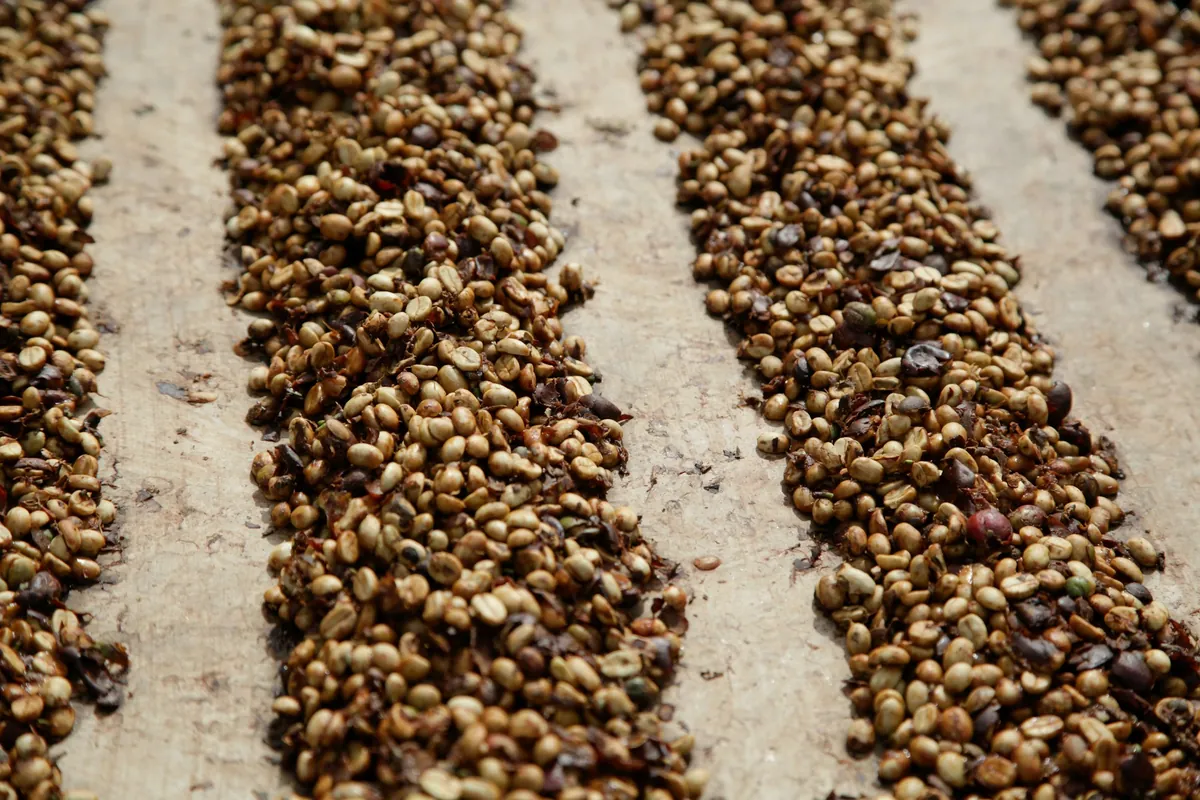
A honey coffee takes 18 to 25 days to dry1, against 7 to 15 for a washed one7. Coffee with fruit left on it is prone to mould and over-fermentation, and the sticky parchment often clogs the hulling machines6. A black honey also holds a drying bed for far longer than a yellow one and needs more attention2.
It uses less water
Honey processing skips the fermentation tank and the washing channel, so it uses less water than the washed method8. A traditional wet mill in Colombia uses an average of 44 litres of water to wash every kilo of dried parchment coffee9.
Is honey-processed coffee vegan?
Honey-processed coffee is vegan because nothing from a bee, or from any other animal, is used to make it. The same goes for “lactic” coffees, which are fermented with lactic acid bacteria and don’t contain milk10.
The only coffee that’s actually not vegan is the kind that’s passed through an animal. Kopi luwak is made from coffee cherries that civets have eaten and excreted, and a growing share of it comes from wild-caught animals kept in cages11.
If you take milk in your coffee, we compare the oat milks we like in You’re not a baby cow: our favourite oat milks for coffee.
Bees still matter to coffee
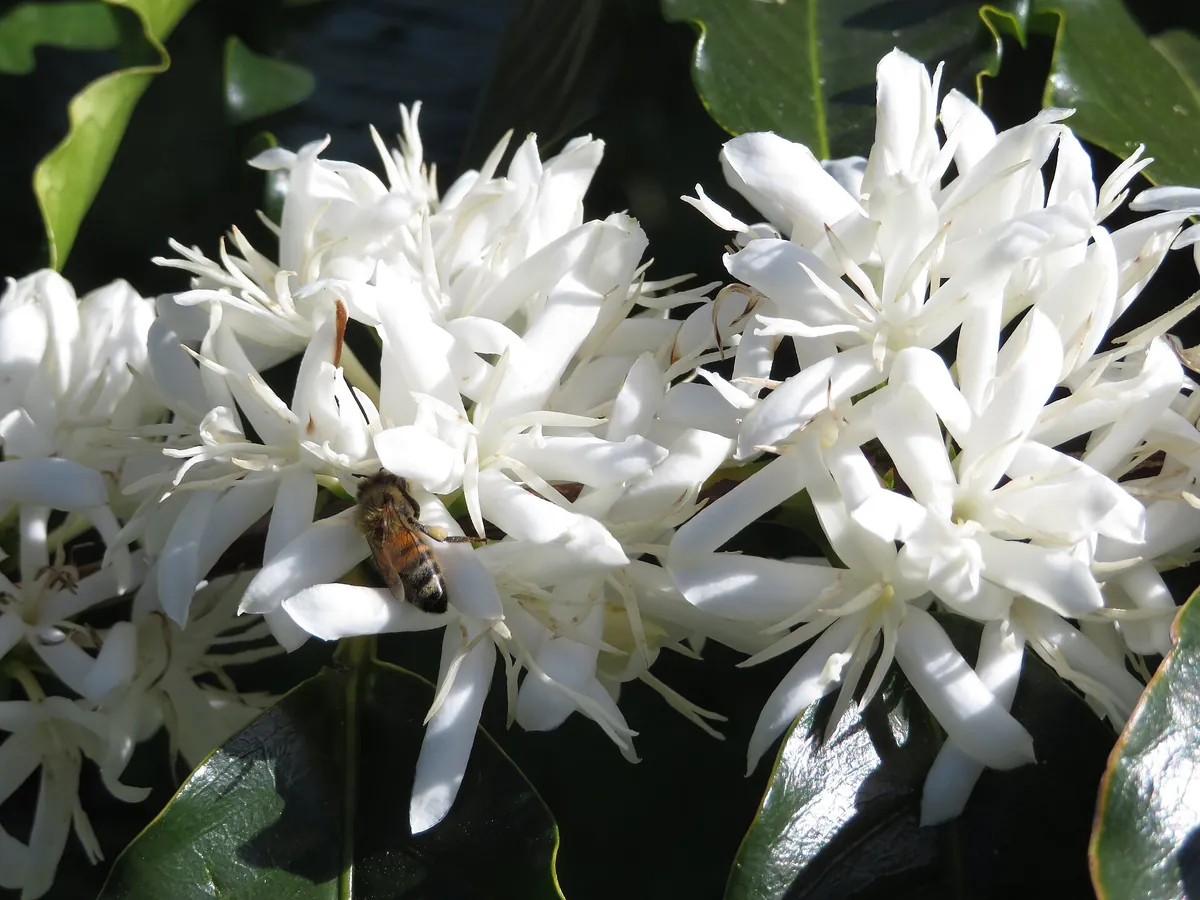
Coffee flowers can pollinate themselves, but bees improve the harvest. On one farm in Costa Rica, coffee growing within a kilometre of forest yielded 20% more because of the bees living there12.
References
- Café Imports, honey process
- Perfect Daily Grind, everything you need to know about honey processing
- Café Imports, Costa Rica
- Perfect Daily Grind, how honey processing is evolving in specialty coffee
- Drop Coffee, processing in Costa Rica
- Barista Magazine, hello, honey: a look at the Costa Rican process that's making coffee colourful
- Café Imports, washed process
- Barista Magazine, understanding the process: honey process
- Contexto Ganadero, Colombian coffee growing uses less and less water
- Perfect Daily Grind, lactic fermentation in coffee
- Carder et al., the animal welfare implications of civet coffee tourism in Bali, Animal Welfare (2016)
- Ricketts et al., economic value of tropical forest to coffee production, PNAS (2004)
Photo credits
- Michael.C.Wright, CC BY-SA 4.0
- Tarrazu at en.wikipedia, Public domain
- PROJETO CAFÉ GATO-MOURISCO, Unsplash License
- Forest and Kim Starr, CC BY 3.0 US


