Wabi-sabi is a Japanese design philosophy rooted in Zen Buddhism. For the writer Beth Kempton, it helps us “to see beauty in imperfection, appreciate simplicity and accept the transient nature of all things”, and in interiors it mixes rustic and minimalist pieces with natural, earthy tones and raw surfaces1.
In specialty cafés, that means hand-finished plaster, rough stone, linen and clay colours, in cities as far apart as Copenhagen, Prague, Lisbon, Bogotá and Singapore.
Glyph Supply Co, Singapore
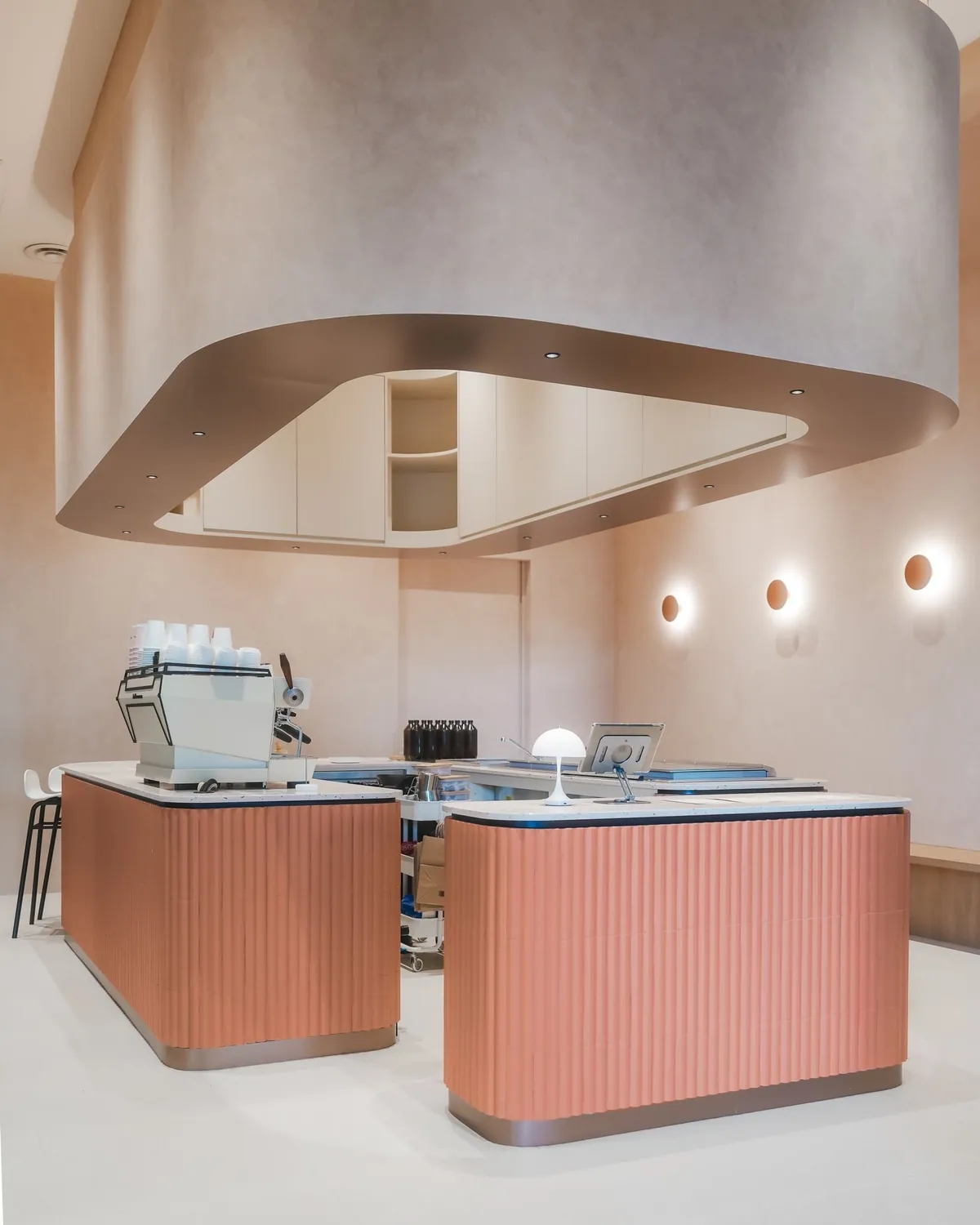
Glyph Supply Co’s café is in Jurong East2. Its bar stands in the middle of the room under a curved grey canopy hung from the ceiling, and its two counters are faced in fluted panels the colour of terracotta, against sand-coloured walls lit by small round lamps.
Glyph roasts its own coffee and has bought it directly since it started in 2019, from Colombia, Panama, Bolivia, Ecuador, Ethiopia and Brazil, working with the producers at each farm it visits3.
Andersen & Maillard, Copenhagen
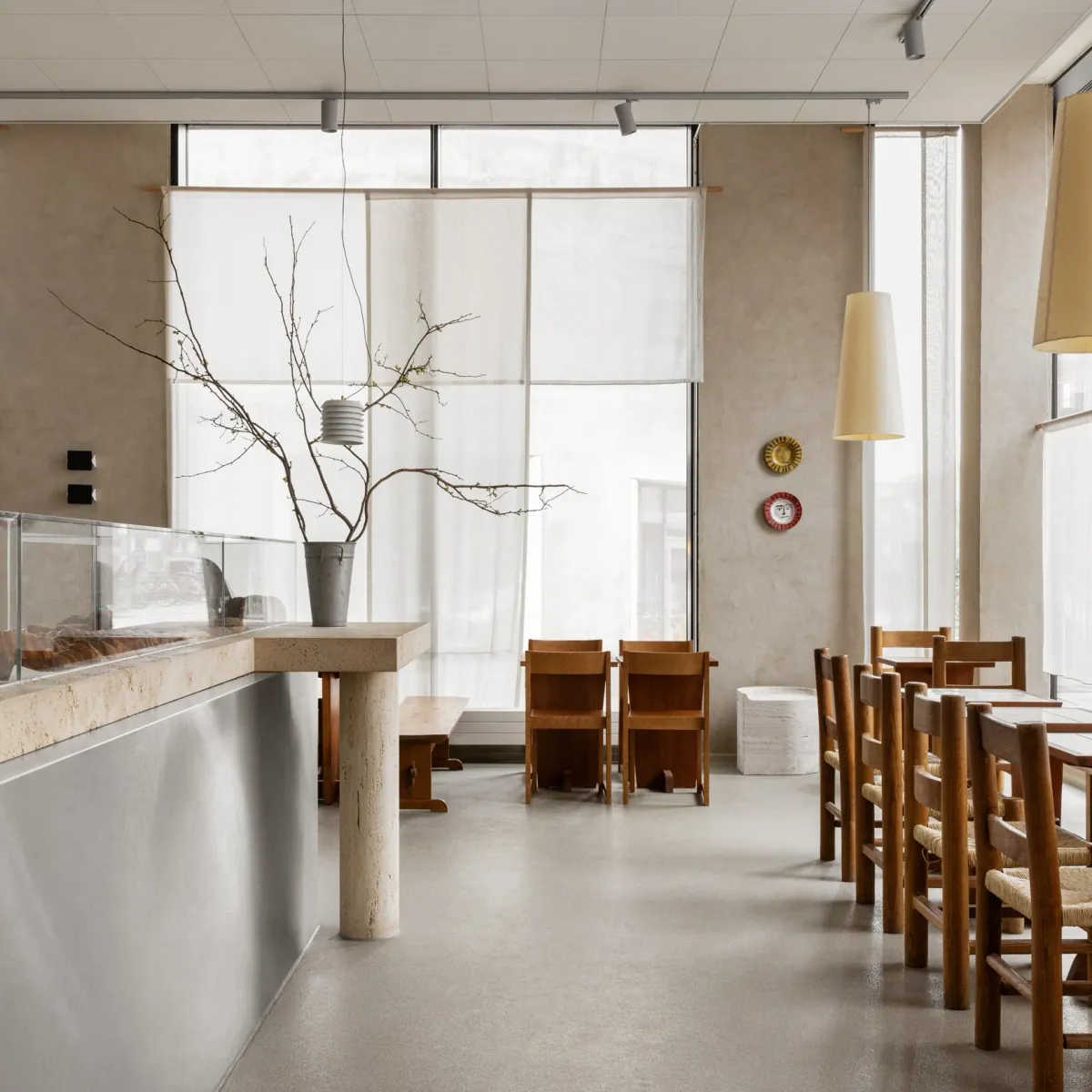
Andersen & Maillard’s artisan bakery in Nordhavn opened in 20194. The walls are a warm grey plaster, the steel counter ends in a pale stone column, and tall windows are screened with white linen. Wooden chairs with woven rush seats line the tables, paper lamps hang from the ceiling and a bare branch stands in a pot on the counter. Andersen & Maillard’s day starts at 3am5.
The coffee is Andersen & Maillard’s own, roasted at the coffee shop and roastery it opened in Nørrebro in 20184.
Tropicalia Coffee, Bogotá
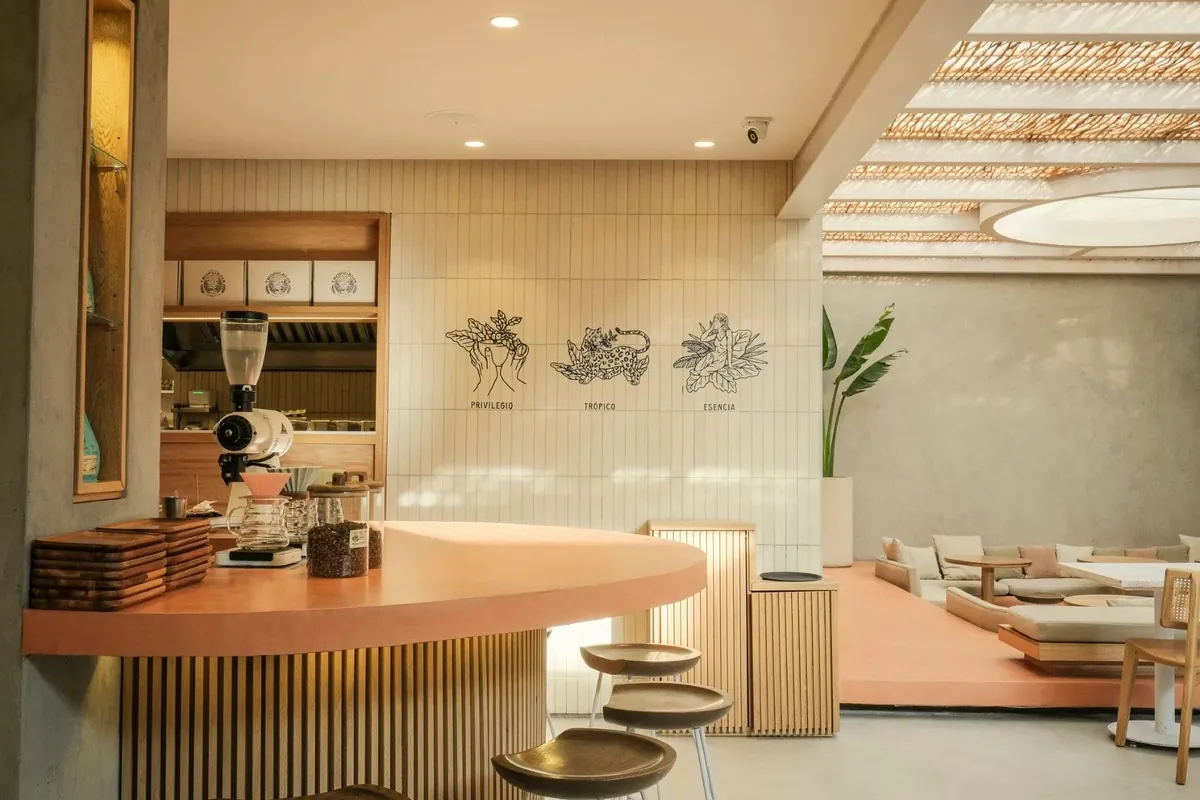
Tropicalia’s El Nogal café was designed by Colette Studio, which set out to explore the idea of the tropics beyond the stereotypes and to speak “a contemporary language”, and it was a Spaces winner at the SCA’s Coffee Design Awards in Boston in 20226. A curved terracotta counter on a slatted wooden base faces a pale tiled wall with three botanical drawings, each labelled with one of Tropicalia’s coffee lines. Beyond it, a lounge of cream sofas sits a step down under a ceiling of woven reed.
Tropicalia roasts Colombian coffee every day, and its cuppers and roasters give each batch its own cup profile7.
Mazelab Coffee, Prague
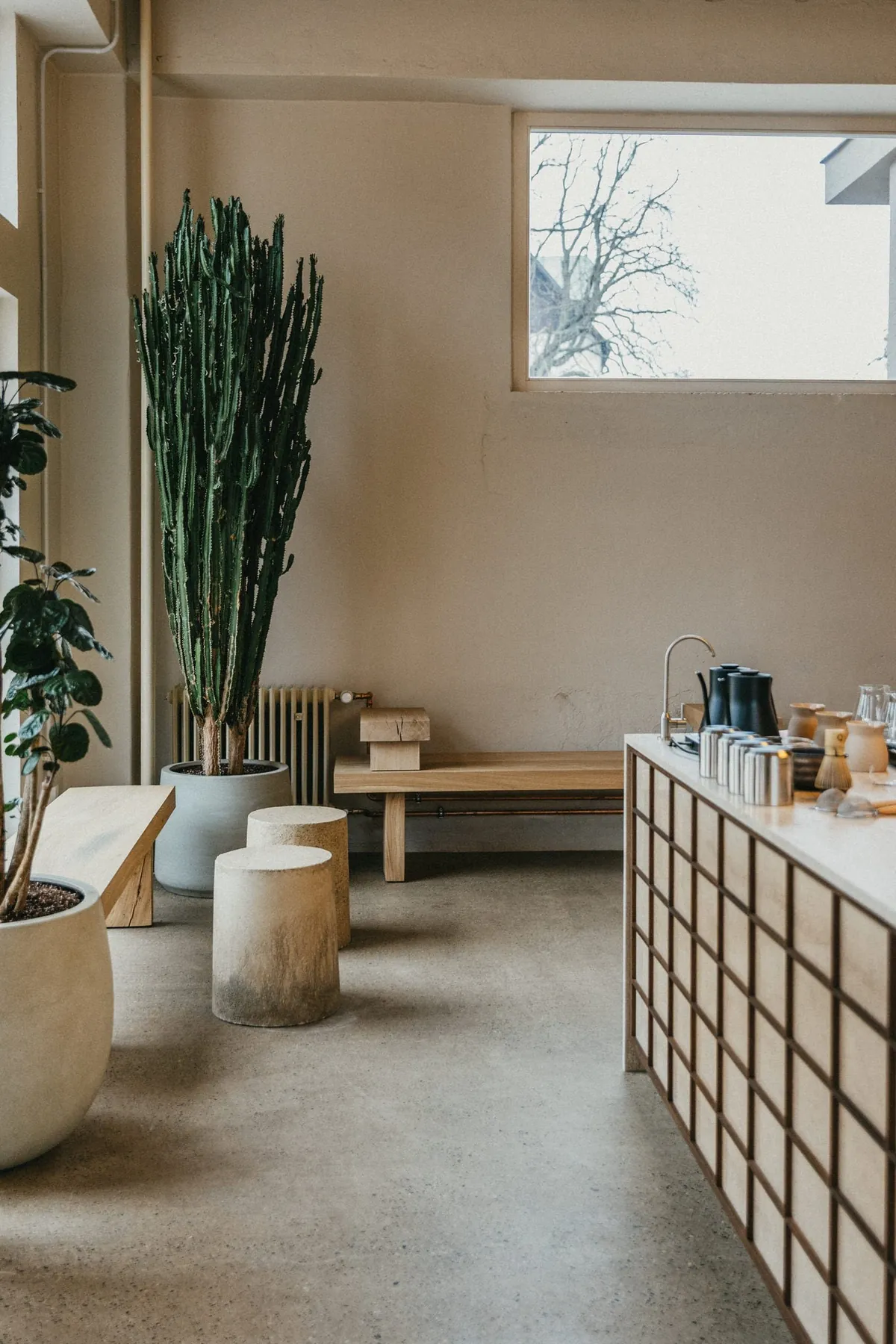
Mazelab’s Pleiku café opened in Libeň, near the Libeň Chateau, on Valentine’s Day 20268. Jackie Tran, one of Mazelab’s founders, designed it himself and treated the bar as its most important part. It has stone on the side and a lattice front and back that echoes the bar at the Mazelab roastery. Tran had wanted a paper-like material he’d seen in Japan and couldn’t find it, so the panels are partly made of coffee, a washed geisha from the Panamanian producer Wilford Lamastus, who came to see the bar and made the first coffee on it9. Low timber benches and round stools stand against plain plaster walls beside a tall cactus.
Pleiku’s menu is wider than the roastery’s, and the opening menu had a Liberica from Malaysia and a Racemosa from South Africa9. Tran’s large-format photographs of coffee processing hang on the walls, and a side room holds a small coffee gallery with samples to look at and smell8.
The Folks, Lisbon
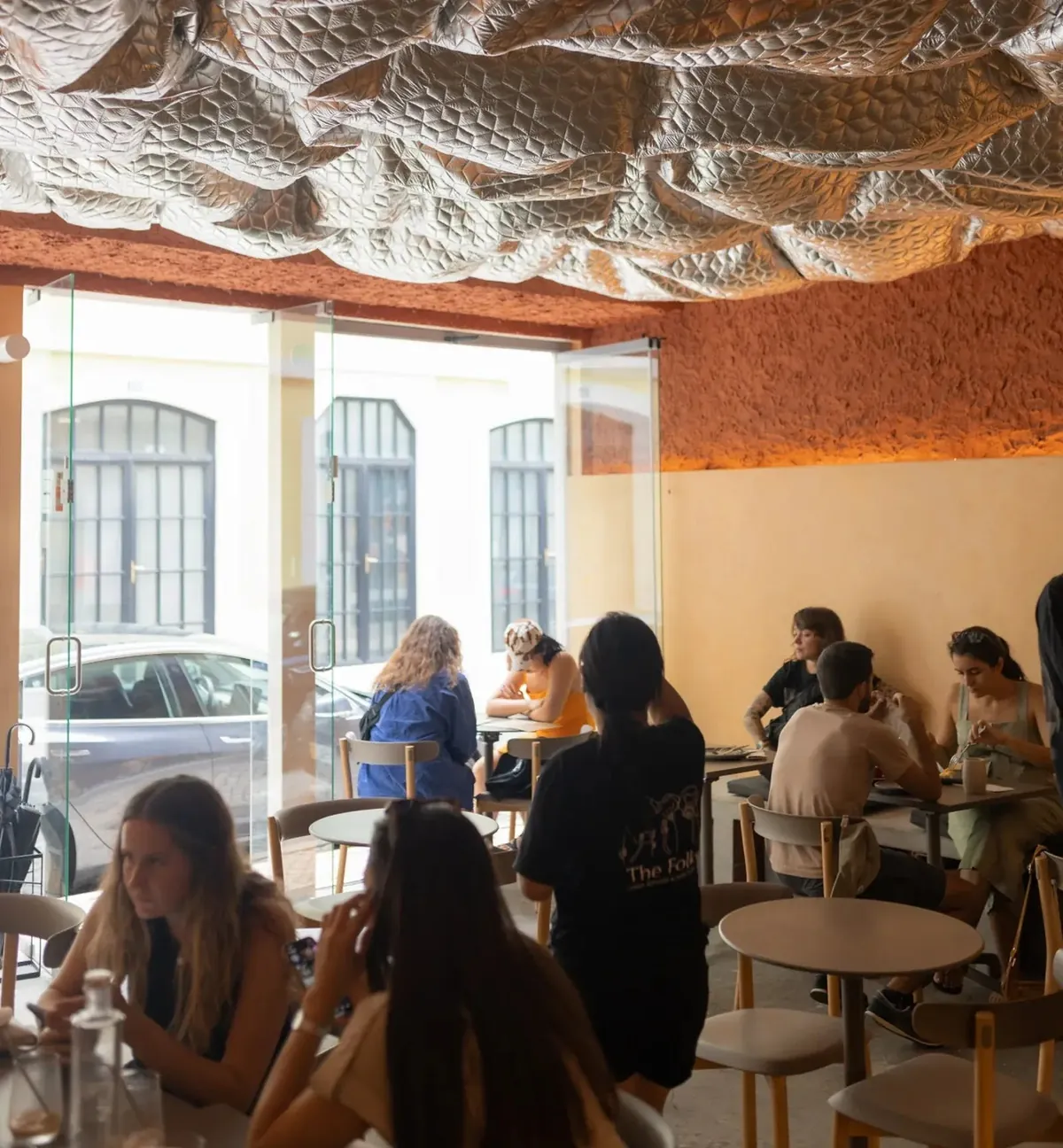
The Folks opened its first café in Chiado in 2022 with “one counter, one machine, a lot of hope”10. The counter is marble11, the ceiling is lined with quilted silver fabric, and a rough orange-plastered wall rises above sand-coloured lower walls, with round tables and glass doors that open onto the street.
Since 2024, The Folks has roasted its coffee in its own roastery in Lisbon, in small batches every week, and the coffee poured in the cafés is the coffee sold in the bags12.
MONO Coffee, Antwerp
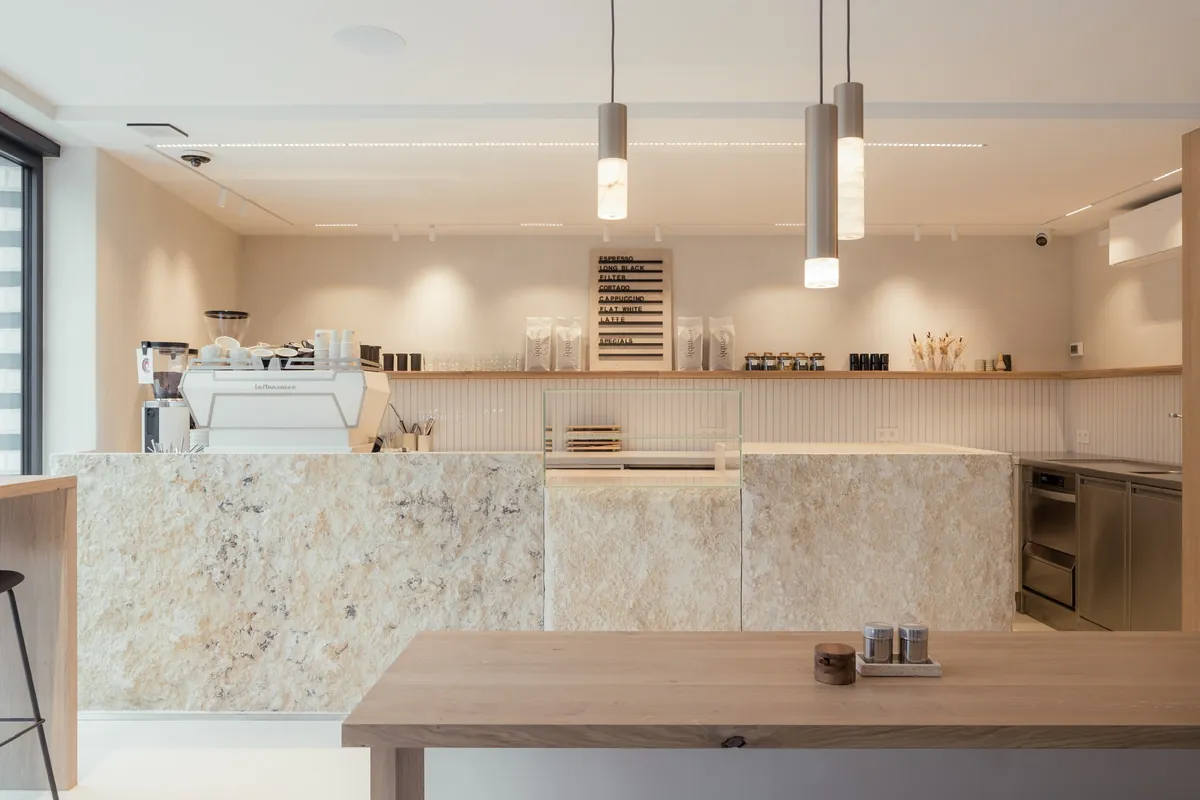
MONO is a coffee bar in Berchem. Its counter is clad in rough pale stone, under glass pendant lights and in front of a ribbed back wall and warm plaster, with a pale oak table in the room.
MONO serves only single origins, “to provide a clean and balanced cup”. Its coffees of the month are roasted by Assembly Coffee and change with the season, while the house espresso stays the same all year: the Mono Espresso, a Brazil from Mio Fazenda. The pastries are made in house13.
Otsu, Barcelona
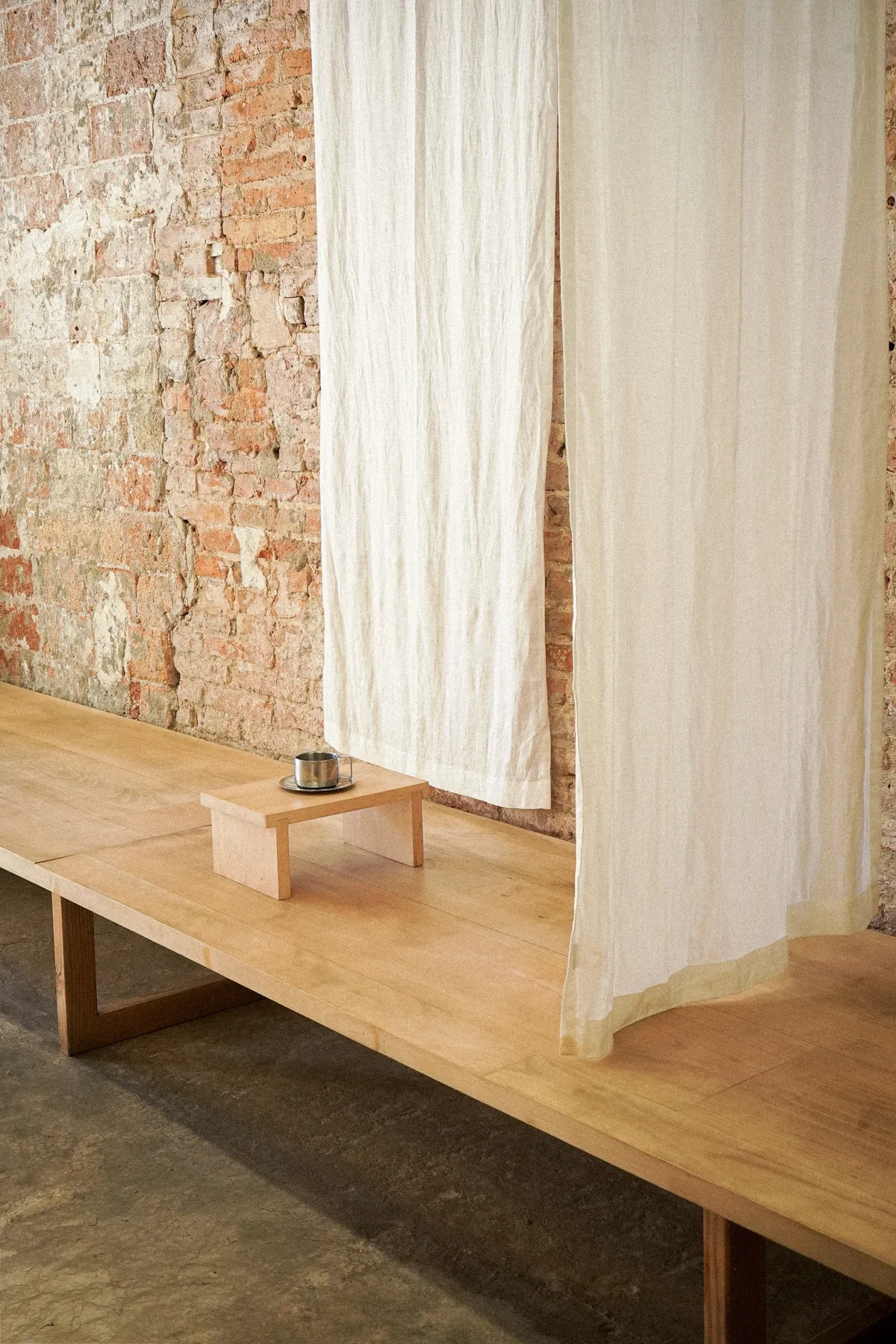
Part café, part kitchen and part atelier, Otsu is in Barcelona’s Poblenou14. White linen curtains hang over a long, low wooden bench against bare brick, with a cup on a small wooden tray table.
The breakfast and lunch menu runs through Japan, from the Tokyo Breakfast of warm rice, slow-cooked egg, shaved bonito, fermented soybeans and coffee broth to egg and kimchi sandos on Japanese bread. The coffee is from April in Copenhagen, and the cardamom bun is glazed with it14.
Nowhere Coffee Roasters, Milan
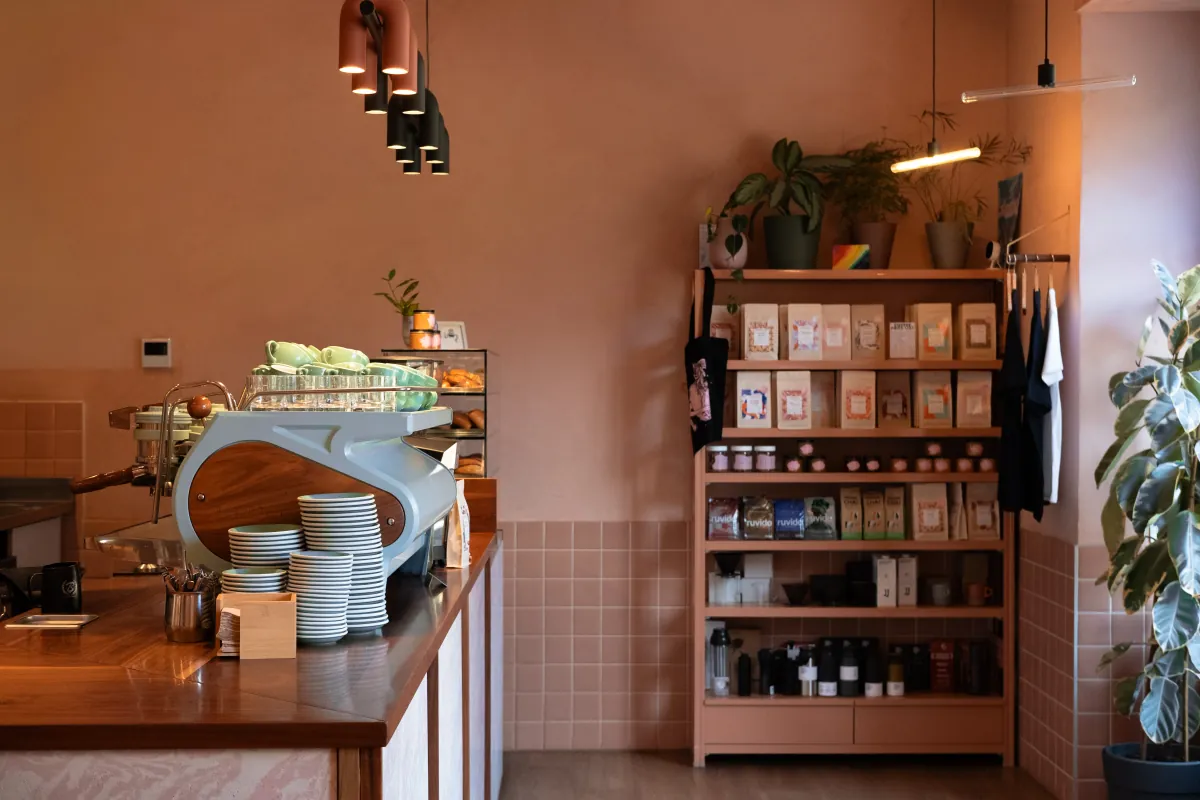
Nowhere’s coffee shop in Ticinese has pink plaster walls over pink tiles, a wooden counter and a wooden shelf of coffee bags and plants. It keeps books to read over coffee or brunch and a selection of vinyl and magazines, and its comfort-food menu focuses on vegetarian and vegan dishes15.
Nowhere began as a small coffee shop in Milan in the summer of 2020 and opened its own micro-roastery at the end of 2021. It roasts single origins only and never blends them, buying fresh seasonal crops directly from producers and from importers who can give full information on each farm16.
References
- Dezeen, eight interiors that embrace the principles of wabi-sabi
- Glyph Supply Co, About Us
- Glyph Supply Co
- Andersen & Maillard, Locations
- Andersen & Maillard
- Specialty Coffee Association, Coffee Design Awards, Tropicália Coffee
- Tropicalia Coffee, Nosotros
- CzechCrunch, Palmovka dostala kavárnu, za kterou se vyplatí jet přes půlku Prahy
- Forbes Česko, Vietnamské kávové městečko otevřelo v Praze
- The Folks, About us
- The Folks, Locations
- The Folks, Cafés
- MONO Coffee
- Otsu, Breakfast. Lunch. Coffee.
- Nowhere Coffee Roasters, About Coffee Shop
- Nowhere Coffee Roasters, About Roastery