Scandinavian style has its roots in Denmark, Sweden and Norway in the early to mid 20th century, and its main aim is to let in as much light as possible. White walls and floors in light woods such as pine, birch and ash help with that, and the look as a whole rests on simplicity and a connection to nature1.
In specialty cafés, it comes out as counters and furniture in pale wood, white or pale grey walls, big windows and very little else on show. It runs from Coffee Collective in Copenhagen through roasters’ cafés in Berlin, Munich, Amsterdam and Cologne, and reaches as far as Lancaster, Pennsylvania, and Sydney.
Coffee Collective, Copenhagen
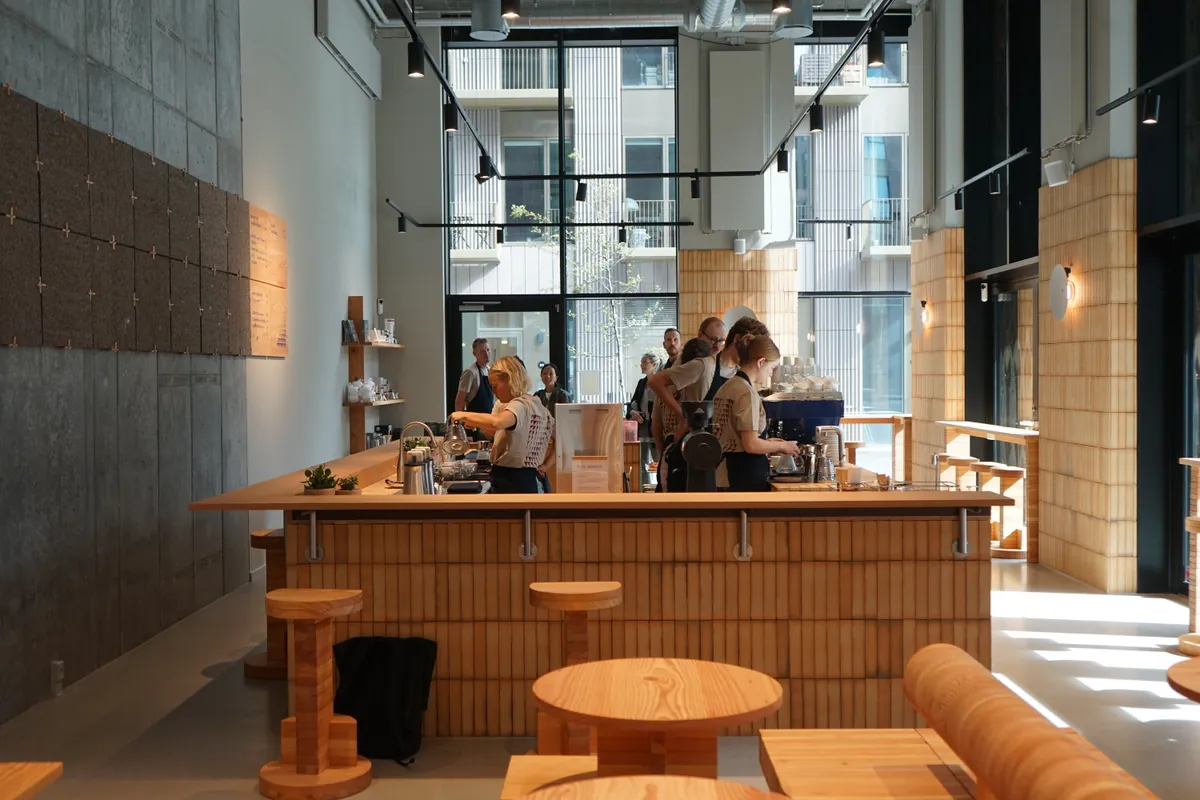
Coffee Collective’s Carlsberg Byen café is one of its newest shops, in a district where old industrial buildings stand beside new ones, and its design draws on both. Six-metre windows fill the room with daylight. The walls are concrete and the bar is tiled. The furniture is made from surplus material from the flooring maker Dinesen and is designed to be taken apart and used again, and the acoustic panels are made of seagrass. From the café there’s a view of J.C. Jacobsen’s garden2.
Coffee Collective roasts every day and delivers the coffee to its own shops3.
Haven Coffee, Sydney
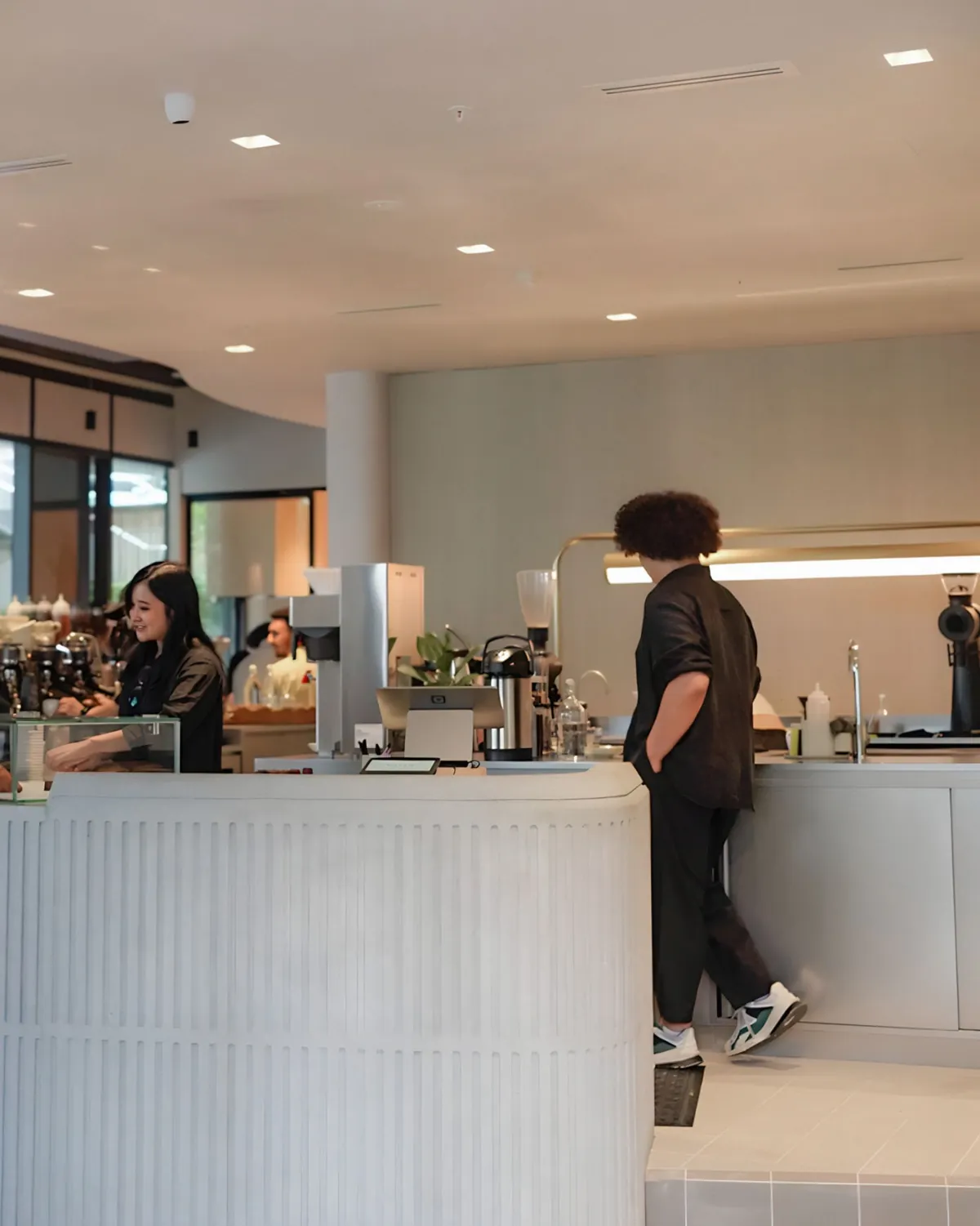
Haven Coffee opened its Green Square café in Zetland as its new flagship a decade after the brand launched. Its directors, Kit Tran and Herman Chui, worked with the interior architects MOYA & CO again for it, and the room is minimalist, in tactile materials and neutral colours4. A curved white counter with fluted sides stands in front of the bar, under a low white ceiling.
Haven roasts its own beans4. Its everyday house blend, Compass, is an espresso roast made to work through milk while keeping some fruit5.
Bonanza Coffee Roasters, Berlin
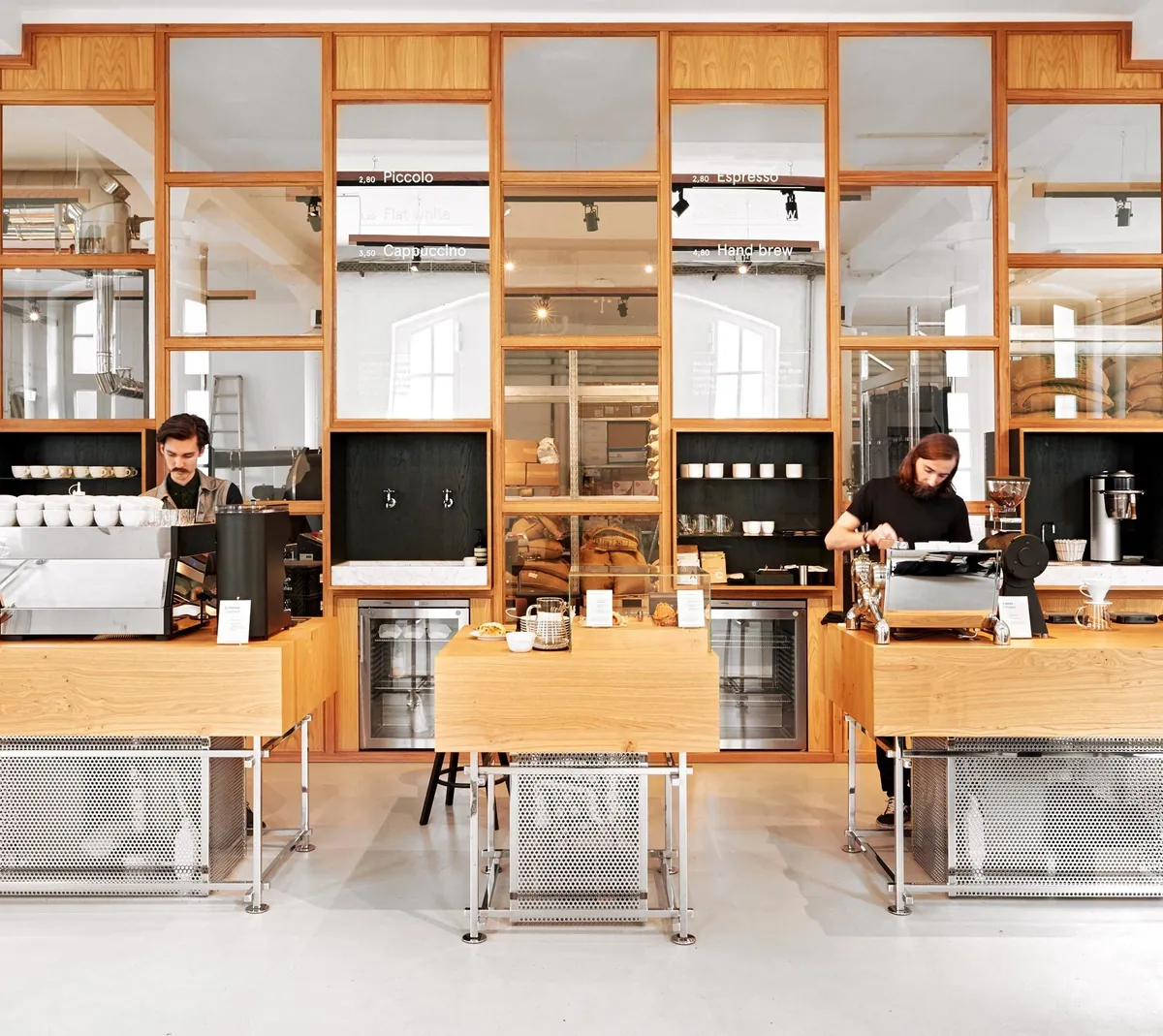
Bonanza’s roastery café is in a backyard in Kreuzberg, and the Dutch interior and furniture studio Modiste designed it. The coffee stations stand in the main seating area, and the roasting room is visible behind a semi-transparent partition with a door that lets the smell of roasting reach the whole bar6. The partition is a grid of pale wood and glass, and the three stations in front of it are pale wood on steel frames with perforated metal panels.
The coffee is roasted on a rebuilt 1965 Probat UG-226. Bonanza has been part of Berlin’s specialty coffee since 2006 and roasts all its coffee in the city7, and the roastery is one of its four sites there8.
Passenger Coffee, Lancaster
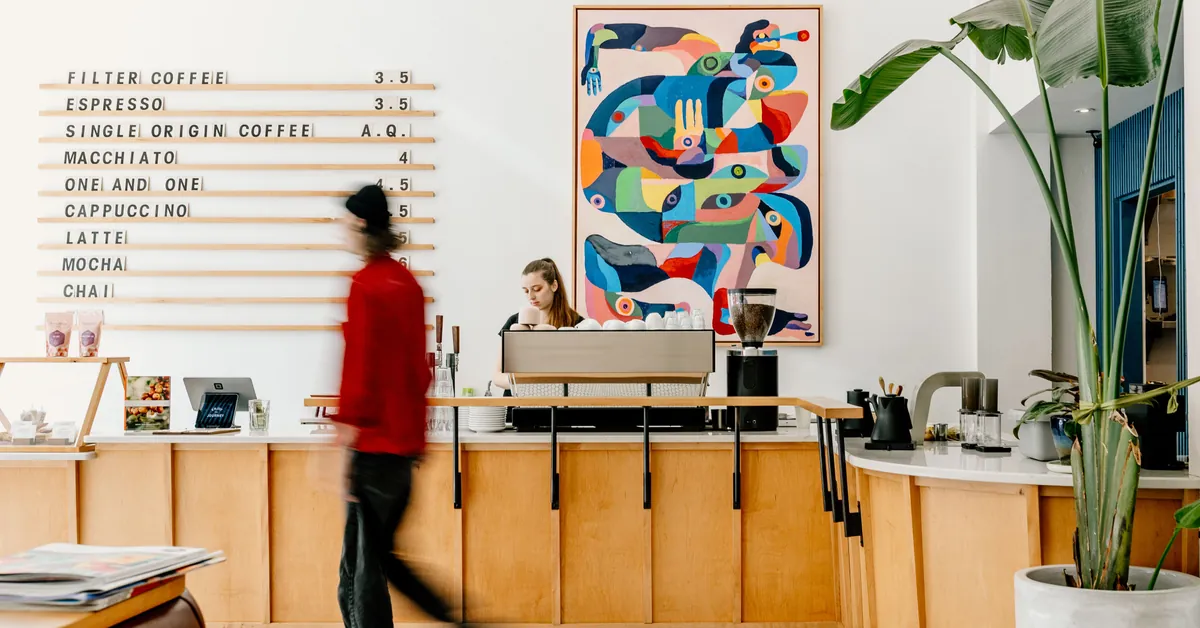
Passenger Coffee’s Flagship Cafe in Lancaster, Pennsylvania, has a long counter in pale wood with a white top, set against white walls with a menu board of wooden slats and one large, brightly coloured painting. The menu is built to put coffee and tea first, with single origins brewed as espresso or pour-over and a Gongfu tea bar. It also lists archival coffees kept in deep freeze, among them past competition winners and rare varieties, which are brewed as pour-over9.
Passenger roasts its coffee in Lancaster and also runs a coffee bar at the front of its roasting facility10.
Suuapinga, Munich
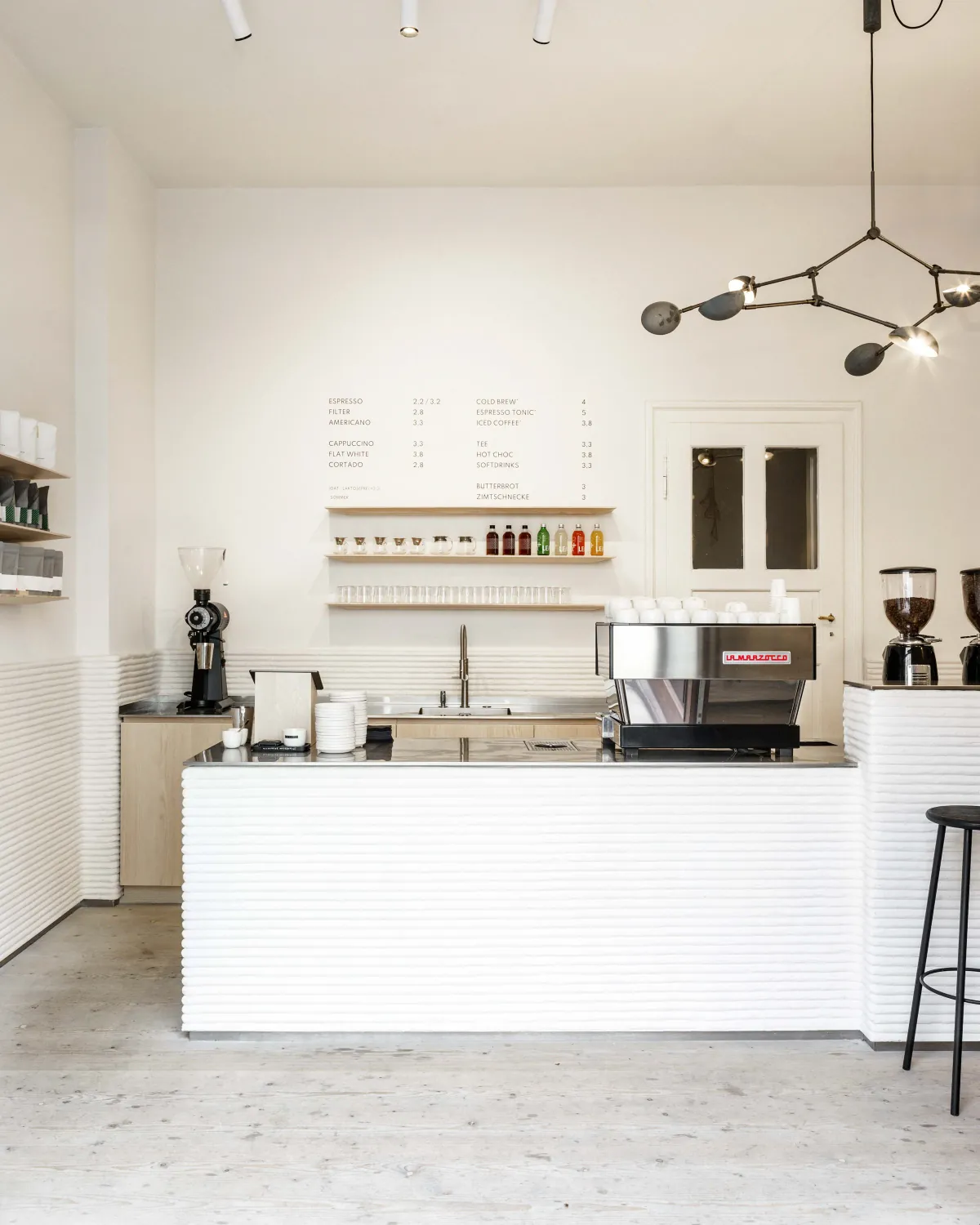
Suuapinga began in 2021 with one small café in Schwabing, the Munich neighbourhood that was first mentioned in the year 782 as Suuapinga, and it now has a roastery and a sourdough bakery as well as its cafés11. The first café is a white room with a counter clad in white ribs, pale wood shelves behind the bar, pale floorboards and a branching lamp above it.
The house espresso is the Suuapinga Espresso, a natural-process coffee from Minas Gerais in Brazil12, roasted in small batches at the company’s own roastery11.
Five Ways Coffee Roasters, Amsterdam
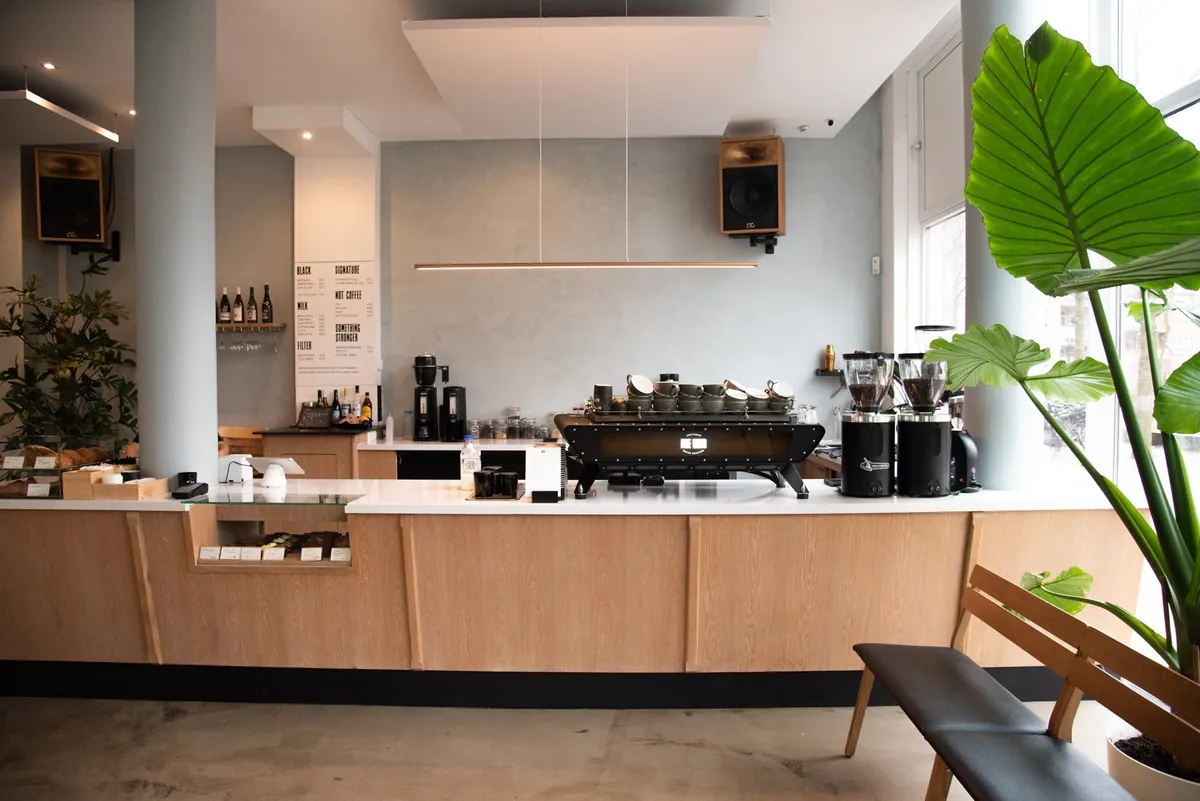
Five Ways has two cafés in Amsterdam, East and West13. The East café in Oost has a long counter faced in pale wood under a white top, pale grey plaster walls, tall windows and a wooden bench beside a large plant.
It pours the Five Points blend, a natural Brazil and a washed Colombia that Five Ways roasts to separate profiles, the Brazil for body and chocolate sweetness and the Colombia for its raspberry acidity14.
omo, Cologne
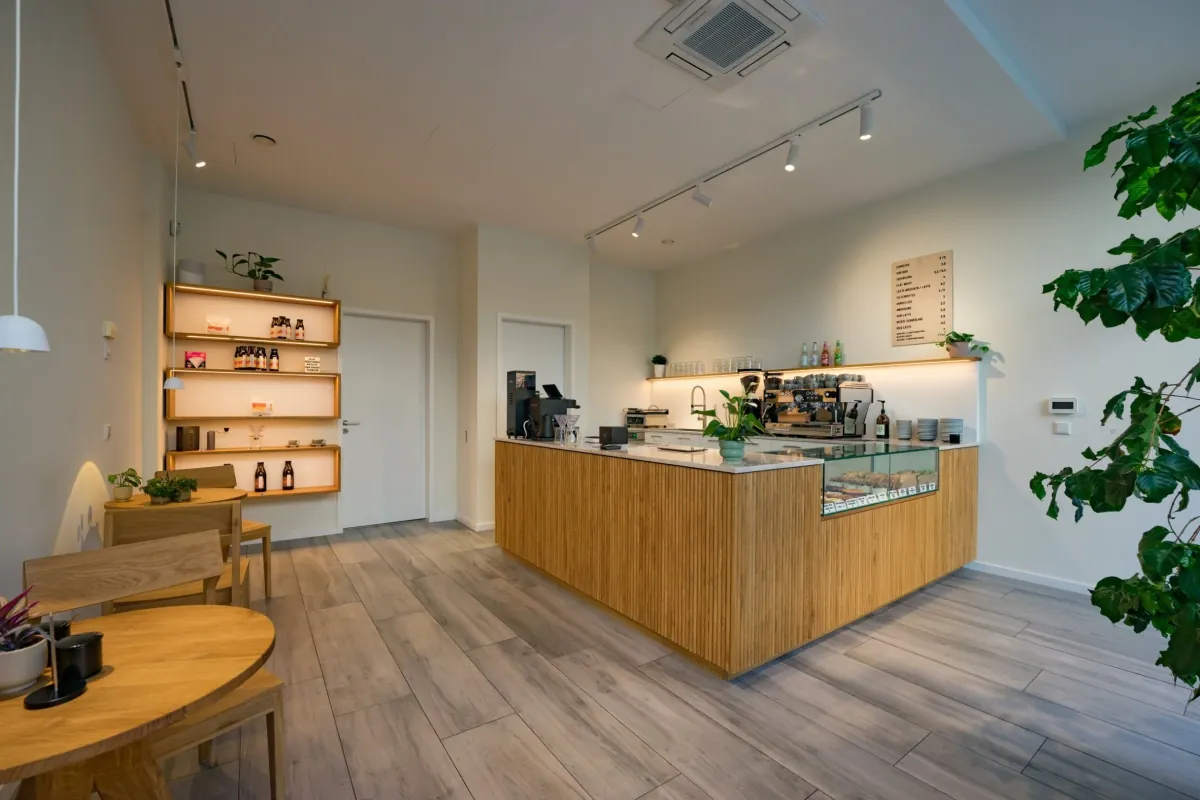
omo roasts in Cologne and pours its coffee in its own café in the Rheinauhafen15. The room has a counter of pale wooden slats, lit wooden shelves on the side wall, white walls, a grey floor and round wooden tables.
The shelves hold coffee in deposit glass bottles, which can be refilled or handed in at a bottle return machine15. The café’s standard coffee is the fruity omo-Blend16.
References
- Houzz, a guide to Scandinavian design
- Coffee Collective, Carlsberg Byen
- Coffee Collective, Our story
- Concrete Playground, Haven Coffee Green Square
- Haven Coffee, Haven's Seasonal Blend: What Exactly Is It?
- Wallpaper*, the Bonanza Roastery Cafe gives Berlin a new coffee star
- Bonanza Coffee Roasters
- Bonanza Coffee Roasters, Where to Find
- Passenger Coffee, Flagship Cafe
- Passenger Coffee, Roastery & Coffee Bar
- Suuapinga, About
- Suuapinga, Suuapinga Espresso
- Five Ways Coffee Roasters, Locations
- Five Ways Coffee Roasters, Five Points Blend
- omo, Specialty Coffee, Köln
- omo, omo-Blend, fruchtig