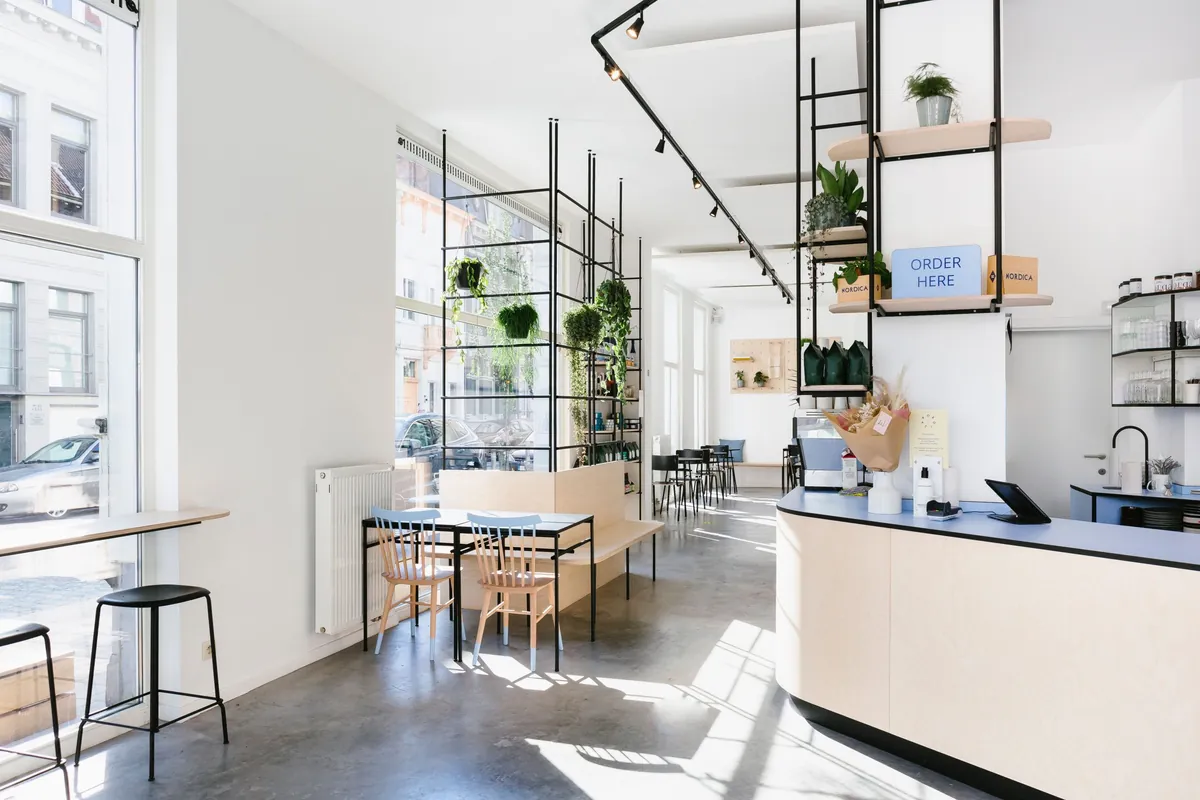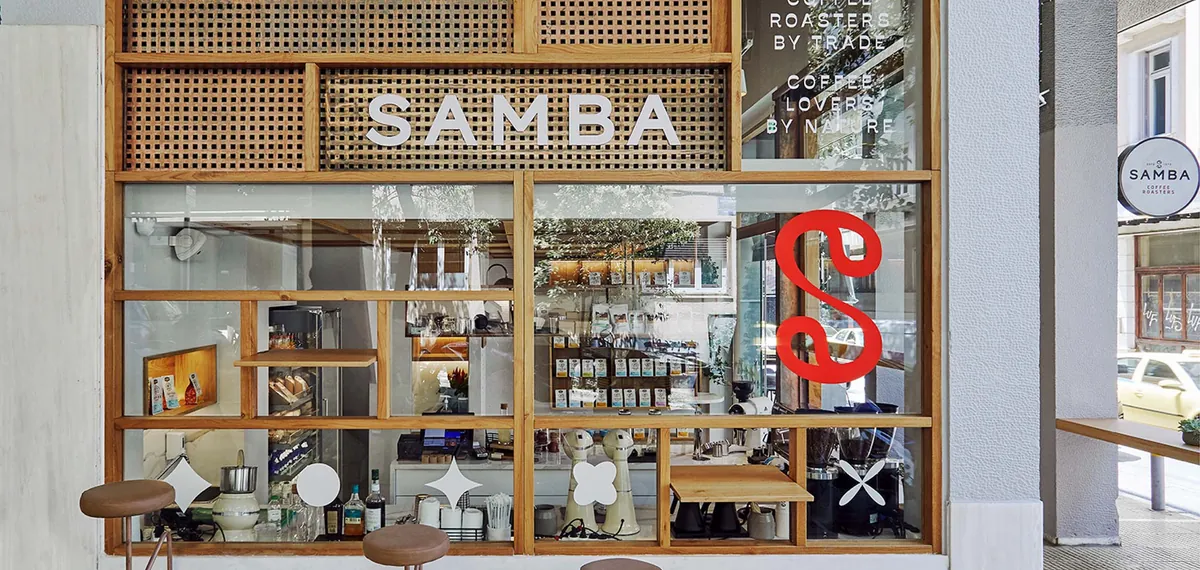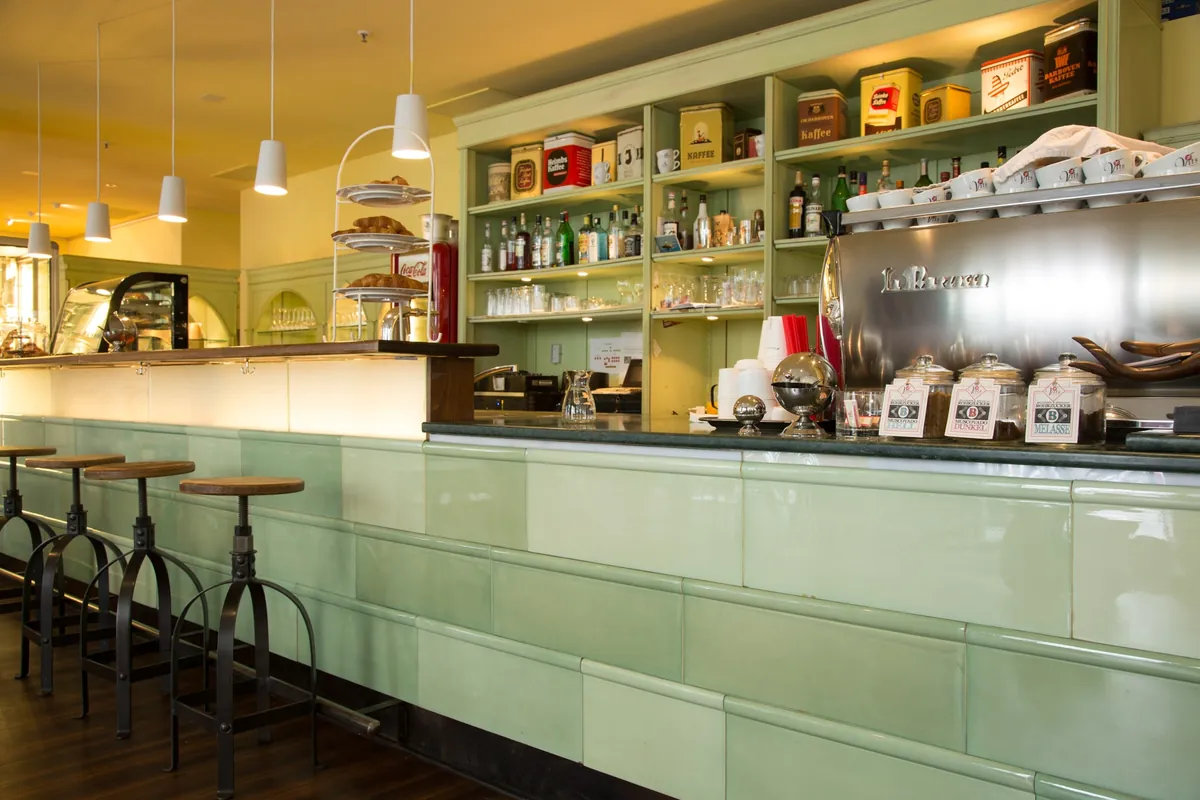
Six of these ten Munich coffee businesses roast their own coffee: Man Versus Machine has done so since 2014, Vits roasts in the heart of the city, Stray and Suuapinga started in 2021, Pacandé roasts Colombian microlots in Sendling and Café Blá roasts on a Giesen drum roaster in the Au. The other four pour coffee roasted for them. Three of those, sweet spot kaffee, Standl 20 and Coffee Twins, work with Johannes Bayer, who roasts as JB Kaffee, and sweet spot also brings in more than 30 roasters from around the world. Two of them have a stand or shop at Munich’s food markets, the Viktualienmarkt and the Elisabethmarkt, and the rest are spread from the Altstadt and Glockenbach to Maxvorstadt, Schwabing, Westend, Sendling and the Au.
Man Versus Machine, Glockenbach, Maxvorstadt, Schwabing and Marienplatz
Man Versus Machine was founded in Munich in 2014 and has stayed independent, with no investors. It roasts in Maxvorstadt on a 35 kg Loring Kestrel, cups every coffee in-house before it ships, and roasts light to medium: “some say Nordic and light. We say balanced and sweet.” Its coffee goes to independent cafés in the UK, the EU and the UAE and to Michelin-starred restaurants. The first café, in Glockenbach, is where the roasting began and serves Franzbrötchen. The Maxvorstadt café sits among the universities and museums, Schwabing has a neighbourhood café for espresso and matcha, and on Marienplatz Hôtel de Ville by Man Versus Machine pairs the coffee with ceremonial-grade Japanese matcha. The bars run La Marzocco and Slayer machines, and the roastery hosts barista, latte art and home brewing classes.
Vits, on the edge of the Altstadt
Vits is a roastery with its café on the edge of the Altstadt, and the bar pours espresso drinks, flat whites and pour-over, with an espresso of the week on the grinder and a short lunch menu that changes daily. The coffee is roasted to five profiles, from light filter and espresso roasts of around ten minutes kept for the specialty lots, through an omni roast for fruity single origins and a medium house roast, to a dark roast close to second crack. Vits buys through importers such as Trabocca and Omwani and has bought micro-lots from Germán Carranza in Peru’s Amazonas region for several years. Four course modules teach espresso, latte art, brewing and sensory skills.
Suuapinga, five cafés from Schwabing to Haidhausen
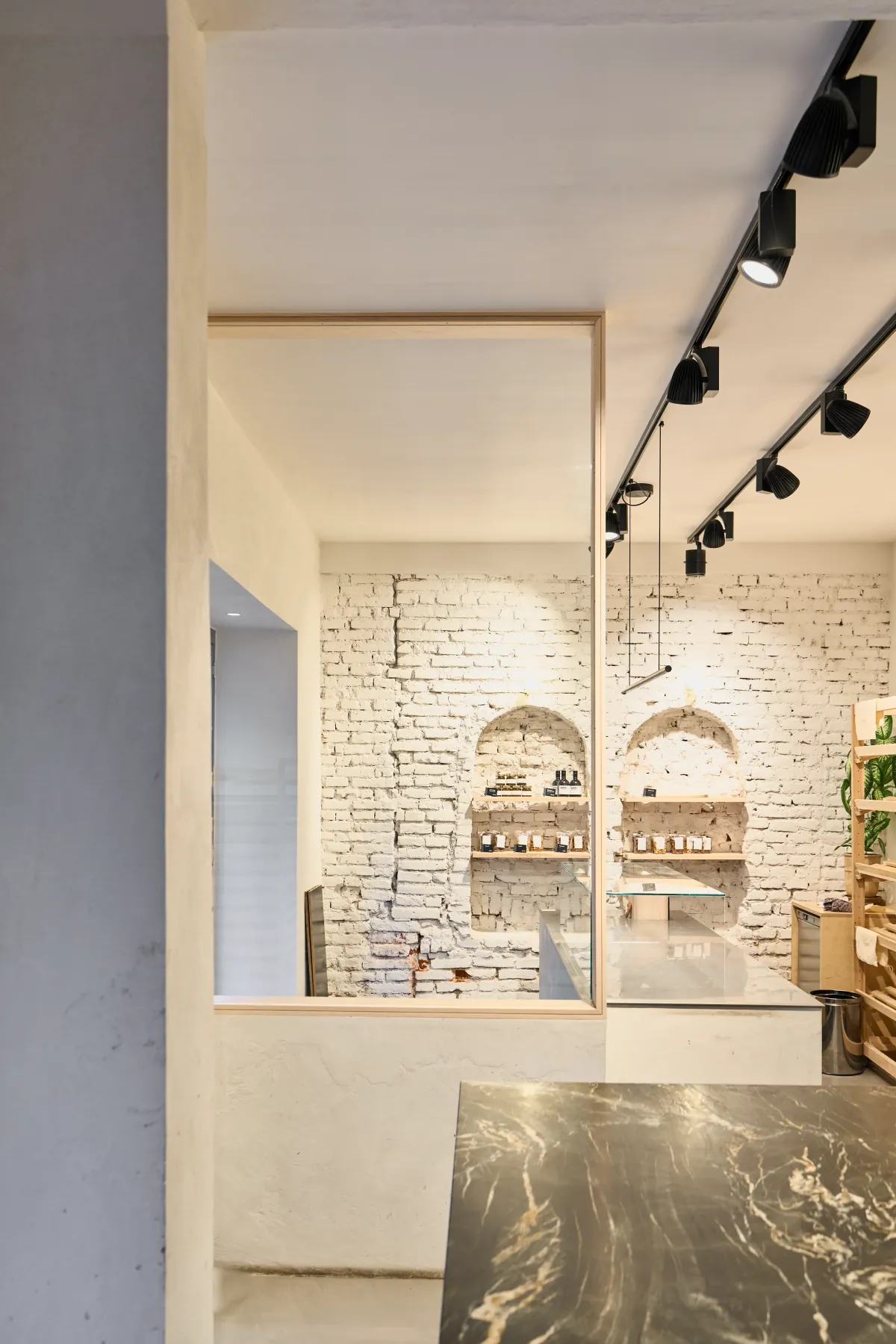
Suuapinga opened its first café in Schwabing in 2021 and took its name from the neighbourhood’s first recorded name, from the year 782. Its founders, Emanuel, Lucas and Pete, now run five cafés, in Schwabing, by the Münchner Freiheit, in Neuhausen, on Wiener Platz in Haidhausen and in Glockenbach, with their own small-batch roastery and a bakery. The house espresso is a natural Brazilian from Minas Gerais, and the Brasilianer, roasted in Munich, is the coffee of its partnership with TSV 1860 München, with part of every bag going to the club’s youth academy. The Glockenbach bakery has baked everything in-house from the first day: slowly fermented sourdough, the Zimtschnecke and the cardamom bun.
Stray Coffee Roasters, Westend
Stray Coffee Roasters was founded in 2021 by Matthias Feldmeier and Ilan Bachl and has a coffee shop in Westend. Every Stray coffee carries the name of its producer or cooperative, and the roaster discloses all the costs along the supply chain, on the view that the producers do most of the work behind a good cup and rarely get the credit for it. The current selection of rare lots comes from Colombia, Kenya, Ethiopia, Burundi and Brazil.
Pacandé, Sendling
Pacandé roasts Colombian specialty coffee at a roastery in Sendling with a bar for espresso and filter. Most of its coffees are microlots from single farms, imported and negotiated directly, and sorted into three families: Special Selection for rare nano-lots, Exotic and Vibrant for fruity and floral coffees, and Classic and Outstanding for chocolatey medium roasts. At the bar every filter coffee from the shop can be tried in any brewing method, and the espresso rotates. Pacandé also holds barista workshops, coffee tastings and guided cuppings.
Café Blá, the Au
Café Blá is a café near the Isar and the Deutsches Museum that roasts its own coffee in small batches on a Giesen WA15 drum roaster. Its roaster, Jacob, took the café over from its founder, Stephanie Bjarnason, in partnership with his boss at Vits, and moved the light roasts he had roasted for Vits to the Blá brand. There are two roasts: the house espressos, House of Nuts and House of Fruits, and an omni roast for every single origin. The green coffee comes through importers such as Raw Material, Planting Costa Rica and Omwani, and the kitchen makes cakes, pies and sandwiches every day, with brunch at the weekend. There are no table reservations.
sweet spot kaffee, Viktualienmarkt and Gärtnerplatz
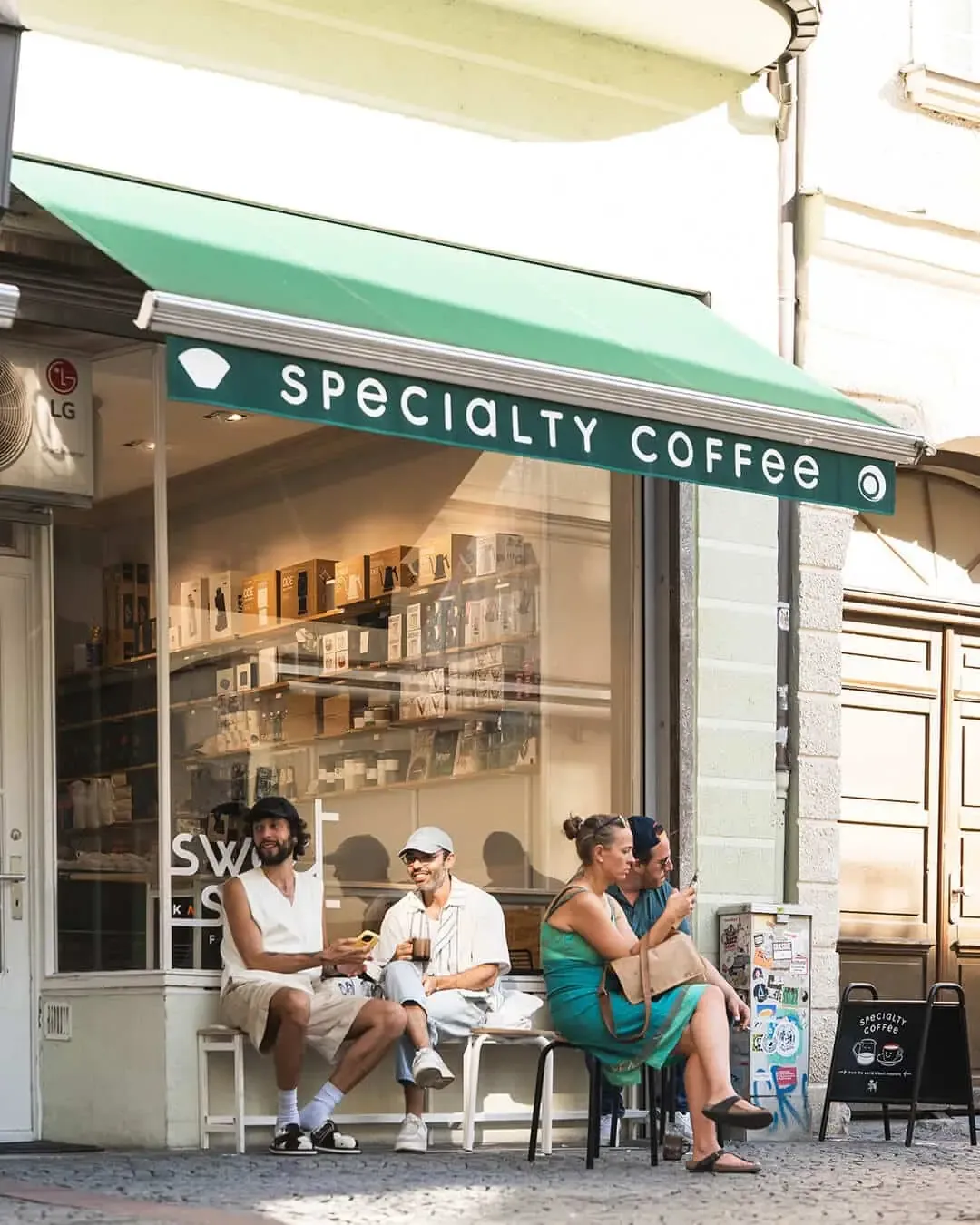
sweet spot kaffee opened in 2019 as a small shop at the Viktualienmarkt and added a larger one between Gärtnerplatz and the Isar in 2023. It does not roast. Six to eight new coffees arrive every two weeks, 150 to 200 a year from more than 30 roasters, chosen from over 1,000 samples tasted blind, and the regulars on the shelf include La Cabra, Tim Wendelboe, SEY, DAK and Coffee Collective, its first supplier. The house espresso, the sweet standard, is a light-roasted single origin from Johannes Bayer, changed every three to four months. Filter coffee has been at the centre from the start, and the Viktualienmarkt shop hosts masterclasses in filter, espresso, sensory skills and coffee water.
Standl 20, Elisabethmarkt
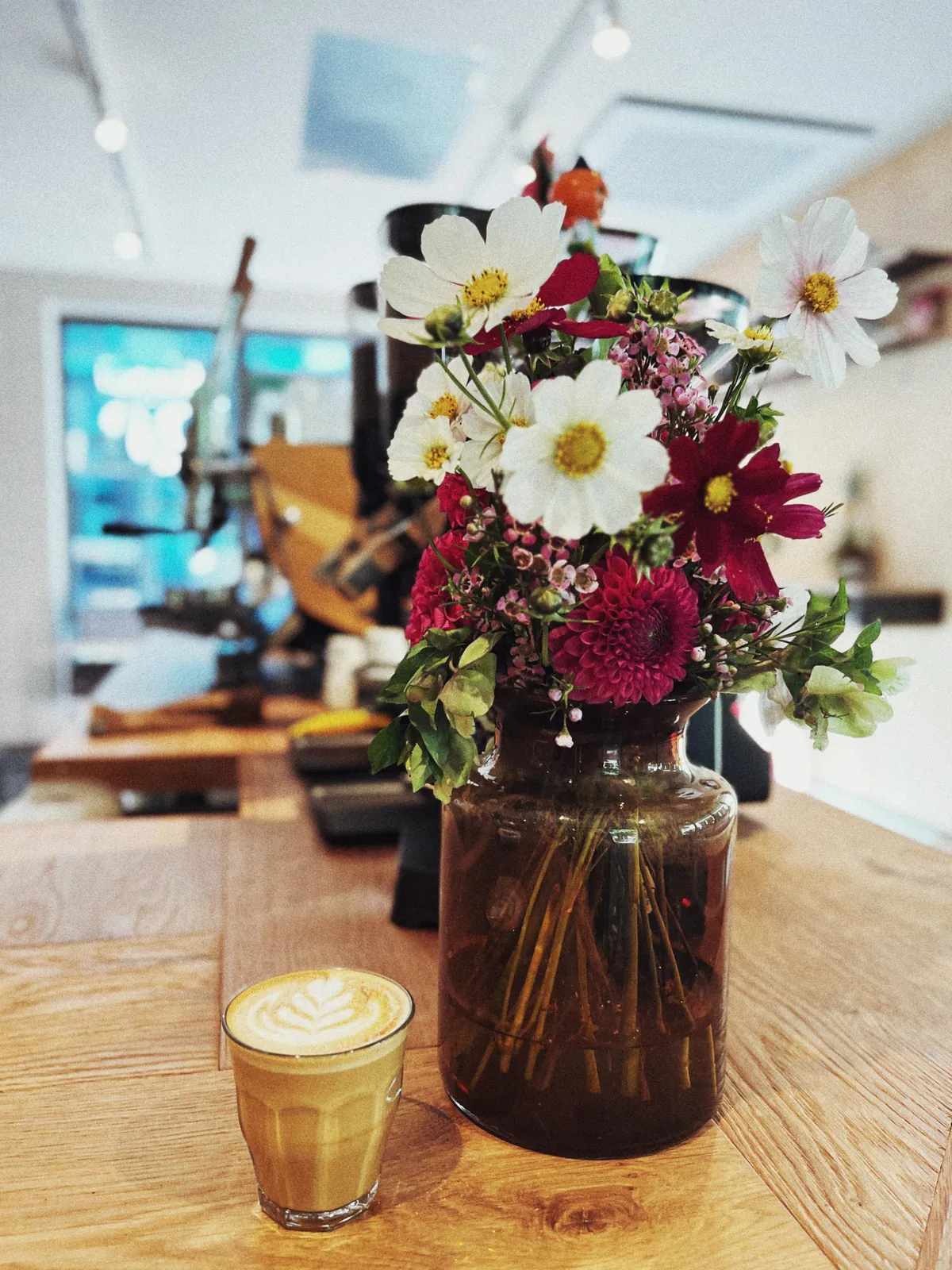
Standl 20 is a coffee stand and brew bar on the Elisabethmarkt in Schwabing, back at its original spot after the market’s rebuilding. It belongs to Johannes Bayer, who roasts every coffee by hand as JB Kaffee, and his business partner Paul von Tettenborn, and the range is seasonal and changes constantly. The menu runs to flat whites, filter coffee and espresso tonic, with homemade pastries. Markus Pyttel was a barista here in 2018 while he planned sweet spot kaffee.
Coffee Twins, Isarvorstadt
Coffee Twins is a café and bakery opened on 3 March 2022 by Jonas and Daniel, twins who trained as pastry chefs. The coffee is roasted by JB Kaffee in Sulzemoos, with a Brazil and Ethiopia house blend, a decaf and a fruitier alternative on the La Marzocco GB5 and filter coffees brewed on the V60. Everything is baked in the café’s own bakehouse with spelt flour from the Meir-Mühle in Arnbach, French wheat flour and Normandy butter, and the milk is hay milk from the Lanzl family’s farm in Neuching. A second Coffee Twins is opening soon in Moosach.
Humpback Whale Specialty Coffee, Amalienpassage
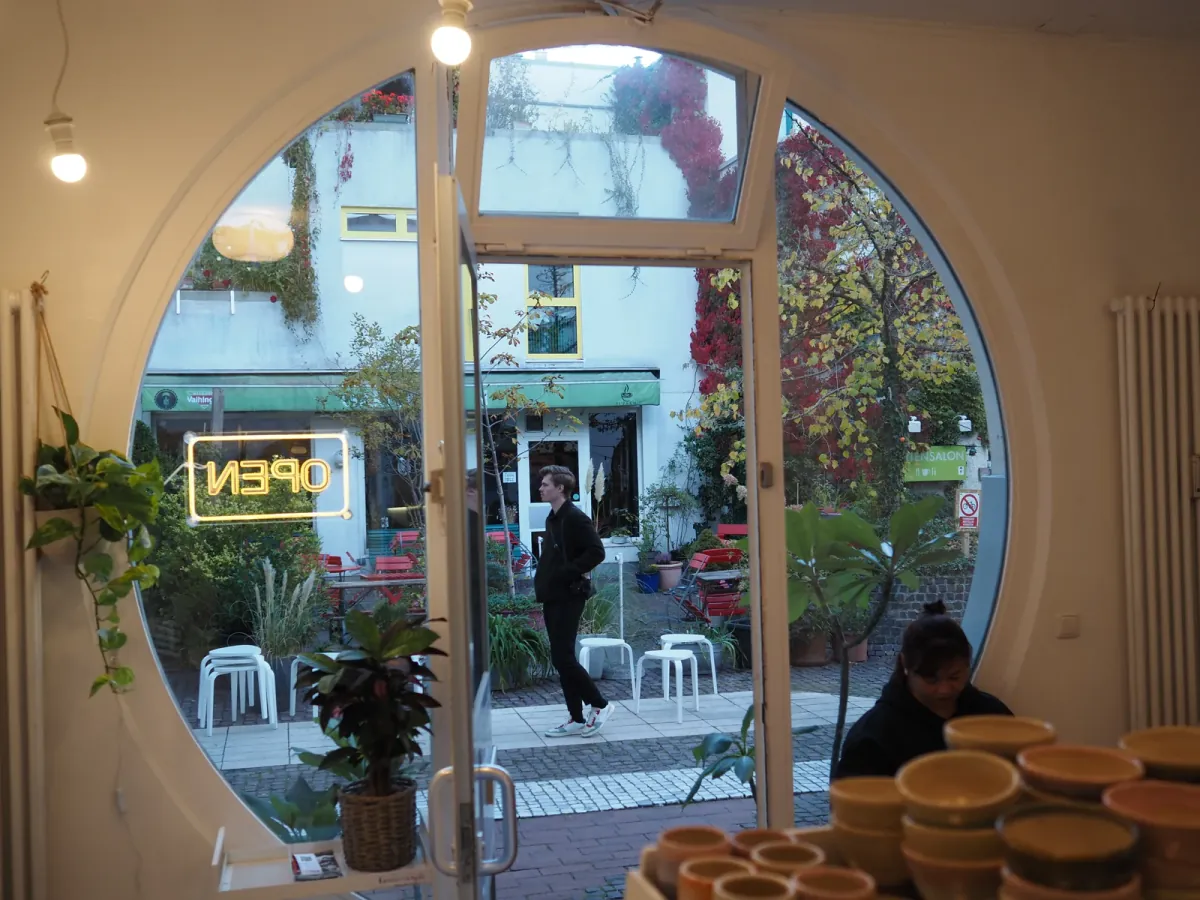
Humpback Whale is a café behind a round porthole door in the Amalienpassage, in Maxvorstadt’s university quarter. It is run by a family with roots in Vietnam, Australia, the Netherlands and Germany, and the bar by Lucy, a co-founder and Germany’s Cup Tasters Champion in 2025, who chooses every coffee. All of them are single origins roasted fresh in Munich, named by region and producer where possible, from a honey-processed Catimor grown by K’Ho smallholders in Vietnam’s Lam Dong highlands to a geisha from Costa Rica’s West Valley.
What you need to know about Munich specialty coffee
Which Munich coffee shops roast their own coffee? Man Versus Machine roasts in Maxvorstadt for its four cafés, Vits roasts for its café on the edge of the Altstadt, Suuapinga has its own roastery for five cafés, Stray roasts for its Westend coffee shop, Pacandé roasts at its Sendling bar and Café Blá roasts in small batches for its café in the Au.
Who roasts for the others? Johannes Bayer of JB Kaffee roasts for Standl 20, which he co-owns, for Coffee Twins and for the sweet standard espresso at sweet spot kaffee, which buys its other coffees from more than 30 roasters. Humpback Whale serves single origins roasted fresh in Munich and chosen by its co-founder Lucy.
Where can you learn to brew? Man Versus Machine holds barista, latte art and home brewing classes at its roastery, Vits teaches espresso, latte art, brewing and sensory skills, Suuapinga runs barista courses in German or English, Pacandé offers barista workshops, tastings and cuppings, and sweet spot kaffee holds masterclasses at the Viktualienmarkt.
Where is the coffee at the markets? sweet spot kaffee began at the Viktualienmarkt and still has its first shop there, and Standl 20 is on the Elisabethmarkt in Schwabing.
Where is there food with the coffee? Suuapinga and Coffee Twins bake their own bread and pastries, Café Blá’s kitchen makes cakes, pies and sandwiches every day and brunch at the weekend, and Vits serves a daily lunch.
Photo credits
Photographs belong to the businesses and are reproduced from their official websites with attribution.