Paris has two kinds of café. The café on the corner sells an espresso at the zinc and a terrace seat for as long as you like. The coffee shop, a word Parisians use in English, sells a flat white or a V60 made with coffee from a named farm, roasted recently, often a few streets away. This guide is about the second kind: the specialty coffee shops that have turned the capital into one of Europe’s more interesting places to drink filter coffee.
We start with three places we would send a visiting coffee drinker to first, in the 11th, 2nd and 3rd arrondissements, then move outward. We have not ranked them.
Klover Coffee Paris, 11th arrondissement
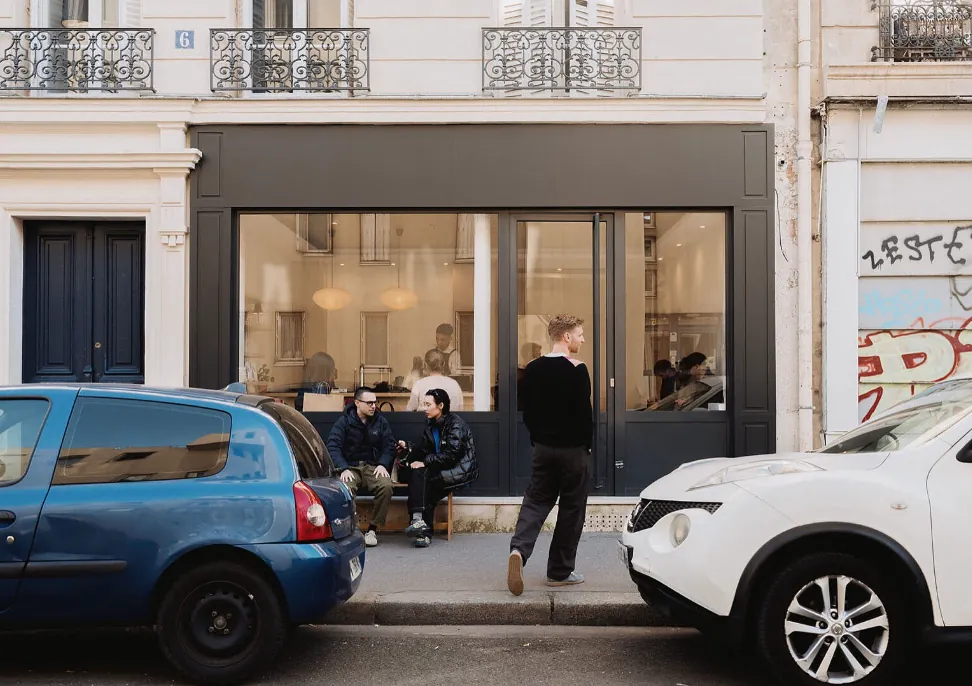
Klover belongs to Harry Kim, a Korean roaster who worked at April in Copenhagen before opening his own place. The name joins the Scandinavian word for coffee to “lover”. The room has blond wood, a bench in the window, pendant lamps, and shelves of deep-blue 200 g bags behind the bar. Klover calls it a showroom.
Kim roasts in-house every Wednesday, and roasts light on purpose. The idea, in the roastery’s own words, is to preserve the variety, the terroir and the producers’ work rather than the roaster’s signature. The current list runs to seventeen single origins: a Klover Selection of Ethiopian, Kenyan, Honduran and Colombian lots at 200 g, and a Limited Edition of 100 g bags that leans heavily on Panamanian geisha.
Substance Café, 2nd arrondissement
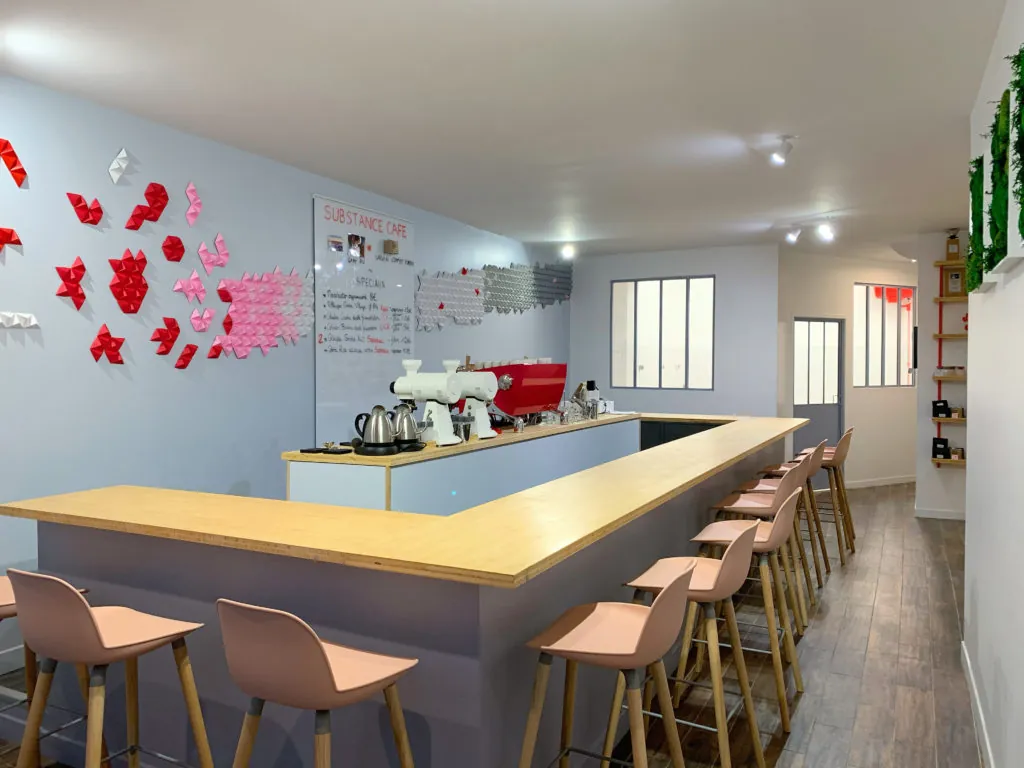
Substance is a coffee shop run on rules. Joachim is the owner, the only roaster and the only barista. He roasts ultra-light on a Loring at the back of the shop, keeps most coffees vacuum-sealed and frozen until the moment they are brewed, and serves them at a pale wooden bar with a handful of pink stools. There is no takeaway cup, no sugar, no pastry and no music.
The format is an omakase: tell him what you like and he builds a tasting course from the board of special and competition coffees. Espresso comes from a two-group Slayer, filter from a V60, and the website publishes the recipes it uses for both, down to 12 g of coffee to 200 g of water. The café takes guests by reservation only.
Tiba, 3rd arrondissement
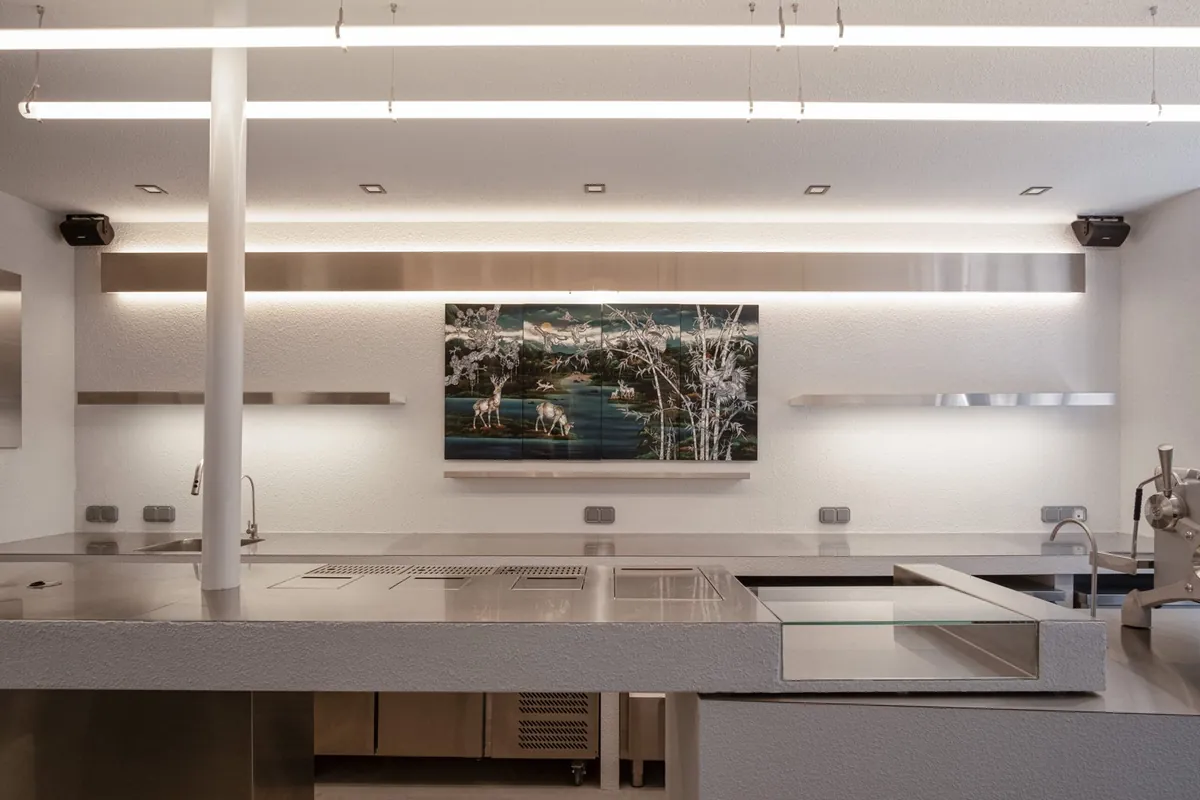
Tiba does not roast. In the Haut Marais, the counter is a long run of brushed steel under strip lights, designed by HYPNOS XP, and the coffee on it comes from guest roasters chosen for their sourcing: Goût & Co and Terraform, which roast Ethiopian, Kenyan and Panamanian lots, alongside Kolibri and Mellow from the Netherlands. The tagline is “Exploring coffee”, and the brewing leans towards Hario V60 filter, with an espresso machine for the milk drinks.
Tiba has started commissioning its own coffees too. Kolibri roasts a “Special Tiba Blend” for milk drinks, and a Terraform x Tiba box holds three small bags of one Ethiopian lot roasted three ways. Bags and brewing equipment are sold at the counter and online.
Ten Belles, 10th arrondissement
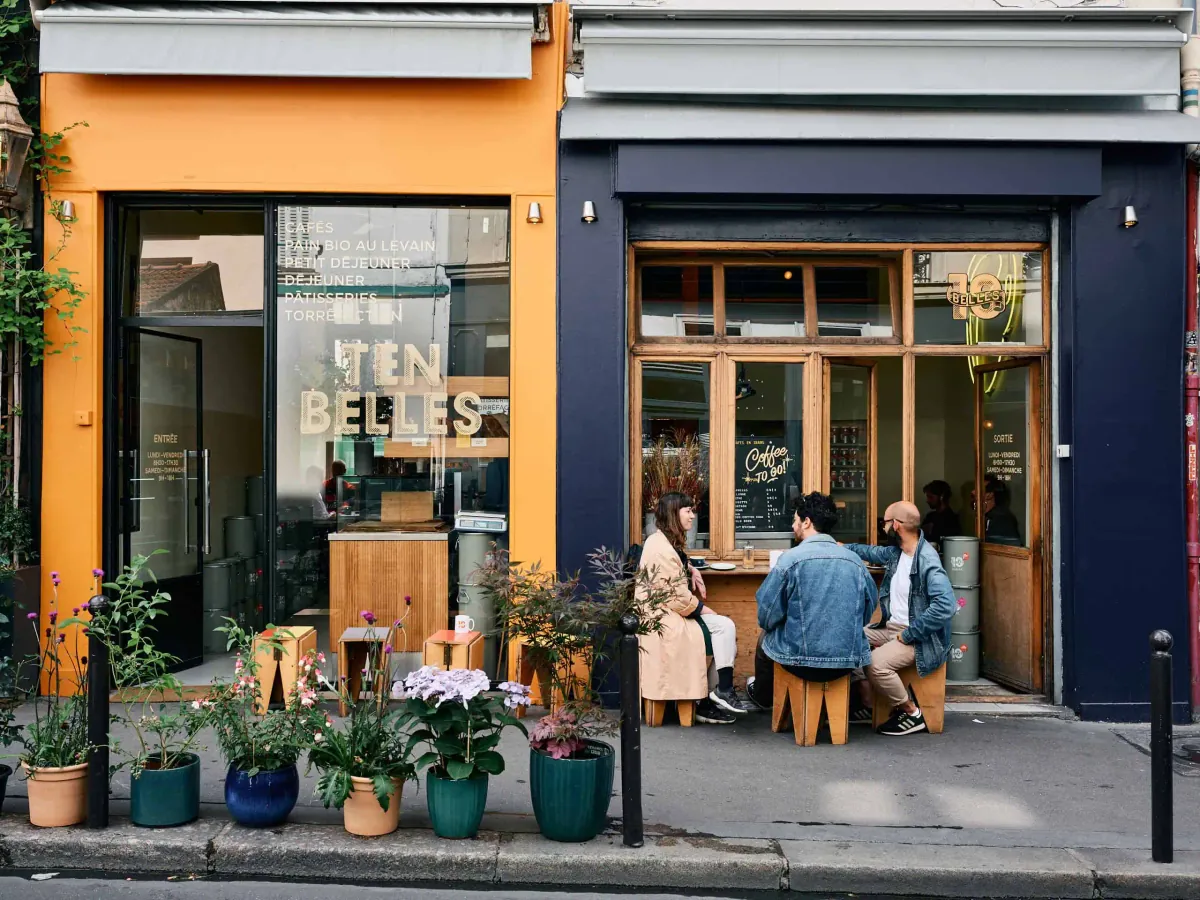
Ten Belles opened in 2012 a short walk from the Canal Saint-Martin and has grown into a sourdough bakery and specialty coffee roaster. The roasting started in 2019 and happens weekly in the 20th arrondissement; the house blend, Le Mixtape, pairs Brazilian and Colombian coffee. The original shop keeps a small terrace and takes no reservations. Ten Belles Bread, in the 11th, is the largest site and home of the bakery, and a third café is in the 6th.
Fringe, 3rd arrondissement
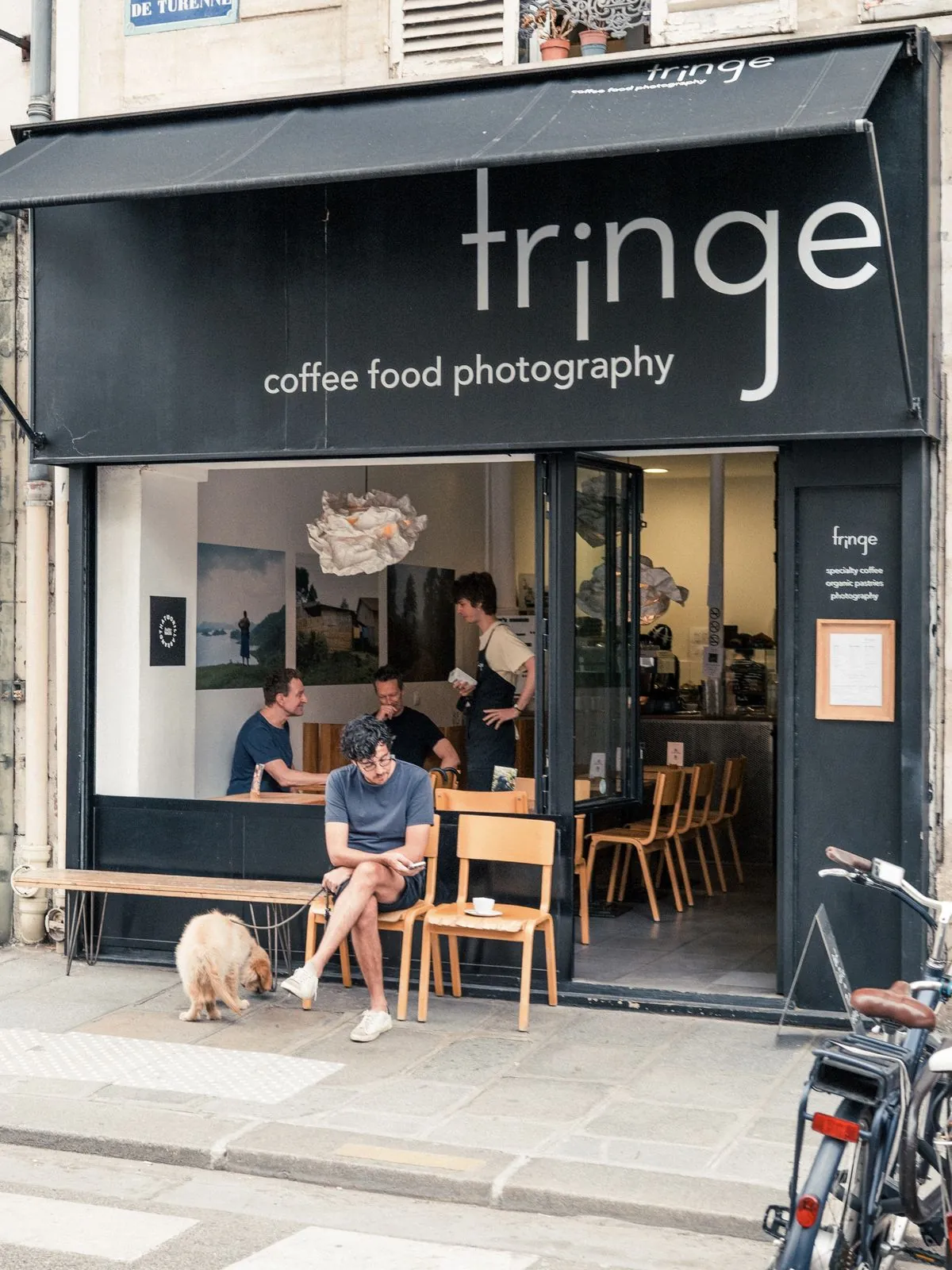
Fringe describes itself as specialty coffee and photography in the Haut Marais. The founder, Jeff Hargrove, is a large-format photographer, and the room doubles as an exhibition space with a library of photo books. The coffee is seasonal single origins from small European roasters, served as espresso, flat white, espresso tonic and pour-over, with cinnamon and cardamom rolls, homemade granola and banana bread from the kitchen.
Tanat, 3rd, 1st, 2nd and 10th arrondissements
Tanat, formerly Kawa, has roasted in its own Paris workshop since 2016 and sources directly from producers. The first shop, in the 3rd, opened in 2019 and is still described as the intimate spot where it all began. Three more have followed, near the Châtelet, in the 2nd and in the 10th.
La Caféothèque, 4th arrondissement
Facing the Seine, La Caféothèque has been a coffee salon, roastery and school since 2005. Gloria Montenegro founded it and coined “caféologie” for the tasting discipline the school still teaches; it has trained more than a thousand professionals. The coffee is roasted on site, and there are terrace tables under the awning.
Coutume, 7th arrondissement
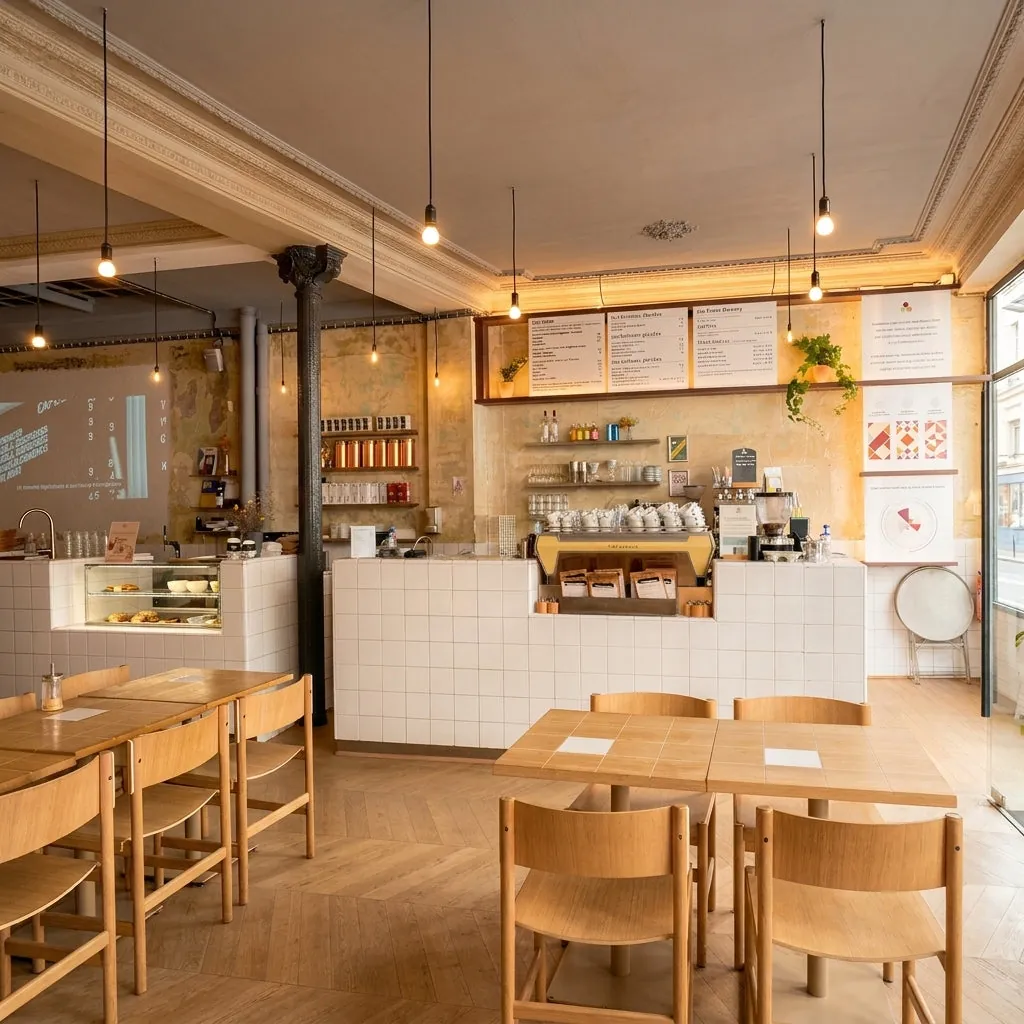
Coutume’s first café opened in the 7th in 2011, a year after Tom Clark founded the roasting company, and it remains the original: a bright room of white tiles and wooden tables that serves brunch and seasonal food alongside espresso and slow-brewed filter. Roasting moved in 2022 to a 750 m² roastery in Romainville, just outside Paris, which handles some 65 tonnes a year from more than thirty origins. Coutume now has fifteen coffee shops, including one inside the Galeries Lafayette.
KB Coffee Roasters, 9th arrondissement
KB opened in 2010 as one of the first coffee shops in France, in the 9th, with a large terrace that looks up towards the Sacré-Cœur. Its own roasting began in 2015, and since 2019 the company has run Back in Black in the 11th, a 200 m² coffee shop with a roasting workshop, a kitchen for breakfast and lunch, and what the website calls devilish pastries.
The Beans on Fire, 11th, 10th and 18th arrondissements
The Beans on Fire is a collaborative roastery: more than thirty coffee projects roast on its Diedrich machines in a shared atelier, and it runs training courses in sourcing, roasting and extraction. Its three cafés, Beans Gardette in the 11th, Beans Au Théâtre in the 10th and Beans Trois Frères in the 18th, are the easiest way in.
Partisan Café Artisanal, 3rd arrondissement
Partisan sits by the Arts et Métiers and calls itself a roasting workshop and a salon for specialty and terroir coffee. Roasting day is Wednesday. Bags on the shelf run from single origins such as an Ethiopian Danche and a Kenyan Karimikui AA to an Italian-style blend for people who want darker espresso.
Roasters with shops across the city
Two Paris roasters have grown into small chains without giving up roasting. Terres de Café, founded in 2009 by Christophe Servell, roasts in the Île-de-France on Loring machines and runs ten Paris boutiques, from the historic shop in the 4th to the 14th. Noir roasts weekly in its Paris atelier, buys directly from producers, and lists 25 coffee shops in the city, from the Louvre to the Abbesses. For roaster visits rather than café stops, Belleville Brûlerie opens a tasting space at its headquarters in the 19th, and Lomi’s 18th arrondissement café has run since 2012 beside the roaster’s coffee school.
What you need to know about Paris specialty coffee
What are coffee shops called in France? Both words are in use. A café is the traditional bar-restaurant; “coffee shop”, in English, is what Parisians call a specialty place. Hunting for “café de spécialité” or “torréfacteur” on a shopfront will find you the roasters.
Can you just sit down? In most coffee shops, yes: order at the counter and take a seat. Two exceptions in this guide are Substance, which takes guests by reservation, and Ten Belles on the canal, which takes none and fills up at weekends.
Which cafés roast their own beans? Klover, Substance, Tanat, La Caféothèque, Coutume, KB, The Beans on Fire, Partisan, Terres de Café and Noir all roast; Ten Belles roasts in the 20th. Tiba and Fringe are multi-roaster shops that pick from roasters elsewhere.
Where should a first coffee walk start? The 3rd arrondissement has the densest walk: Tiba, Fringe, Partisan and Tanat’s original shop are within fifteen minutes of each other. The 2nd and 10th follow, and the 11th rewards a detour for Klover, Ten Belles Bread and Beans Gardette.
How much does coffee cost? Menus are not published online by most of these shops, so budget for city prices and check the board. For beans, Klover’s 200 g bags run from €17 to €36 and Partisan’s 250 g bags from €15 to €19.50 at the time of writing.
Photo credits
Photographs belong to the businesses and are reproduced from their official websites with attribution.