

What veganism means
The Vegan Society defines veganism as a way of living that excludes, as far as is possible and practicable, “all forms of exploitation of, and cruelty to, animals for food, clothing or any other purpose”.1 The environment and health are good reasons too, but in the end it’s all about the animals.
Writer and vegan activist Ed Winters, author of This Is Vegan Propaganda and How to Argue With a Meat Eater, makes the case in one line: “Every time we eat, we have the power to radically transform the world we live in.”2
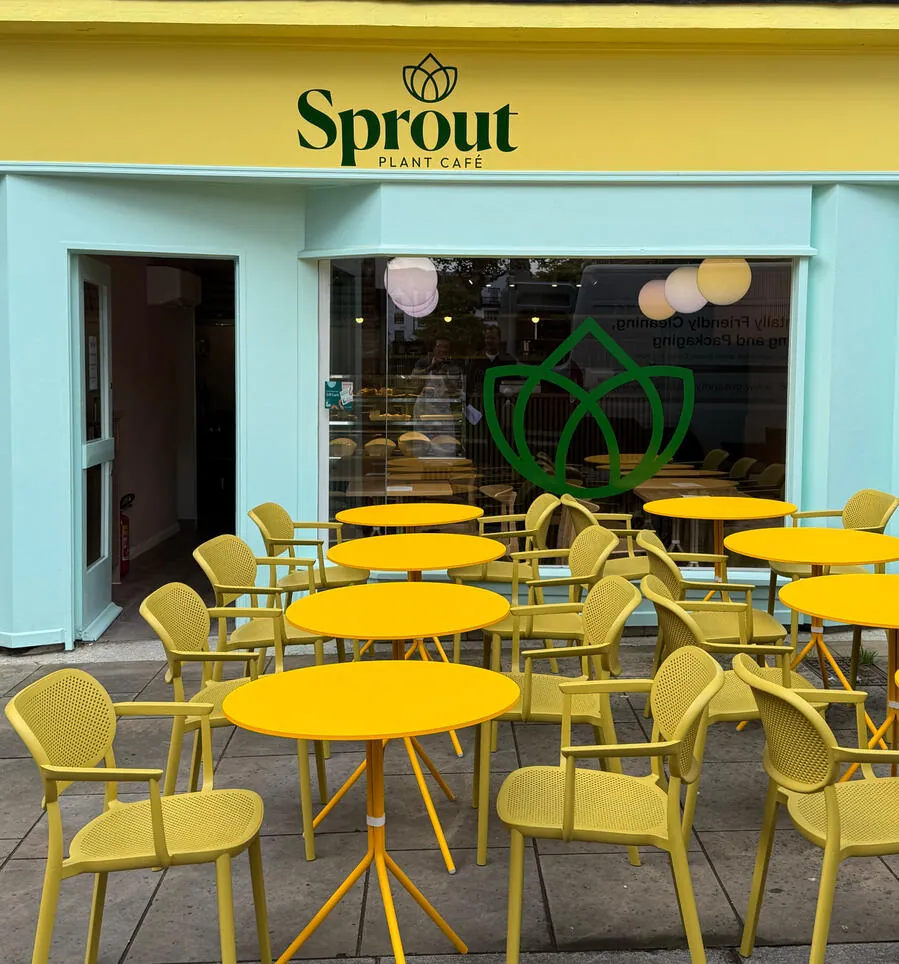
We created this guide to support the cafés that have made the brave choice to stand up for the animals by putting only plant-based food and drink on their menu.
The problem with dairy and why oat is superior anyway
A cow only makes milk after she has given birth, so a dairy farm gets her pregnant about once a year by artificial insemination. Her calf is usually taken from her within a day, so that the milk meant for them can be sold instead.
Every one of those calves is born into a system that has little use for them. The United States has about 9.3 million dairy cows3 and the UK about 1.85 million4, and each gives birth close to once a year. Some of the daughters are kept to take their mothers’ place in the herd5. The sons will never give milk. Even though farmers can largely influence the sex of calves, we estimate that roughly five million calves are slaughtered for dairy every year in the US and one million in the UK.
Unlike the idyllic pastoral picture that ads and packaging try to paint, the life of a dairy cow is not fun and games. She is milked through most of each pregnancy and spends much of the year indoors, and at any one time about one in five British dairy cows walks with a painful limp6. Her life is cut short too. She is slaughtered as soon as her milk yield or fertility drops, usually at five or six years old, when a cow can live to about 207.
Oat milk leaves all of that out. While cow’s milk often overpowers the coffee with a strong buttery taste, oat milk lets a light, fruity coffee keep its flavour. Oatly sells its Barista Edition on a “rich and neutral taste”8, and Minor Figures’ Barista Oat9 is another tasty choice. It is easier on the planet too: cow’s milk takes around ten times the land of a plant milk and about three times the emissions10.
Soy, almond, coconut and pea milks have their fans as well, and several cafés in this guide offer more than one.
Why choose a fully vegan café
An Oaty Boy (oat-milk flat white) is easy to find. That does not make the café vegan. A coffee shop that steams cow’s milk keeps buying it, and the money that passes over its counter, including for the oat latte, keeps that order coming. The same café may serve butter croissants and egg sandwiches.
A fully vegan café removes the question. Every pastry in the case is open to you and nothing needs checking. None of the money goes to a dairy supplier, and each of these places serves specialty coffee without cow’s milk.
Some of the places on this map roast their own coffee. Others pour coffee from roasters such as Belleville Brûlerie, Gardelli and Proud Mary.
Did we miss a spot? Let us know.
If you know a café, bakery or brunch spot where the whole menu is vegan and the coffee is specialty, send us its name, city and website at hello@coffeedash.com. If you run one of the places listed here, you can claim its profile from its page.
References
- The Vegan Society, definition of veganism
- Ed Winters
- USDA NASS, Milk Production, February 2025 (2024 annual average)
- AHDB, UK and EU cow numbers
- University of Maryland Extension, managing heifer inventory on the dairy
- AHDB, a new approach to lameness control in dairy cows
- PETA, the dairy industry
- Oatly, Barista Edition
- Minor Figures
- Our World in Data, dairy vs plant-based milk